Sleep, Light and Time of Day: The Best Time for Your Eye Test

Sleep, light and time of day all affect how well you see on the day of your eye test, and choosing the best time for your eye test can make the difference between a comfortable pass and a borderline result that sends you back for a retest. Most people book the eye test for whenever the optician has a free slot, without thinking about whether their eyes are at their best at that hour, and most of the time that works out fine. If your vision is borderline, however, or if you are taking the test for a lorry or bus licence, or if you have recently changed your prescription, the time of day can matter. This guide explains how sleep, light and time of day influence your vision, and how to pick the slot that gives you the best chance of a clear, accurate result.
Your eyes are not like a camera with a fixed setting. They change through the day, and from one day to the next, in response to how much sleep you have had, how much light is around you, how long you have been looking at a screen, and how tired your eye muscles are. In the morning, after a good night sleep, your eyes are usually fresh, your tear film is stable, and your ability to focus is at its best. In the late afternoon, after a long day at work, your eyes may be dry, tired, and slower to focus, and that can show up as a slightly worse result on the eye chart. The difference is often small, a line on the chart or less, but if you are close to the pass mark, a small difference can matter a great deal.
Light matters too. The eye test is carried out in a controlled room, with standard lighting, so the time of day does not change the light in the testing room itself. What it does change is the light you have been in before the test, and the way your pupils have adjusted. If you walk in from bright sunlight, your pupils are small, and it can take a few minutes for them to adjust to indoor light. If you come in from a dark room, or after a long drive at night, your eyes need time to adapt in the other direction. Giving yourself time to arrive, to sit down, and to let your eyes settle before the test begins is one of the simplest ways to get a reliable result, and it is a reason to book a slot that is not rushed.
How sleep affects your eyesight
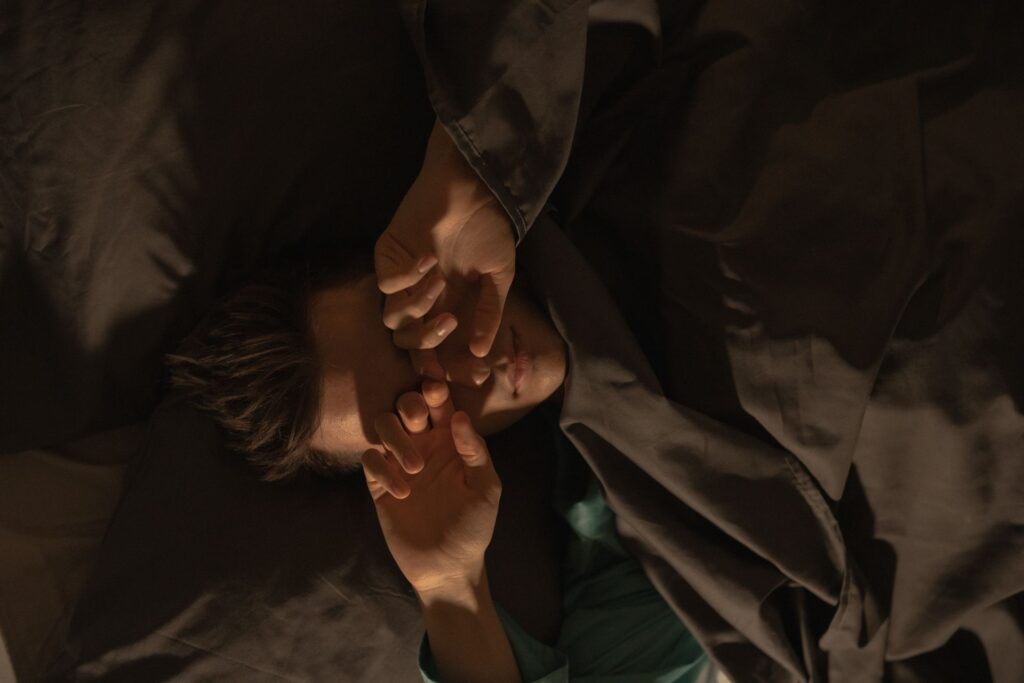
Sleep is one of the most important factors in how well you see, and it is also one of the most neglected. When you are short of sleep, your eyes are drier, because you produce fewer tears, and your tear film, the thin layer of moisture that covers the front of the eye and keeps it smooth, breaks up more quickly. That can make your vision blurry, especially when you are trying to read small letters on a chart. Lack of sleep also affects the muscles inside the eye that control focusing, and the muscles around the eye that control blinking and eye movements. Those muscles get tired, just like any other muscle, and when they are tired, they respond more slowly and less accurately.
A single bad night may not ruin your eye test, but a week of short nights, or a night of very poor sleep before the test, can make a noticeable difference. If you have been up late, or if you have been working night shifts, try to book the test for a day when you have had a normal night sleep beforehand, and avoid taking it at the end of a long shift. Aim for seven to eight hours of sleep the night before, and try to keep your sleep pattern regular for a few days beforehand, so that your body clock is settled. That advice is especially important if you are taking the test for a professional licence, where the standard is higher and the test is longer, because tired eyes will struggle more with a long, detailed examination than with a short optician test.

There is another, quieter effect of sleep on your vision, and it is about concentration. Reading an eye chart is not only about optics; it is also about attention. You need to look carefully, to distinguish one letter from another, and to say what you see without guessing. When you are tired, your concentration wanders, you are more likely to hesitate, and you are more likely to misread a letter that you would have read correctly if you were fresh. Good sleep helps you concentrate, and concentration helps you get the result that your eyes are really capable of, rather than a result that is lower because you were too tired to focus.
Light: natural, artificial and the test room
Light is the raw material of vision, and the eye test is designed to work in standard light, but your eyes are affected by the light you have been in before the test as well. Natural daylight is the best light for your eyes to work in, and it is the light your eyes evolved to use. Artificial light, especially the blue-rich light from screens and fluorescent tubes, can make your eyes work harder, and it can contribute to dryness and fatigue. If you spend the morning before your test in front of a computer, your eyes may be tired before you even arrive at the optician, and that can affect the result.
The testing room itself is lit to a standard level, and the chart is lit evenly, so that the test is fair and repeatable. That is why the result is comparable from one optician to another, and from one day to another. What varies is not the room, but you. If you arrive with eyes adapted to bright sunlight, it can take a few minutes for your pupils to open up to indoor levels, and during those minutes your vision can feel slightly different. Most opticians understand this, and they will give you a few minutes to sit down and settle before they start the test. If you can, arrive ten minutes early, sit in the waiting area, and let your eyes adjust. That short pause is a useful part of the test, even though it is not formally part of it.
There is also a practical point about the time of year. In winter, the days are short, and many people take their eye test after work, in the dark, when their eyes are already tired. In summer, the opposite can happen: people walk in from bright sun, with sunglasses on, and their eyes need a moment to adjust. Neither situation is a reason to fail, and neither will be held against you, but both are reasons to think about the slot you book. A mid-morning appointment, in natural light, after a good night sleep, is the closest thing to ideal conditions for most people, and it is worth choosing if you can.
Time of day: morning, afternoon and evening
For most people, the morning is the best time for an eye test, and the reason is simple: you have just had a night sleep, you have not yet spent hours looking at a screen, and your eyes are as fresh as they will be all day. A mid-morning appointment, between about nine and eleven, is often ideal. You have had time to wake up properly, to have breakfast, and to get to the optician without rushing, but you have not yet had a long day behind you. If you are a morning person, you will also find it easier to concentrate at that hour, and concentration, as we have seen, is part of getting an accurate result.

The afternoon is not a bad time, and for many people it is the only time they can fit the test in around work, but it has more pitfalls. By the afternoon, you will usually have spent hours on a computer or a phone, and your eyes will be drier and more tired than they were in the morning. If you work in an office, take a break before the appointment, look away from your screen, close your eyes for a few minutes, and use artificial tears if you normally use them. That short break can make a real difference. If you can choose between a late afternoon slot after a full day at work and a morning slot on a day off, the morning slot is usually the better choice, especially if your vision is borderline.
Evening appointments are the least ideal, and they are the ones that most often lead to a repeat test. By the evening, your eyes have worked all day, your tear film is at its thinnest, and your focusing muscles are tired. That does not mean you will fail, and many people pass comfortably in the evening, but if you are close to the limit, the evening is the hardest time to pass. If the optician only has evening slots, and you have a choice about which evening, pick the earliest one, and try to rest your eyes in the hour before the appointment: no screens, no reading, and no driving in the dark if you can avoid it. If you are taking the test for a professional licence, where the standard is higher, it is worth waiting for a morning slot rather than taking an evening one and risking a borderline result.
Screens, tired eyes and the day before
Screens are a major cause of tired eyes in modern life, and the day before your eye test is a good time to give your eyes a rest from them. The 20-20-20 rule is a simple habit to follow: every twenty minutes, look at something twenty feet away for twenty seconds, and blink slowly a few times. That gives the focusing muscles a rest, and it helps the tear film to spread evenly over the front of the eye. On the day of the test, try to limit screen time before the appointment, and if you have to use a computer at work, take regular breaks and use the same rule.
There are other things you can do in the day before the test to help your eyes. Drink enough water, because hydration helps your tear film, and eat normally, so that your blood sugar is stable. Avoid alcohol the night before, because it can dry out your eyes and affect your sleep, and avoid taking the test when you are ill, or when you have a cold, because that can affect your concentration and your tear film as well. If you wear contact lenses, take them out the night before if you normally do, sleep in your glasses, and put the lenses in again in the morning, so that your eyes start the day fresh. For more on preparing in general, see our guide to preparing for the eye test and our article on the eye test with glasses.
It is also worth thinking about your general health on the day of the test. If you have a headache, or if you are feeling unwell, it is better to postpone the test than to take it and get a result that is lower than your true ability. The optician will understand, and there is no charge for rebooking in most cases. The eye test is not an exam you have to pass on a particular day, whatever your condition; it is a measurement, and a measurement is only useful if it is taken when you are in a normal, healthy state. Booking a slot when you are well rested and well is the best way to make sure the measurement is a fair one.
When to book: a practical checklist
Putting all of this together, the best time for your eye test is a mid-morning slot, on a day when you have slept well, you are not ill, and you have not spent the morning staring at a screen. That may sound like a lot of conditions, but in practice it is simply a normal, healthy morning, and most people can arrange it with a little planning. If you work during the day, try to book the test for a morning of a day off, or for a Saturday morning if the optician is open, rather than for a weekday evening after work. If you are a shift worker, book for the morning after a day off, rather than for the morning after a night shift, when your eyes will be at their worst.
There are also practical reasons to prefer the morning. Opticians are usually quieter in the morning, they are less rushed, and they have more time to spend with you if a question comes up. If the test shows a problem, there is time in the same day to talk it through, to try a different prescription, or to book a follow-up with an ophthalmologist, without having to wait for another day. In the evening, by contrast, the shop may be closing soon, and the optician may be under pressure to finish quickly. That pressure does not affect the result, but it does affect the experience, and a relaxed, unhurried test is more likely to give you a result you can trust.
Finally, remember that the best time for you is the time that works for your life as well as for your eyes. If you are a night owl who sleeps late and does your best work in the afternoon, a mid-morning test may not suit you, and an early afternoon slot may be better for you than it is for someone else. The general advice in this article is based on how most people see best, but you know your own body clock better than anyone else. Choose a slot when you feel alert, rested, and comfortable, and avoid a slot when you know you will be tired, rushed, or stressed. That, more than any single rule about hours, is the best way to get a result that reflects your real vision.
Frequently Asked Questions
What is the best time of day for an eye test?
For most people, mid-morning, between about nine and eleven, after a good night sleep. Your eyes are fresh, you have not yet spent hours on a screen, and you can concentrate well. If you are a night owl, an early afternoon slot when you feel alert is a good alternative.
Does lack of sleep really affect an eye test?
Yes. Short sleep makes your eyes drier, your tear film less stable, and your focusing muscles slower, and it also makes it harder to concentrate on the chart. Aim for seven to eight hours of sleep the night before your test.
Should I avoid screens before my eye test?
Yes, if you can. Give your eyes a break in the hour before the test, use the 20-20-20 rule during the day, and blink often. That helps your eyes arrive at the optician rested rather than tired.
Is an evening eye test a bad idea?
Not necessarily, and many people pass in the evening, but it is the hardest time of day, because your eyes have worked all day. If your vision is borderline, wait for a morning slot if you can, and if you must take an evening slot, take the earliest one and rest your eyes beforehand.
Does the light in the test room change with the time of day?
No. The test room is lit to a standard level, so the test itself is the same at any hour. What changes is the light you have been in before the test and how tired your eyes are, so arrive ten minutes early and let your eyes adjust.
Conclusion
Sleep, light and time of day are not the main things that decide whether you pass your eye test, and good eyesight with a good prescription will pass at almost any hour. They are, however, the small things that can tip a borderline result one way or the other, and they are the things you can control, at no cost, simply by choosing when you book. A mid-morning appointment, after a good night sleep, with rested eyes and a few minutes to settle, is the best recipe for a reliable result, and it is worth a little planning to get it right.
Book your test for a morning when you feel well and rested, arrive early, and tell the optician if you are tired or unwell. If the result is borderline, do not assume that your eyesight has got worse; consider whether the time of day, a bad night, or a long day at a screen played a part, and ask for a retest at a better time. Your eyes deserve a fair test, and a fair test starts with choosing the right time to take it.