Forgot to Put In Your Contact Lenses? What to Do Before the Eye Test

Forgot to put in your contact lenses before the eye test? It happens more often than you might think, and it usually happens on the worst possible morning: you are already running late, you have an appointment at the optician, and you realise, halfway there, that your lenses are still in their case at home. Your first thought may be that the test is ruined, that you will fail without your lenses, or that you have wasted the trip. In most cases, none of those things is true. There are several ways to deal with the situation, from wearing your glasses instead, to putting in a spare pair of lenses at the shop, to simply rebooking the test for another day. This guide explains what to do before the eye test if you forgot your contact lenses, what the optician can and cannot do for you, and how to make sure it never happens again.
The key point to understand is that the eye test measures your vision with the correction you use when you drive. If you normally drive with contact lenses, the test should be taken with contact lenses in, because that is the vision you will actually drive with, and it is also the correction that will be recorded on your licence. If you take the test without your lenses, and without glasses either, your visual acuity will probably be worse, and you may fail the test, or you may get a result that does not reflect your real driving vision. That does not mean the test is wasted, however. It means you need to be honest about what happened, and to ask the optician what your options are, rather than trying to guess your way through the eye chart.
Many contact lens wearers have a pair of glasses as well, and those glasses are the simplest solution to a forgotten lens. If you have glasses with the same prescription, put them on, take the test with them, and the result will usually be very similar to the result you would have got with your lenses. The certificate will then record that you passed with glasses, and your licence will allow you to drive with glasses or with contact lenses, depending on the code. That is the easiest fix, and it is the reason every contact lens wearer should keep an up-to-date pair of glasses, even if they hardly ever wear them. This article works through that option, and all of the others, in detail, so that you can act quickly and calmly when it happens to you.

First, do not panic: check what you have with you
When you realise you have forgotten your lenses, the first step is to stop and check what you do have with you, before you decide what to do next. Do you have your glasses in your bag, or in the car? Do you have a spare pair of contact lenses, or a spare lens case, in your jacket pocket, your handbag, or your car? Do you have lens solution with you, so that you could put in a spare pair if you had one? Many people carry a spare pair of daily lenses in their wallet or in the car without thinking about it, and that spare pair can save the day. Check every pocket, every compartment of your bag, and the glove box of your car before you assume you have nothing.
If you have your glasses, the problem is solved in the simplest way. Put them on, and take the test with them. Your vision with glasses is usually very close to your vision with contact lenses, although it can feel a little different, especially at the edges of your vision, and you may need a moment to get used to it if you have not worn glasses for a while. Tell the optician that you normally wear contact lenses but that you are wearing glasses today, so that they understand the situation and can note it on the certificate if necessary. The optician will test you with the glasses on, and the result will be recorded as a pass with correction, just as it would have been with your lenses.
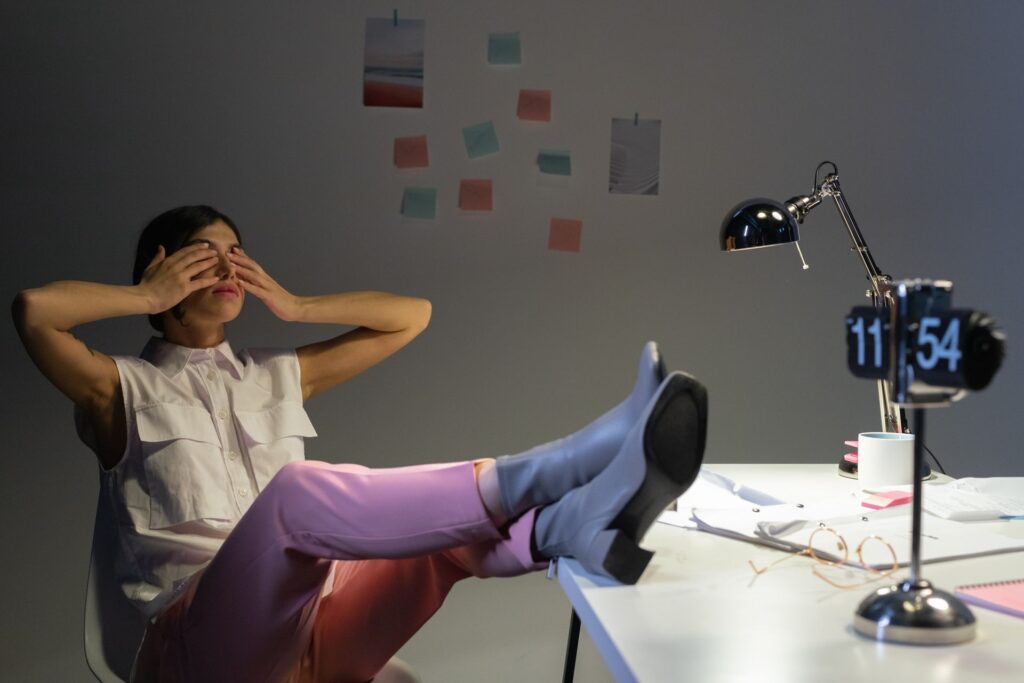
If you do not have glasses, and you do not have a spare pair of lenses, do not try to take the test without any correction and hope for the best. That is the least helpful option, because the result will not be a fair measurement of your driving vision, and it can lead to a fail that is recorded, a referral to an ophthalmologist that you do not need, or an unhelpful note on your licence. It is better to be honest with the optician, to explain what happened, and to ask what they suggest. In many cases the optician will simply suggest that you come back another day, or later in the same day, with your lenses in, and there will be no charge for rebooking. That is a far better outcome than a failed test.
Can you still take the test without your lenses?
Whether you can still take the test without your lenses depends on how well you can see without them, and that depends on your prescription. If you are only slightly short-sighted, you may be able to read enough lines on the eye chart to pass, even without your lenses, and the optician may be happy to test you and see what the result is. If you are strongly short-sighted, or if you have a strong astigmatism, you are unlikely to pass without correction, and the optician will probably advise you not to take the test that day. That is not a rule, but a practical judgement, and it is better to follow the optician advice than to insist on a test that you are likely to fail.
There is another reason to be careful about taking the test without your lenses, and it is about the record that is created. If you take the test without correction and you fail, that failure is not a permanent bar, and it does not go on your licence, but it can be a waste of time and money, and it can be discouraging. If you take the test without your lenses and you pass, the certificate may record that you passed without correction, which is not a true reflection of the correction you need when you drive. That can lead to confusion at the licensing office, because the certificate will not match the prescription you actually use, and that can cause delay. In both cases, the honest, accurate result is the one taken with the correction you use when you drive.
If you are unsure how well you see without your lenses, you can ask the optician to do a quick check, without issuing a certificate, just to see whether it is worth taking the formal test. Most opticians will be happy to do that, and they will tell you honestly whether you have a reasonable chance of passing, or whether you should come back with your lenses. That informal check takes only a minute, and it can save you from a formal result that you do not want. Use it if you are in any doubt, and take the advice you are given, even if it means coming back another day.
Using your glasses instead of your lenses
Glasses are the simplest and most reliable substitute when you have forgotten your contact lenses, and most opticians will be perfectly happy to test you with them. The prescription for your glasses should be very close to the prescription for your contact lenses, although it is not identical, because the lens sits at a different distance from your eye, and the optician will take that into account. If your glasses are up to date, the result should be almost the same as the result you would have got with your lenses, and the certificate will be valid in exactly the same way. Tell the optician that you normally wear lenses, so that they understand why you are in glasses today, and so that they can record the result correctly.
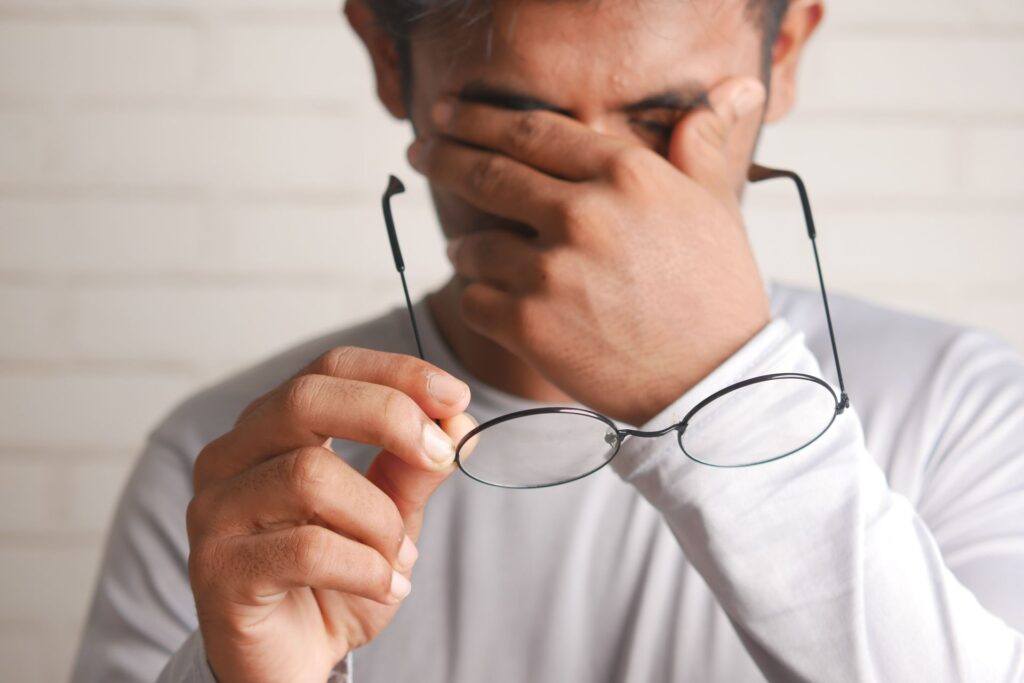
There are a few practical points to remember when you switch to glasses for the day. If you have not worn glasses for a long time, they may feel odd at first, and your peripheral vision may feel narrower than it does with contact lenses. Give yourself a few minutes to adjust before the test starts, and look around the room, so that your eyes get used to the frame. Make sure the glasses are clean, and that they sit straight on your face, because a dirty lens or a lens that is tilted can affect the result. If your glasses are old, and your prescription has changed since they were made, be honest about that as well, because an out-of-date pair of glasses can give you a worse result than a current pair, just as an out-of-date contact lens can.
If you do not have a pair of glasses at all, consider getting one, even if you prefer contact lenses and never intend to wear glasses regularly. A pair of glasses is an inexpensive safety net, and it is also a requirement in practical terms: if a contact lens falls out while you are driving, or if your eye becomes irritated and you have to take a lens out, you need a way to see clearly enough to pull over safely. Many contact lens wearers keep a pair of glasses in the car for exactly that reason, and that pair can also save an eye test appointment. Ask your optician about a basic pair of glasses with your current prescription, and keep them in a case where you can find them quickly.
Can the optician help you on the spot?
Opticians deal with forgotten lenses every week, and they are usually very helpful, because they understand that it is a simple human mistake, not a sign that you are not taking the test seriously. What they can do on the spot is limited, but it is often enough. They can test you with your glasses, they can do a quick informal check without correction to see whether it is worth taking the formal test, and they can rebook your appointment for later in the day or for another day at no extra cost. Some larger opticians also sell contact lenses, and if they have your prescription on file, they may be able to sell you a pair of daily lenses there and then, so that you can put them in and take the test with them.
What an optician cannot do is take a formal eye test without any correction and then pretend that you were wearing your lenses. The certificate has to record the correction you actually used, and it has to be an accurate record. If an optician offered to do that, you should refuse, because a false certificate can cause serious problems at the licensing office, and it can also put your insurance at risk if you have an accident. A good optician will not offer that, and they will explain your options clearly instead. Trust their advice, and do not try to persuade them to do something they are not allowed to do, no matter how much of a hurry you are in.
If you are at a chain optician such as Apollo or Fielmann, and they have your records on their system, they may be able to check your prescription and your lens type from your file, even if you do not have the details with you. That can help them decide whether a spare pair of daily lenses in your prescription is available, or whether glasses are the better option. It is a good reason to have your eye care in one place, rather than buying lenses online and having your glasses made somewhere else, because a single record makes it easier for an optician to help you in an emergency. For a comparison of the two main chains, read our guide to the eye test at the optician and our article on contact lenses versus glasses in the eye test.
Going home, rebooking and getting it right next time
If you decide to go home for your lenses, do not rush, and do not drive if you cannot see well enough without them. That last point is important and easy to overlook. If you cannot see clearly enough to drive safely without your lenses, you should not drive home to get them, because you would be driving without the correction your licence requires, and you would be putting yourself and others at risk. Ask a friend or family member to drive you, or take public transport, or rebook the test for another day when you can bring your lenses with you. The optician will understand, and there is no penalty for rebooking.
When you rebook, make a written note of what you need to bring, and set a reminder on your phone for the morning of the new appointment. Put your contact lenses in first thing, before you do anything else, and then put your glasses in your bag as a backup, along with a spare pair of daily lenses if you have one. That simple routine, lenses in first, glasses in the bag, spare lenses in the wallet, takes a minute to set up, and it makes the whole problem almost impossible to repeat. Many people find that the one time they forget their lenses is the time they learn to build that routine, and they never forget again.
Finally, remember that forgetting your lenses is not a failure, and it is not a reflection on you as a driver. It is a small, common mistake, and it is one that the system is designed to handle. The optician, the driving school, and the licensing office have all seen it before, and they all have a straightforward way to deal with it. The best response is to stay calm, to be honest about what happened, and to choose the option that gives you the most accurate result, whether that is glasses today, a spare pair of lenses, or a new appointment next week. That way, you will get a certificate that reflects your real vision, and your licence will be based on a fair test.
Frequently Asked Questions
I forgot my contact lenses. Can I still take the eye test?
Yes, if you can wear glasses instead, or if you have a spare pair of lenses. If you have no correction at all, you may not pass, so talk to the optician first and consider rebooking rather than taking a test you are likely to fail.
Does taking the test with glasses change the result?
Not in any important way. If your glasses are up to date, your visual acuity with glasses is very close to your vision with contact lenses, and the certificate is valid in the same way. Tell the optician you normally wear lenses.
Can the optician sell me lenses on the day?
Sometimes, if they stock your prescription or if it is on their system. Ask them. If they cannot help, they can rebook your test. Never accept a certificate that does not record the correction you actually used.
Should I drive home without my lenses to get them?
No. If you cannot see well enough to drive safely without your lenses, do not drive. Ask someone to drive you, take public transport, or rebook the test. Driving without the correction you need can be fined and can affect your insurance.
How can I stop this happening again?
Put your lenses in first thing on the morning of the test, keep your glasses in your bag as a backup, and carry a spare pair of daily lenses in your wallet or car. Set a phone reminder for the morning of the appointment.
Conclusion
Forgetting to put in your contact lenses before the eye test is a small, very human mistake, and it does not have to ruin your day or your licence application. The best response is a calm one: check what you have with you, use your glasses if you have them, ask the optician what they suggest, and, if there is no good option, rebook rather than taking a test that will not show your real vision. Your licence should be based on an accurate measurement, not on a rushed attempt without your correction.
Build a simple routine for test day, lenses in first, glasses in the bag, spare pair in the wallet, and keep it for every future test as well. That routine takes a minute, and it turns a forgotten lens from a crisis into a non-event. With your correction in place, and your eyes rested and ready, the eye test itself is short, straightforward, and usually a formality, and you can get on with the rest of learning to drive.