How to Read Your Eye Test Certificate: Values Explained

Introduction
Eye test certificate is the piece of paper that most expats in Germany hold in their hand after the Sehtest, look at for ten seconds, and then file away without really understanding. It says whether you passed the driving licence eye test, it carries your name, the date, and the stamp of the optician, and it is the document that the driving licence office wants to see when you apply for your licence. But the numbers and words on it are not always clear. What does Visus 0.8 mean? What is the difference between the eye test certificate and a glasses prescription? Where does it say whether you need glasses while driving, and how long is the certificate valid? This guide explains how to read your eye test certificate, value by value, so that you can check that it is correct and know exactly what it allows you to do.
Eye test certificate matters because it is the only proof that you passed the eye test for your driving licence. In Germany, the Sehtest-Bescheinigung is the official form for the driving licence eye test, and the driving licence office, the Fahrerlaubnisbehoerde, accepts it only if it is complete, undamaged, and not older than two years. The certificate is different from the detailed prescription you get when you buy glasses, although the two are easy to confuse. The certificate answers one question: did you see well enough to drive? The glasses prescription answers a different question: which lenses do you need to see clearly? Many people keep both, and this article will help you to tell them apart.
In this article, you will learn what every part of your eye test certificate means, how to read the visual acuity values for your right eye, your left eye, and both eyes together, what the codes and remarks on the form mean, and what your values say about your fitness to drive. You will also learn how to read the values on a glasses prescription, including sphere, cylinder, axis, addition, and pupillary distance, because your optician may have given you both documents on the same day. By the end, you will be able to look at your eye test certificate and understand it, spot mistakes, and know what to do next.
What Is an Eye Test Certificate?
An eye test certificate, in German a Sehtest-Bescheinigung, is the official confirmation that you have passed the driving licence eye test. It is issued after you take the Sehtest at an optician, an ophthalmologist, or another authorised testing point. The certificate is a standard form, and it looks similar wherever you take the test in Germany, because the form is set by law. It carries your full name, your date of birth, and sometimes your address. It carries the name and address of the testing point, the date of the test, and the signature and stamp of the person who carried out the test. Without the signature and stamp, the certificate is not valid, so check them before you leave the optician.
The certificate is issued in a single copy, and it is your responsibility to keep it safe and to take it to the driving licence office. Many opticians will not issue a duplicate for free, and some will not issue a duplicate at all unless you take the test again. Take a photo of the certificate on the day you receive it, and store the photo on your phone as a backup, but take the original paper copy to the licence office, because a photo or a copy is not accepted. If you lose the certificate before you apply, you will need a new test, and you will have to pay for it again, unless the optician has a record and is willing to issue a replacement.
The certificate does not contain your glasses prescription, and it does not tell the licence office which lenses you need. It states only your visual acuity result and whether you used glasses or contact lenses during the test. The driving licence office then writes the result into your driving licence, if necessary as a condition. The most common condition is that you must wear a visual aid while driving, which is recorded on the back of the driving licence as code 01.01 for glasses or 01.02 for contact lenses. If you later need a replacement licence, the same condition will be written on it again.
How to Read Your Eye Test Certificate: The Visual Acuity Values
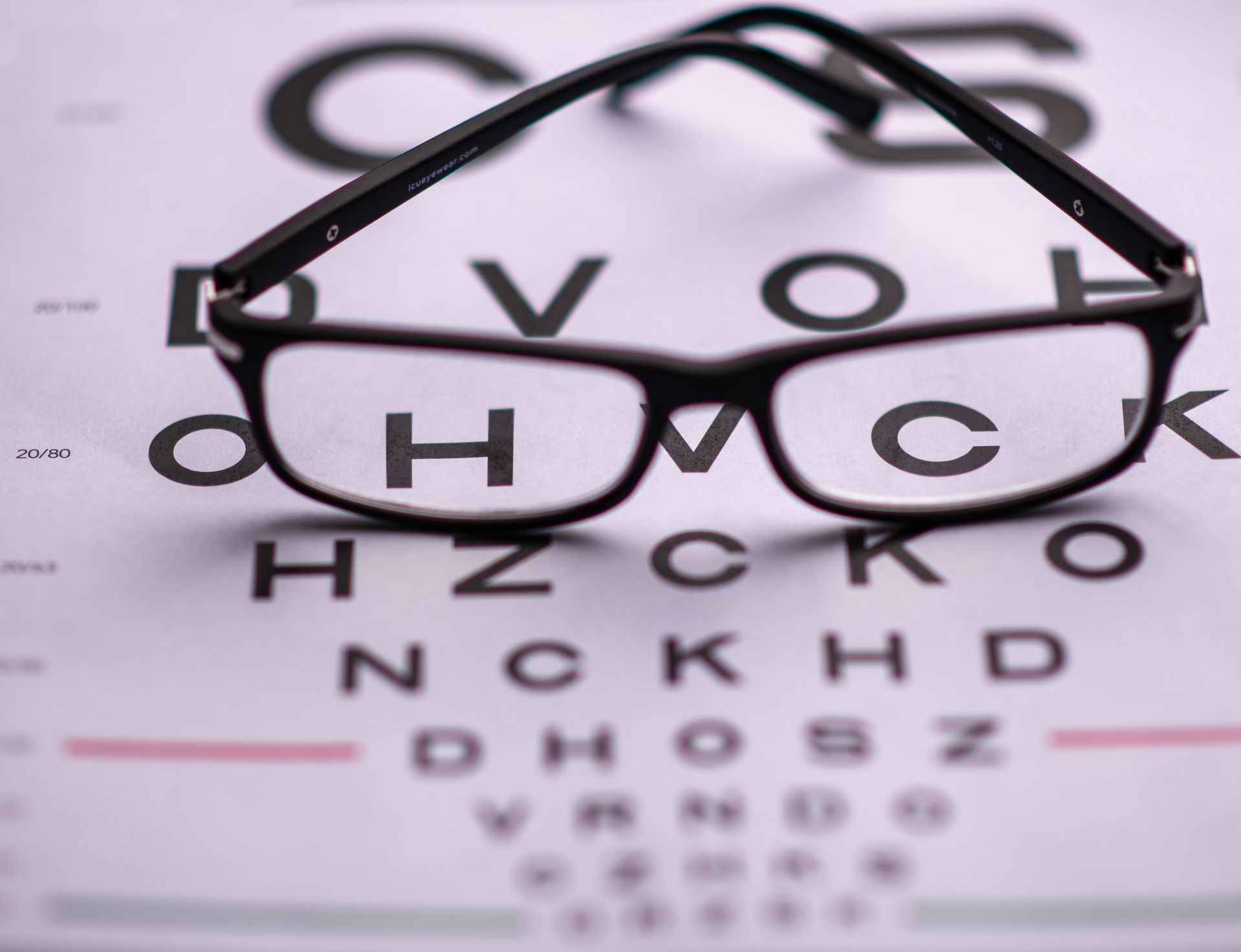
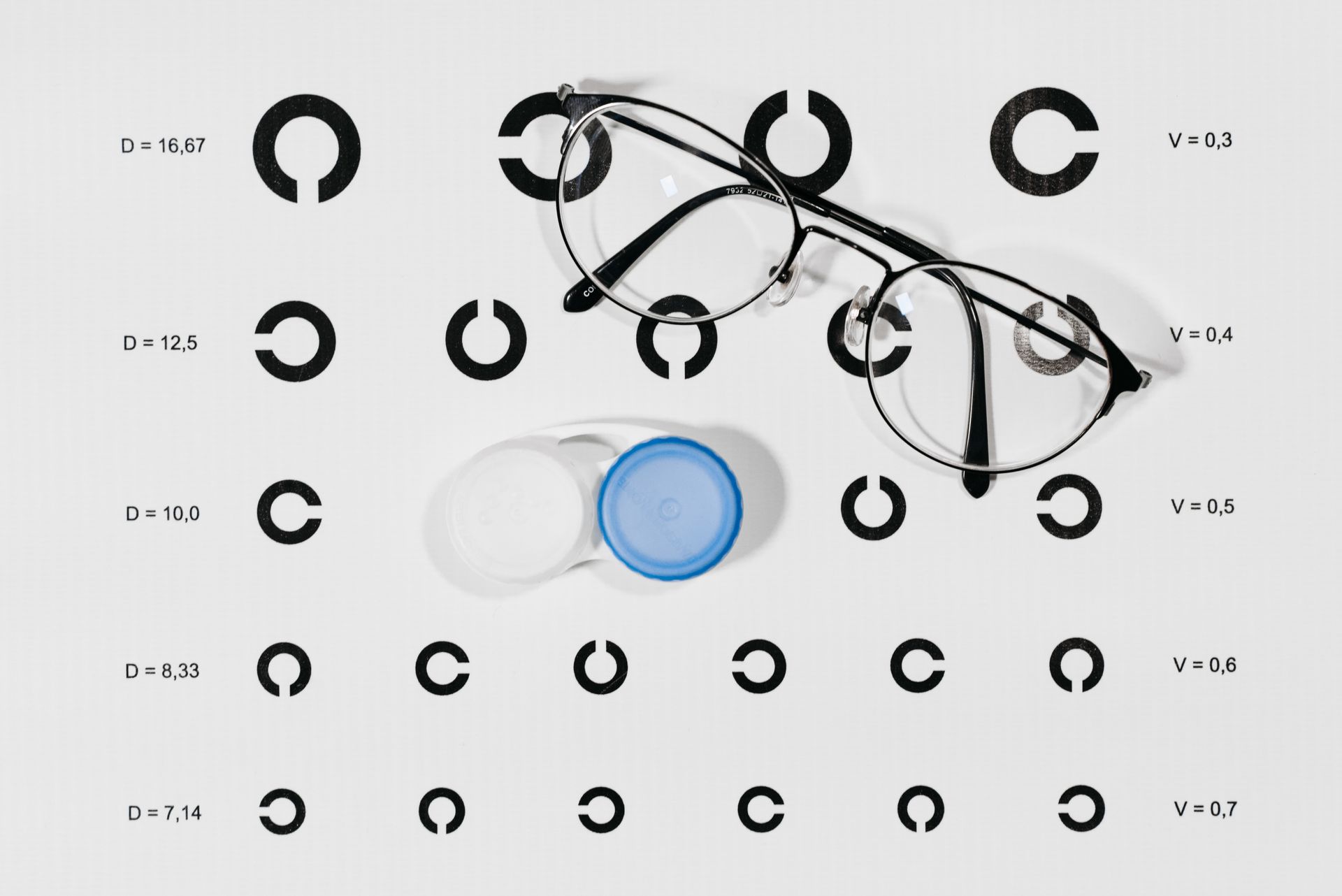
Eye test certificate values start with your visual acuity, called Visus or Sehschärfe in German. Visual acuity is a number that says how sharp your vision is. A value of 1.0 is normal, clear vision for a healthy adult. A value of 0.7 is the minimum that you need for a car driving licence in Germany, with both eyes together, with or without glasses or contact lenses. A value of 0.5 means that you can see at five metres what a person with normal vision can see at ten metres, which is why 0.5 is not enough to drive a car. A value of 1.2 or 1.5 is better than normal, and many young people reach it with glasses, although it is not required for driving.
Your certificate will usually show three visual acuity values: one for your right eye, called rechtes Auge or RA, one for your left eye, called linkes Auge or LA, and one for both eyes together, called beidseitig or mit beiden Augen. The value for both eyes together is the one that decides whether you pass, because it shows what you can actually see when you drive. It is normal for the two eyes to be different. One eye might be 1.0 and the other 0.4, and the two eyes together might reach 0.8, because the stronger eye helps the weaker one. That is enough to pass, and the certificate will show the pass even though one eye on its own is weak.
Next to the visual acuity values, the certificate may show whether the test was done with or without a visual aid. The words ohne Korrektur mean without glasses or contact lenses, and mit Korrektur mean with glasses or contact lenses. If you wore glasses during the test, the certificate will say so, and the driving licence office will add a condition to your licence. The certificate may also show the result of the visual field test, which checks how much you can see to the sides. This is usually written as a simple pass, for example Gesichtsfeld ausreichend, which means the visual field is sufficient. If the visual field test needs a closer look, the optician will refer you to an ophthalmologist.
What Happens If Your Values Are Below 0.7
If your visual acuity with both eyes together is below 0.7, the optician cannot issue the certificate, and the form will not be signed as a pass. This does not mean that you can never drive. It means that you need to find out why your vision is below the limit and correct it. In most cases, the reason is simple: your glasses are out of date, the lens you used was dirty, or you took the test when your eyes were tired. A new prescription, a new pair of glasses, or a rest can be enough. Your optician can check your glasses prescription on the same day, and a new pair of glasses is often ready within a few days.
If a new prescription does not lift your visual acuity above 0.7, the optician will refer you to an ophthalmologist. The ophthalmologist will check for a cataract, a retinal disease, or another eye condition, and will write a report if needed. The driving licence office can then decide whether to issue a licence with restrictions, for example a licence that requires you to wear glasses, or to limit the licence to certain types of vehicles or to daylight driving only. This decision is based on the ophthalmological report, not on the optician’s certificate, and it is a medical decision that protects you and other road users.
Reading Your Glasses Prescription: Sphere, Cylinder and Axis
Eye test certificate values are simple, but the values on your glasses prescription can be confusing, and you are likely to have received both on the same day. The glasses prescription, in German Brillenrezept or Brillenpass, lists the lens strength for each eye. The first value is the sphere, written as SPH or Sph., and it is measured in dioptres, written as dpt. A minus value, for example minus 2.50 dpt, means that you are short-sighted, so distant objects look blurry. A plus value, for example plus 1.75 dpt, means that you are long-sighted, so near objects are harder to see. The larger the number, the stronger the lens you need, and the value can be different for each eye.
The second value is the cylinder, written as CYL or Zyl., and it measures astigmatism. Astigmatism means that the front of your eye is not perfectly round, so light is focused unevenly and images look stretched or blurred. The cylinder is also given in dioptres, and it is usually a minus value. The axis, written as A or Achse, is the direction of the astigmatism, measured in degrees from 0 to 180. The axis tells the optician which way to turn the lens so that it corrects your astigmatism. A cylinder and axis are often given together, for example CYL minus 1.00, axis 90, and they only make sense when they are read together.
Two more values are common on a glasses prescription. The addition, written as ADD or Addition, is the extra strength added to the lower part of a varifocal or reading lens, and it is usually between plus 0.75 and plus 3.00 dioptres. It is used by people over 40 who need help with near vision. The pupillary distance, written as PD, is the distance between your pupils in millimetres, usually between 55 and 70 millimetres, and it is needed so that the optician can centre the lenses correctly in the frame. Neither of these values appears on your eye test certificate, but both are needed to make a pair of glasses that is comfortable and correct.
Codes, Remarks and Validity on the Certificate
Your eye test certificate may carry remarks or codes that are written by hand or stamped on the form. The most important remark is whether a visual aid is required, because that will be written on your licence. The certificate may also note the type of test, the name of the lens you used, or the reason for a referral. If the optician has written a remark that you do not understand, ask before you leave. It is much easier to ask in the shop than to try to understand a handwritten note later, and it is easier to fix a mistake on the day of the test than after you have submitted the certificate to the licence office.
The certificate is valid for two years from the date of the examination. That sounds long, and it is enough time to complete a normal driving course and to take your driving test. But if your driving course takes longer, or if you change your plans, the certificate can expire, and you will need a new test. Check the date when you receive the certificate, and write it on your calendar. Do not wait until the last week before your driving test to apply for your licence, because the licence office can take several weeks to process your application, and an expired certificate will be returned without being processed.
It is also worth checking that the name and date of birth on the certificate match your identity card exactly. A small difference, such as a missing middle name or a wrong birth date, can cause the licence office to reject your application and ask for a new certificate. Bring your identity card or passport to the test so that the optician copies your details from the original, not from memory. The same care is needed for your address, if it appears on the certificate, and for the date of the test. A certificate with a date that is too old or too new can cause problems, so check it on the spot.
The eye test certificate from the optician on this site explains where to get the certificate and what it costs, and the eye test for a driving licence page explains how the certificate fits into the licence application. Together, they give you the full picture of the process.
What Your Values Say About Your Driving
Your values do not just decide whether you pass the test. They also tell you how comfortable and how safe your driving will be. A visual acuity of 0.7 is the legal minimum, but a value of 1.0 or higher is more comfortable, especially at night, in rain, or on an unfamiliar road. If you passed with 0.7 and you wear glasses, keep them clean and keep the prescription current. If you passed without glasses, have your eyes checked every two years anyway, because your vision can change slowly and you may not notice it until it falls below the limit.
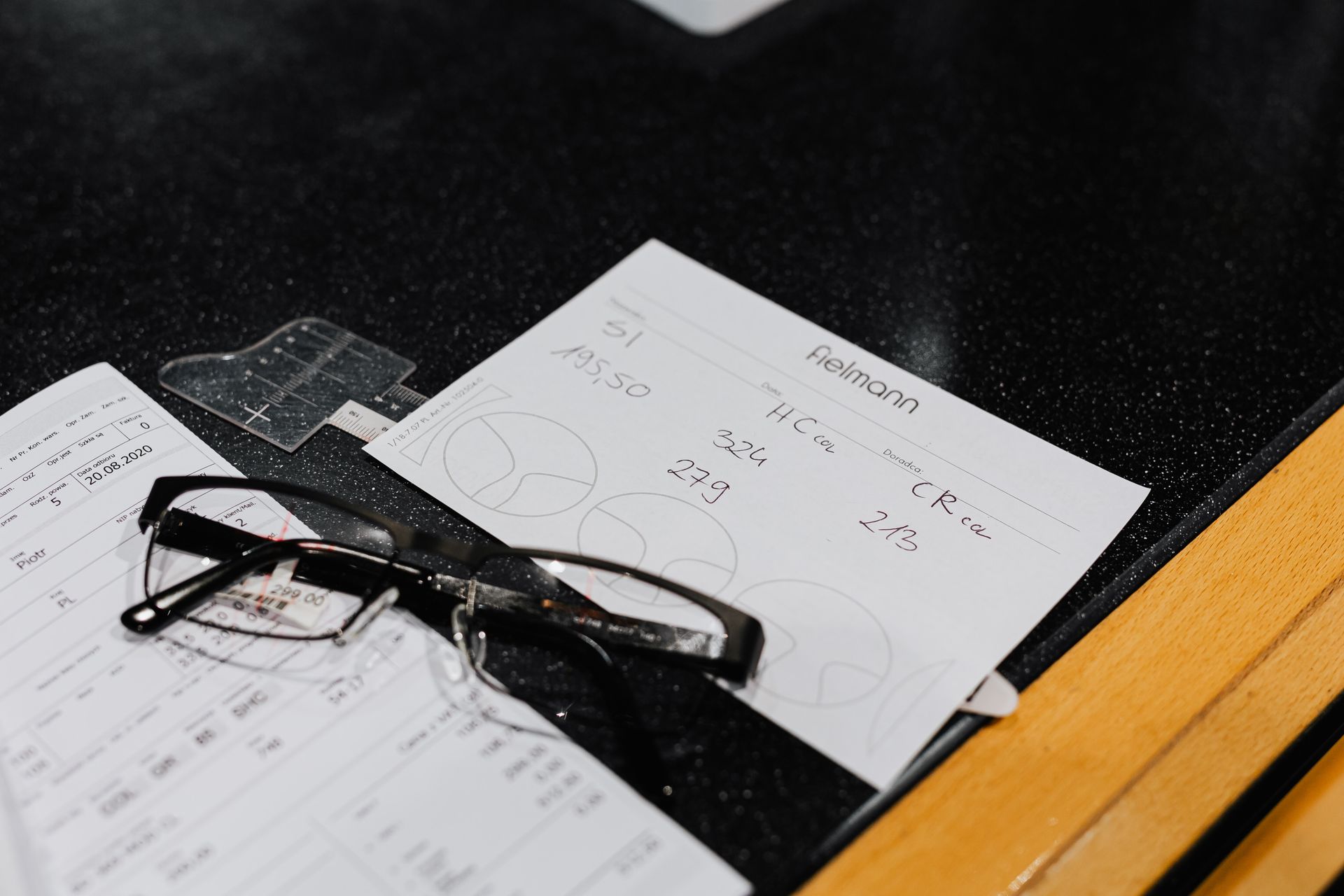
Your sphere and cylinder values tell you how much correction you need, and a large change in either value is a sign that your eyes have changed. If your sphere changes by more than 0.50 dioptres in a year, ask your optician or ophthalmologist why, especially if you have diabetes or high blood pressure. If your axis changes, ask whether the astigmatism is stable. These are not licence questions, but they are health questions, and they are worth asking. The eye test is, for many people, the only regular contact they have with an eye professional, and it is a good chance to ask.
For the official legal text behind the rules in this article, see the German driving licence regulation (Fahrerlaubnis-Verordnung).
Eye test certificate values are easier to read once you know the words. Eye test certificate checks take only a moment at the optician. Eye test certificate copies should be kept safe until your licence arrives.
Frequently Asked Questions
What is Visus on my eye test certificate?
Visus is your visual acuity, the sharpness of your vision. A value of 1.0 is normal, and 0.7 is the minimum for a car driving licence in Germany, with both eyes together, with or without glasses or contact lenses. Your certificate shows the value for each eye and for both eyes together.
Is my eye test certificate the same as my glasses prescription?
No. The eye test certificate states whether you passed the driving licence eye test, with your visual acuity and a note about glasses or contact lenses. A glasses prescription lists the lens strength for each eye, including sphere, cylinder, axis, addition, and pupillary distance, and it is used to make your glasses.
How long is my eye test certificate valid?
Your certificate is valid for two years from the date of the test. If your driving course and licence application take longer than two years, you will need a new test before the licence office can process your application.
What does code 01.01 on my driving licence mean?
Code 01.01 means that you must wear glasses while driving, because you wore glasses during the eye test. Code 01.02 means contact lenses, and 01.06 means glasses or contact lenses. Driving without the required visual aid is an offence.
What should I do if a value on my certificate looks wrong?
Go back to the optician on the same day if you can, and ask for the certificate to be checked and corrected. A corrected certificate must be signed and stamped again. Do not try to correct it yourself, and do not submit a certificate with a mistake to the licence office.
Conclusion
Eye test certificate values are not a mystery once you know the words to look for. Visus tells you how sharp your vision is, and 0.7 with both eyes together is the pass mark for a car licence in Germany. Right eye, left eye, and both eyes together are the three numbers that decide whether you pass. Sphere, cylinder, axis, addition, and pupillary distance belong to your glasses prescription, not to your certificate, and they tell the optician how to make your lenses. The date on the certificate matters too, because it is valid for two years, and the signature and stamp make it official. Check your certificate before you leave the optician, take a photo of it as a backup, and keep the original safe until your licence application is complete. If you understand your values, you can be confident about the next step, and you will drive in Germany knowing exactly what your eyes can do.