Eye Test After Eye Surgery (LASIK and Cataracts): What to Know

Laser eye surgery and cataract surgery can change your vision more in a few weeks than glasses ever could. If you had LASIK a few months ago, or you have just had a cataract removed and a new lens fitted, it is natural to wonder what this means for the driving licence eye test. The eye test after eye surgery is the same standard test every learner takes, but the timing matters, and so does what you tell the tester about your operation.
This guide explains how LASIK and cataract surgery affect the eye test for a German driving licence, how long you should wait after surgery before you take the test, and what happens if you now pass without glasses or still need them. It also explains when the licensing authority needs extra paperwork and when a short visit to your eye doctor is the sensible step before you book the test.
The Eye Test After Eye Surgery: What Changes
The driving licence eye test measures what your eyes can do on the day of the test, not what they could do before your operation. The tester checks your visual acuity with both eyes together, your visual field and your colour vision, and the result decides whether you meet the legal minimum for driving. A successful operation does not give you a free pass, and a recent operation does not automatically mean you will fail. The result depends on how well your eyes have healed and how stable your vision has become.
For many people, surgery improves the result a great deal. After LASIK, the cornea has been reshaped so that light focuses correctly on the retina, and many patients can read the smaller lines on the chart without glasses for the first time in years. After cataract surgery, the cloudy natural lens has been replaced with a clear artificial lens, and distance vision often becomes sharper, brighter and clearer. In both cases, the eye test may be easier than it was before the operation, and the glasses entry on the licence may no longer be needed.
What changes is the timing and the paperwork. Your eyes need time to heal, and your prescription can shift during the first weeks after surgery. Taking the test too early can produce a result that does not last, and if your vision is still changing, glasses fitted in that period may be wrong within weeks. That is why eye doctors advise waiting until your vision has settled before you take the official test, and why you should bring your post-operative reports if you have them.
LASIK and the Driving Licence Eye Test
LASIK, which stands for laser-assisted in situ keratomileusis, reshapes the cornea to correct short-sightedness, long-sightedness and astigmatism. Most patients notice clearer vision within a day or two, but the cornea continues to heal for several weeks, and small changes in vision are common during that time. Dry eyes, glare and halos around lights at night are also common in the early weeks, and they usually improve as healing continues.
For the eye test, the practical rule is simple: wait until your surgeon says your vision is stable. For most people, that is around four to six weeks after LASIK, although it can be longer if your prescription was strong or if healing is slow. Taking the test before that point risks an unreliable result, and if you pass the test while your vision is still changing, the result might not reflect your long-term eyesight. Your surgeon will confirm when your refraction has settled, usually at a follow-up visit a month after the operation.
If you pass the test without glasses after LASIK, no glasses entry is made on your licence, and you can drive without correction. That is one of the main benefits of the surgery for drivers. Keep in mind, however, that LASIK does not stop normal age-related changes, so you may still need reading glasses later in life. That is a separate matter from the driving licence test, which only checks your distance vision, your visual field and your colour vision.
Cataract Surgery and the Eye Test
Cataract surgery is one of the most common operations in the world. The cloudy lens inside the eye is removed and replaced with a clear artificial lens, known as an intraocular lens. Distance vision usually improves quickly, often within days, and colours can look brighter because the yellowed cataract no longer filters the light. Many people who have the operation are surprised by how much clearer the world looks afterwards.
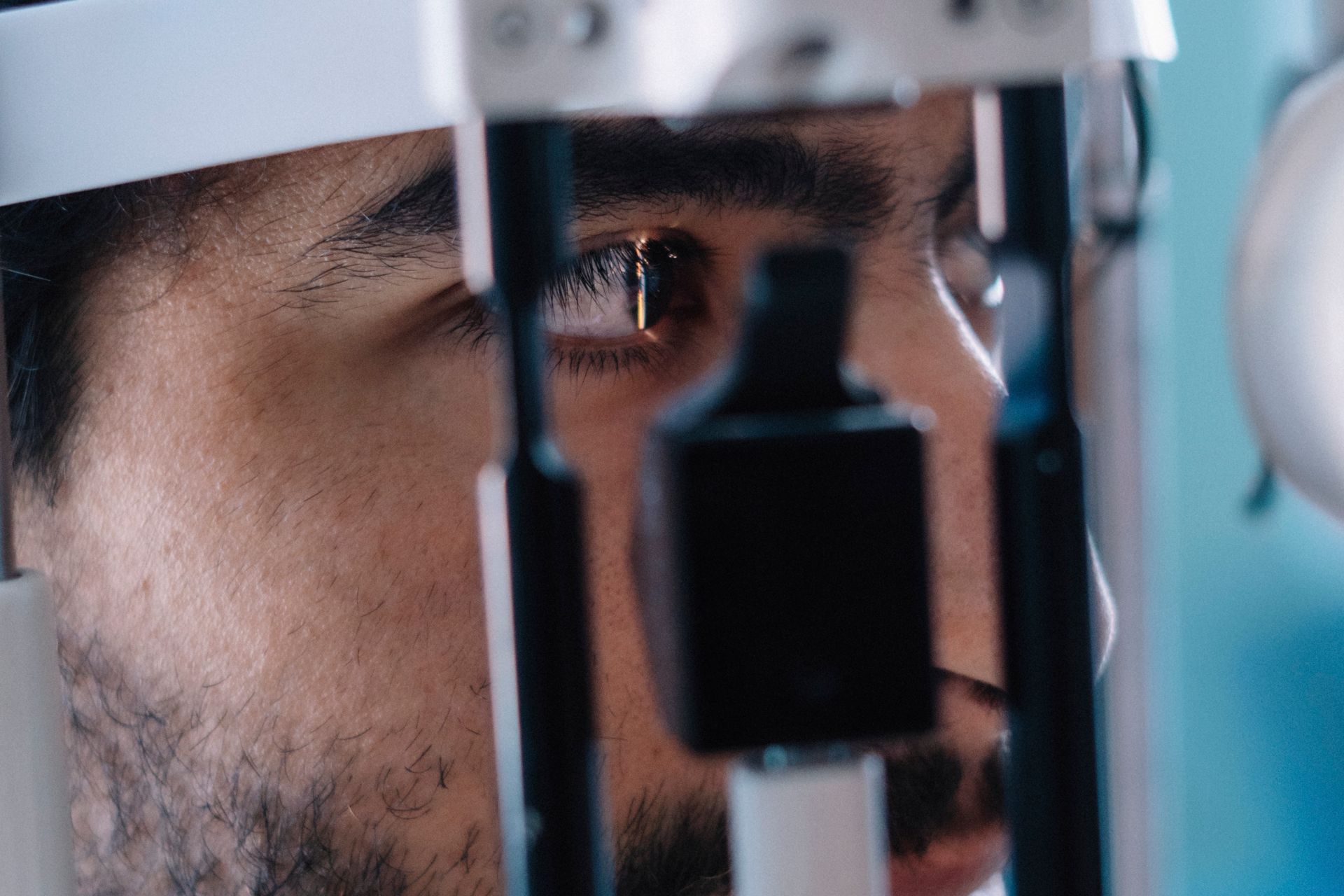
For the eye test, the same timing rule applies as after LASIK: wait until the eye has healed and your vision is stable. That is usually four to six weeks after the operation, when the eye doctor measures your new prescription and checks that the lens has settled into place. Some people need new glasses even after cataract surgery, for example for reading, for astigmatism, or because the artificial lens was chosen for distance vision only. If you need glasses for driving, you take the test wearing them, and the usual code is entered on your licence.
If you are having cataract surgery on both eyes, the two operations are usually a few weeks apart. Wait until both eyes have been operated on and both have healed before taking the eye test, because the test measures both eyes together and your vision will keep changing between the two operations. Your eye doctor can tell you the right date, and that is a good moment to ask whether you will need glasses for driving at all.
How Long Should You Wait After Surgery?
As a rule of thumb, wait four to six weeks after LASIK or cataract surgery before taking the driving licence eye test. That is the period most eye doctors use before they measure a final prescription, and it is the period after which most people have stable vision. If your healing is slower than average, your surgeon may ask you to wait longer, and it is worth following that advice rather than rushing to book the test.
There are also practical reasons to wait. In the first weeks after surgery, you may be using eye drops several times a day, and your eyes may feel dry or sensitive to bright light. Reading the smaller lines on a chart under bright examination light can be harder when your eyes are still irritated. After a few more weeks, the drops are usually finished, the surface of the eye has calmed down, and the test result is much more likely to reflect your everyday vision.
Do not let the waiting time hold up the rest of your licence training. You can start your theory course and your first aid course while you are waiting, and you can even start practical lessons in some cases, but the licence application itself needs the eye test certificate. A good plan is to book the eye test for a week after your surgeon confirms your vision is stable, so that the certificate is ready when your school sends the application.
Glasses, Contact Lenses and the Code on Your Licence
After surgery, there are three possible results. The first is that you pass without any correction, and no code is added to your licence. The second is that you still need glasses or contact lenses for driving, and the code 01.01 for glasses or 01.02 for contact lenses is entered. The third is that you pass with glasses for one eye only, or with a correction that works differently for distance and near vision, and the tester notes exactly what applies.
If you already have a licence with a glasses code and you no longer need glasses after surgery, you can ask for the code to be removed. That usually requires a new eye test or a report from your eye doctor, and the licensing authority updates the licence on the basis of that evidence. Do not simply stop wearing glasses while the code is still on your licence, because the code is a legal condition of your licence and driving without the required correction can be treated as driving without a valid licence.
Contact lenses are usually fine after LASIK or cataract surgery, once the eye has healed, but check with your surgeon before you wear them again. Some surgeons ask patients to avoid contact lenses for a few weeks after the operation. If you take the test wearing contact lenses, the tester will note that, and the same code will be entered as for any lens wearer. Our guide to visual acuity 0.7 explains the minimum standard in detail and what the numbers on the chart mean.
What to Tell the Tester and the Licensing Authority
Tell the tester that you have had eye surgery, which eye was operated on and how long ago it was. Bring your discharge letter or the report from your surgeon if you have it, and tell the tester if you are still using eye drops. This is not a trick question and it will not make you fail. The tester needs the information to judge whether your result is reliable, and to decide whether a fuller examination by an eye doctor would be better than the standard test.
In most cases, the standard eye test certificate is enough and the licensing authority does not need to know about the surgery in detail. The certificate simply states that you meet the vision standard. If the test result is borderline, or if the tester finds something that needs a doctor opinion, the authority may ask for a report from an ophthalmologist. That is a normal step and it does not mean your licence has been refused. The eye doctor report usually covers visual acuity, visual field, eye movements and any condition that could affect driving, and it is used to decide whether any conditions should be added to your licence.
Professional drivers should be more careful here than car drivers. If you drive a lorry or a bus, the medical examination is more detailed and the vision standards are stricter. After eye surgery, a professional driver should always check the result with the doctor who carries out the occupational medical examination, and should not rely on the standard car eye test alone.
If You Do Not Pass After Surgery
If you do not pass the test after surgery, the most likely reason is that your vision has not stabilised yet or that you still need a correction that has not been fitted. The first step is to ask your eye doctor when your vision is expected to settle and to have a refraction measured at that visit. In many cases, a new pair of glasses solves the problem and you pass the repeat test without difficulty.
If glasses do not bring you to the required standard, the eye doctor will look for the cause. That could be a remaining refractive error, a problem with the artificial lens, or an unrelated condition such as a change in the retina. The doctor can then explain whether a further treatment is possible, whether a different correction would help, or whether a more detailed examination is needed before the licensing authority can decide. While that sounds serious, most people who fail after surgery fail because of timing or because of a simple prescription that has not yet been corrected.
Do not book the test again immediately after a failure. Wait until your eye doctor has checked your eyes and fitted any correction you need, then take the test again in good light and when you are rested. For more on your options when the result is disappointing, see our article on the eye test at the ophthalmologist, which also covers costs and when a doctor report is needed.
Conclusion
An eye test after eye surgery is the same test every learner takes, but it should be taken at the right time. Wait until your surgeon confirms that your vision is stable, usually four to six weeks after LASIK or cataract surgery, tell the tester about the operation, and take the test with the correction you will actually use for driving. Most people pass once their eyes have settled, and many no longer need glasses at all. If you do still need them, the usual code is entered on your licence and you drive safely with the correction that suits your new eyesight.
Frequently Asked Questions
When can I take the eye test after LASIK?
Most surgeons advise waiting four to six weeks after LASIK, until your vision is stable. Your surgeon will confirm the right date at a follow-up visit, when your final refraction is measured. Taking the test earlier risks a result that does not last.
When can I take the eye test after cataract surgery?
Wait four to six weeks after the operation, and until both eyes have been operated on if both need surgery. Your eye doctor will measure your new prescription and confirm that the artificial lens has settled before you book the test.
Do I still need glasses for the eye test after surgery?
Many people pass without glasses after LASIK or cataract surgery, but some still need them, for example for astigmatism or for reading. If you need glasses for driving, take the test wearing them, and the code 01.01 will be entered on your licence.
Do I have to tell the tester about my surgery?
Yes, tell the tester which operation you had and when. Bring your discharge letter or surgeon report if you can. It does not make you fail; it helps the tester judge whether your result is reliable.
Can the glasses code be removed from my licence after surgery?
Yes, if a new eye test or a report from your eye doctor shows that you now meet the standard without correction, the licensing authority can remove the code. Do not drive without glasses while the code is still on your licence.
What if I fail the eye test after surgery?
See your eye doctor first. The usual cause is that your vision has not stabilised or that you need a new prescription. Once your doctor has checked your eyes and fitted any correction, take the test again. Most people pass on the second attempt.