Daily and Monthly Contact Lenses and the Eye Test: What to Know

If you wear contact lenses, the driving licence eye test looks a little different from the test a glasses wearer takes. You will take the test with your lenses in, the tester will note which kind of lenses you use, and the result will decide what is written on your licence. Daily and monthly contact lenses both work for the test, but they behave differently, and the type you wear affects how you should prepare for the day.
This guide explains the contact lenses eye test in detail: how daily and monthly lenses differ, what to wear on test day, what to do if your eyes feel dry, and whether lenses or glasses are better for the test. It also covers what happens to your licence afterwards, and when the tester might ask you to repeat the test with glasses instead.
Contact Lenses Eye Test: The Basics
The driving licence eye test is the same test for lens wearers as for everyone else. The tester checks your visual acuity with both eyes together, your visual field and your colour vision, and your vision must reach at least 0.7 with both eyes together for a car licence. The only difference is the correction: instead of glasses, you wear your contact lenses, and if you pass, the code 01.02 is entered on your licence, which means you must wear contact lenses, or glasses of the same power, whenever you drive.
That code is important. It does not force you to wear contact lenses for the rest of your life. It only says that you need a correction of that strength when you drive. Many lens wearers also own glasses with the same prescription, and they can switch between lenses and glasses as they like, as long as the correction is the same. What you cannot do is drive without any correction, so if you take your lenses out, put your glasses on.
Before the test, the tester will ask which kind of lenses you wear, how often you replace them, and whether your eyes feel comfortable. Daily lenses, monthly lenses and hard lenses all behave differently, and the tester wants to know whether your vision on the day is typical for you. If your eyes are irritated on the day, say so before the test starts, because a tired or dry eye can read a line less than a comfortable one.
Daily Lenses and the Eye Test
Daily lenses, also called daily disposables, are worn for one day and then thrown away. They arrive in a fresh blister pack each morning, so the lens you wear is always new, clean and thin. For the eye test, that is an advantage. A fresh lens is less likely to carry deposits, and it usually gives you the sharpest vision your prescription can offer.
The preparation for the test is simple with daily lenses. Put in a fresh pair in the morning, as you normally would, and take a spare pair in your bag. If a lens feels uncomfortable, take it out, throw it away and put in the spare. Do not try to take the test with a lens that is scratching your eye, because you will blink, your vision will blur, and the result will not reflect your normal eyesight.
One thing to watch with daily lenses is that they can dry out in a warm room or after long screen work. If your eyes feel dry on the way to the test, blink slowly a few times and look away from your phone for a minute. Do not use a wetting drop straight before the test unless you know the brand and have used it before, because a drop can leave a film on the lens that blurs the chart for a few minutes.
Monthly Lenses and the Eye Test
Monthly lenses are worn for up to thirty days, and they need to be cleaned and stored in solution each night. They are thicker than daily lenses, which can make them more comfortable for some people, and they are more economical if you wear lenses every day. For the eye test, the important question is where in the monthly cycle you are.
A monthly lens in its first week usually performs as well as a daily lens. A monthly lens in its last days, however, can carry protein deposits and feel less comfortable, and that can make your vision slightly less sharp. If your test falls on the last day of a monthly cycle, it is worth opening a fresh pair for the test. The cost is small, and a fresh lens gives you the best chance of a clean result.
Cleaning also matters. If you are the kind of person who sometimes skips the cleaning step or tops up old solution instead of using fresh solution, the week of the test is a good time to be careful. A clean lens sees better and feels better. Bring your lens case and a small bottle of solution in your bag, in case a lens needs to be taken out and put back in during the day.
What to Wear on Test Day
Wear the lenses you normally use, and wear them in the normal way. If you usually wear daily lenses, put in a fresh pair in the morning. If you wear monthly lenses, use the pair you are currently wearing, unless it is at the very end of its cycle. Do not try a new brand or a new power for the first time on test day, because a lens that does not fit perfectly can blur the chart and give you a worse result than you deserve.
Bring your glasses with you as well, even if you plan to take the test with lenses. If a lens tears or falls out on the way to the test, you can put your glasses on and still take the test. Also bring the packaging from your lens box, or know your prescription by heart. The tester may ask for the exact power of your lenses, and having it written down saves time. Our article on contact lenses in the eye test covers the same question from the tester point of view, including what happens if you arrive with lenses in.
One more tip: do not wear coloured or cosmetic lenses to the test. Decorative lenses that change the colour of your eyes can affect your vision and the colour vision screening, and they are not suitable for a driving licence test. If you wear them socially, put in your normal clear lenses before the test and save the coloured ones for another day.
Dry Eyes, Irritation and Other Problems
Dry eyes are the most common problem lens wearers face at the eye test. The examination room is often warm, the air may be dry, and you may be nervous and blinking less than usual. If your eyes feel dry, the test result may not show your best vision. The best fix is prevention: keep your eyes moist in the days before the test by drinking water, taking screen breaks and getting enough sleep.
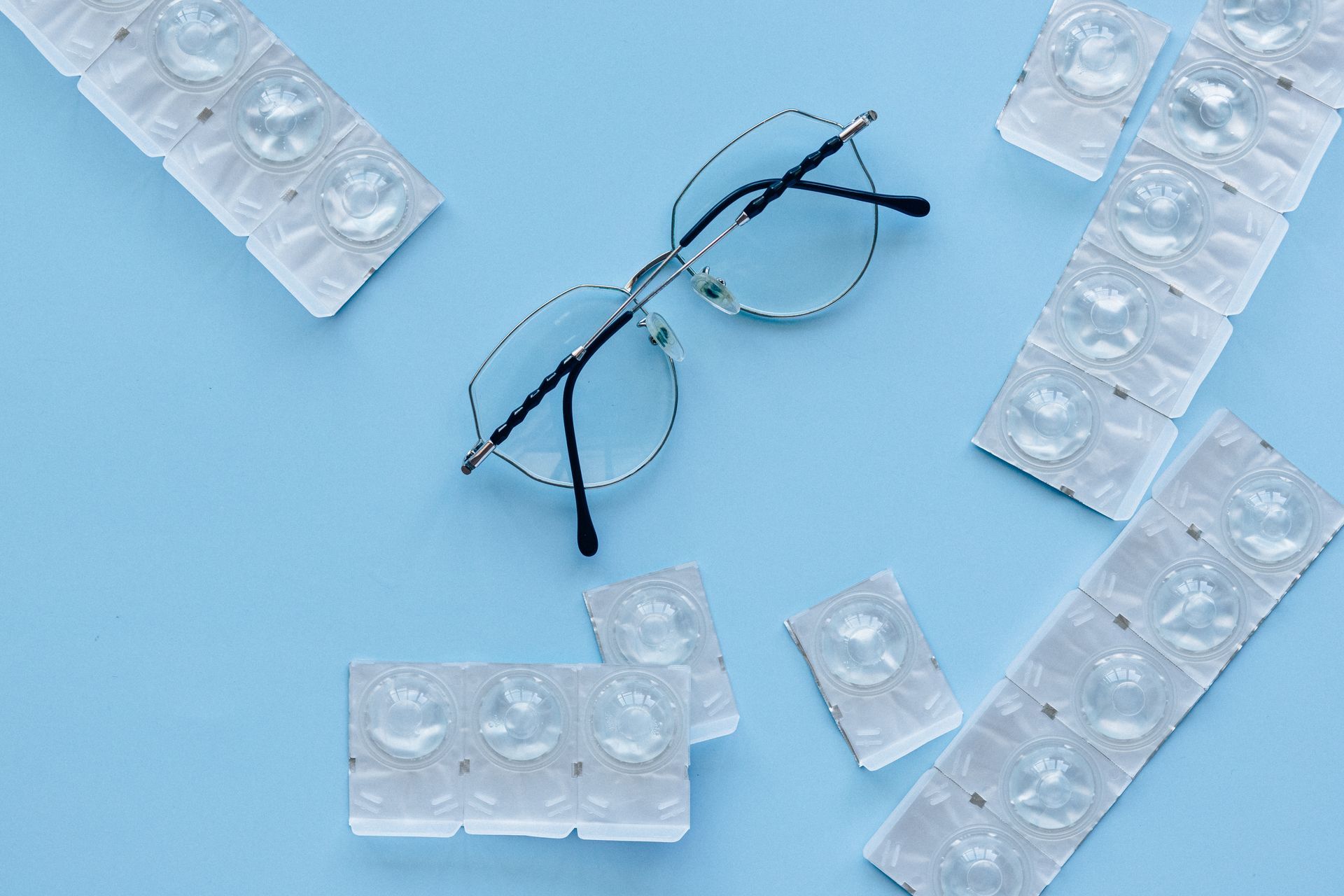
If a lens feels irritated on the day, do not rub your eye. Take the lens out, rinse it with fresh solution if it is a monthly lens, or replace it with a spare if it is a daily lens. If the irritation does not go away, or if your eye is red and painful, tell the tester and consider coming back another day. A red, painful eye is not a normal test condition, and it may be a sign of an infection or a scratched lens, which needs to be checked by an eye doctor, not by an optician doing a driving test.
Allergy season can also cause problems, because pollen makes eyes water and itch, and that blurs the chart. If you have seasonal allergies, take your usual allergy medicine before the test and avoid rubbing your eyes. If your eyes are very irritated on the day, it is better to wait a few days than to take a test that does not show your true vision.
Lenses or Glasses: Which Is Better for the Test?
There is no rule that says lenses are better than glasses for the eye test, or the other way round. Both correct your vision to the same prescription, and the chart measures the result, not the method. Many people see slightly better with lenses, because lenses sit directly on the eye and give a wider field of vision than glasses frames. Others see better with glasses, because their lenses are more stable.
The honest answer is to take the test with the correction you use most often and feel most comfortable in. That is the correction you will drive with, and it is the one your licence code should reflect. If you split your time between lenses and glasses, choose the one you have been using in the last few days, so that your eyes are used to it. Our comparison of contact lenses versus glasses in the eye test explains the advantages of each option in more detail.
One thing the tester may check is your vision without the correction, to record both values. That is normal, and it does not affect your licence. The important result is the corrected one, because that is what decides your code. If you are unsure which correction to use, bring both to the test and ask the tester. Most opticians are happy to test you with lenses first, and then quickly with glasses if you need a comparison.
After the Test: Keeping the Right Record
If you pass with contact lenses, the certificate will say so, and the code 01.02 is entered on your licence. That means you must wear lenses, or glasses with the same power, when you drive. Keep your lens prescription up to date, and make sure your glasses match the same power, so that you can switch without worry. If your prescription changes, you do not need a new licence, but you do need to wear the new correction when you drive.
If you do not pass with your lenses, the tester will usually ask whether your lenses are the right power, and may suggest that you have your eyes measured again. Sometimes a small change in prescription is enough, and sometimes the problem is that the lens is old or dirty. In either case, the fix is a short visit to the optician, not a failure of your licence dreams. Most lens wearers pass easily once the prescription is right.
Keep the certificate with your other licence documents, and take a photo of it. The certificate is valid for two years, so a test taken at the start of your training usually stays valid until your practical test. If your training takes longer than two years, you will need a new test, and you should take it with the lenses and glasses you will use at that point.
Choosing Between Daily and Monthly Lenses for Driving
The choice between daily and monthly lenses is mostly about lifestyle, but driving adds a few points to consider. Daily lenses are a fresh pair every morning, so the lens is always clean and the vision is at its sharpest. Monthly lenses need cleaning every night, and the lens can lose a little sharpness as the month goes on, which matters more for night driving than for a short trip to the shops.
If you drive long distances or at night, daily lenses are often the better choice, because a clean lens gives the clearest view of the road and the least glare from oncoming headlights. Monthly lenses are cheaper if you wear them every day, and they can be more comfortable for some people, but they need a strict cleaning routine, and a lens that is not cleaned properly can irritate the eye and blur the view.
A practical approach is to keep both: monthly lenses for everyday use, and a box of daily lenses in the car for long drives or night drives. That way you always have a fresh pair when the driving matters most. Whichever you choose, tell the tester which type you wear, and bring the box with you to the test, so that the tester has the strength of the lenses if they need it.
Conclusion
Daily and monthly contact lenses are both fine for the driving licence eye test, as long as they are clean, comfortable and give you sharp vision. Wear a fresh pair on test day, bring a spare and your glasses as backup, and tell the tester if your eyes feel dry or irritated. If you pass with lenses, the code 01.02 goes on your licence, and you can drive with lenses or with glasses of the same power. With a little preparation, the test is quick and straightforward, whichever kind of lens you use.
Frequently Asked Questions
Can I take the eye test with contact lenses?
Yes, you take the test with your lenses in, and the code 01.02 is entered on your licence if you pass. That means you must wear lenses or glasses of the same power when you drive. Bring your glasses as a backup in case a lens tears.
Are daily or monthly lenses better for the test?
Both are fine. Daily lenses are fresh every morning, which is an advantage on test day. Monthly lenses are fine too, but use a fresh pair on the day if your current pair is at the end of its monthly cycle.
What if my eyes feel dry during the test?
Tell the tester before the test starts. Blink slowly a few times, look away from the chart for a moment, and let your eyes recover. Do not use a wetting drop just before the test unless you know it well, because it can blur the chart.
Can I wear coloured contact lenses for the eye test?
No, wear your normal clear lenses for the test. Coloured or cosmetic lenses can affect your vision and the colour vision screening, and they are not suitable for a driving licence test.
Do I need glasses as well as lenses?
You do not need them for the test, but you should own a pair of glasses with the same prescription. If a lens tears or your eyes are irritated, you can still take the test and drive safely with your glasses.
What if I fail the test with my lenses?
Ask the optician to measure your eyes again. The usual cause is an outdated prescription or an old, dirty lens. With a fresh prescription and clean lenses, most people pass on the second attempt.