Eye Test for Motorhome and Campervan Drivers (Class C1)

Introduction
Eye test for motorhome and campervan drivers is an important step for anyone who wants to drive a larger motorhome in Germany, because the licence you need depends on the weight of the vehicle, and the eye test depends on the licence. Many motorhomes and campervans in Germany are under 3.5 tonnes, so they can be driven with a normal car licence, class B, and the eye test for motorhome drivers is the standard Sehtest. But a larger motorhome, from 3.5 tonnes to 7.5 tonnes, needs a class C1 licence, and the eye test for motorhome and campervan drivers is stricter for that class. This guide explains which licence you need, which eye test for motorhome drivers applies to your vehicle, and how to pass the test.
Eye test for motorhome and campervan drivers matters because a motorhome is bigger, heavier, and harder to stop than a car, and it often carries a family and a lot of equipment. A motorhome driver must see road signs early, must judge distances when overtaking and parking, and must drive safely on motorways and on narrow country roads. The German rules say that a C1 driver must have better eyesight than a car driver, and the medical check for C1 is more detailed. That is the reason why the eye test for motorhome drivers is not the same for every motorhome in Germany.
In this article, you will learn which motorhome can be driven with a car licence and which needs a C1 licence, how the eye test for motorhome and campervan drivers works for each class, what visual acuity you need, how much it costs, and how often the test has to be repeated. You will also find practical advice on preparing for the test, on what happens if you fail, and on the special rules for older motorhome drivers, for motorhome hire, and for driving a motorhome abroad. By the end, you will know exactly what you need to drive your motorhome legally and safely in Germany.
eye.
Which Motorhome Needs Which Licence?
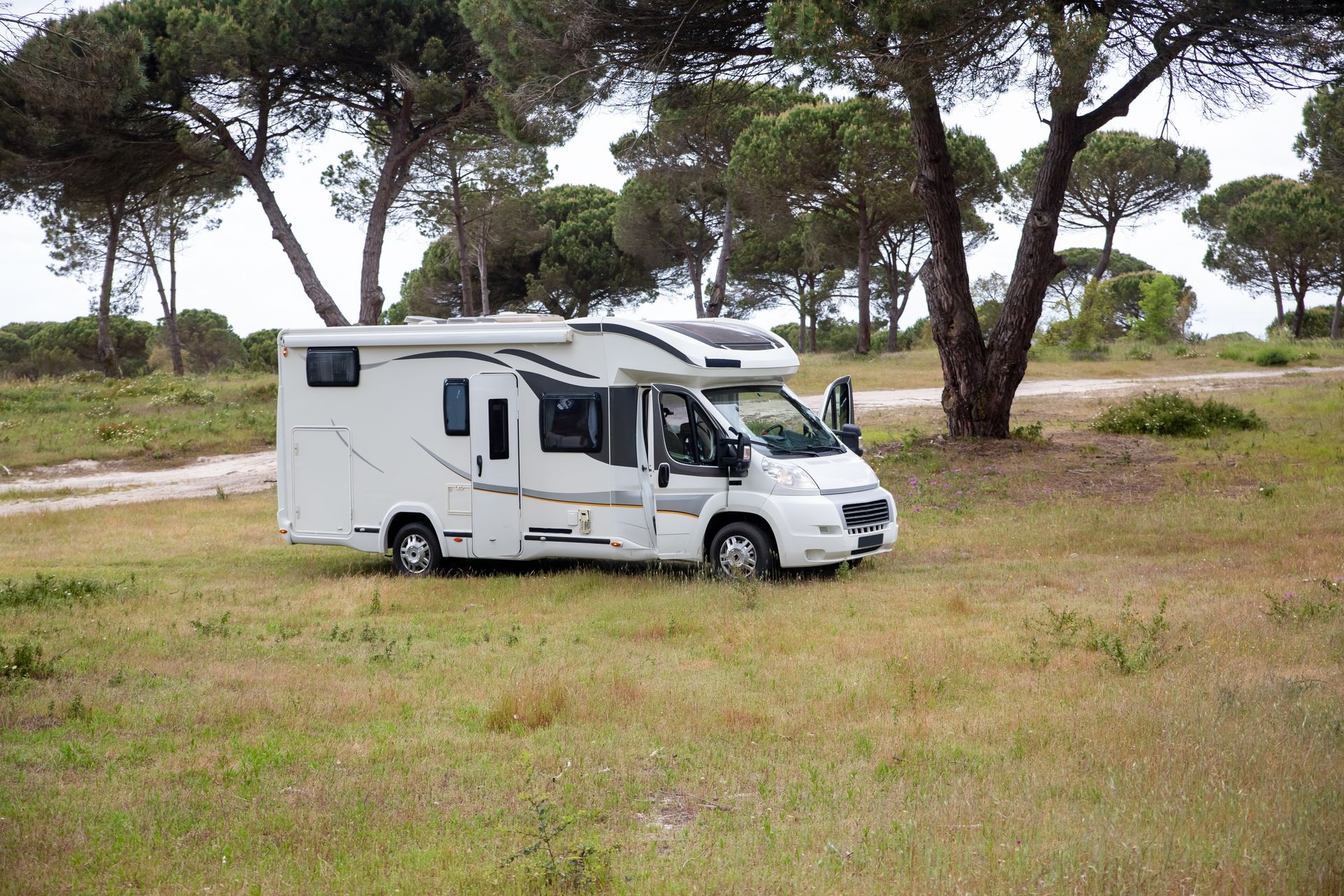
Eye test for motorhome and campervan drivers depends on the weight of the vehicle, which is shown in the vehicle papers as the permitted total weight, the zulaessiges Gesamtgewicht. A motorhome up to 3.5 tonnes can be driven with a car licence, class B, and the eye test for motorhome drivers is the standard test, with a visual acuity of at least 0.7 with both eyes together, with or without glasses or contact lenses. Most campervans and small motorhomes in Germany are built to be under 3.5 tonnes, because that is the limit for a car licence, and many buyers choose a lighter motorhome for that reason alone.
Eye test for motorhome and campervan drivers for a vehicle from 3.5 to 7.5 tonnes needs a class C1 licence. The C1 licence is a professional licence, and the medical examination is more detailed. The visual acuity must be at least 0.8 in the better eye and 0.1 in the worse eye, a normal visual field is needed in both eyes, and the doctor will check your general health, including blood pressure, diabetes, and heart disease. The C1 licence is valid for five years, and it must be renewed with a new medical examination and eye test, and after the age of 50, the renewal is every five years, with a medical check each time.
Eye test for motorhome and campervan drivers for a vehicle over 7.5 tonnes needs a class C licence, which is the full lorry licence, and the rules are the same as for a lorry driver. Most motorhomes are not that heavy, but some large luxury motorhomes are over 7.5 tonnes, and they need a C licence, a medical examination, and a professional driver qualification in some cases. If you are not sure which licence your motorhome needs, check the vehicle papers for the permitted total weight, and ask the driving licence office. The weight rule in Germany is strict, and driving a vehicle that is too heavy for your licence is an offence.
Eye Test for Motorhome and Campervan Drivers: Class B
Eye test for motorhome drivers with a car licence, class B, is the standard Sehtest. You go to an optician, an ophthalmologist, or a doctor at a technical inspection centre, bring your identity card or passport, and read letters or numbers from an eye chart, first with one eye covered, then with the other, and then with both eyes together. The test includes a visual field check, and the result is a visual acuity value, called Visus, which must be at least 0.7 with both eyes together, with or without a visual aid. The fee is between 6.43 and 15 euros, and many large optician chains do the test for free.
The eye test for motorhome drivers for class B produces the Sehtest-Bescheinigung, which is valid for two years and is taken to the driving licence office with the application. If you already hold a German car licence, you do not need a new eye test to drive a motorhome under 3.5 tonnes, because your licence says that you passed the test. Eye test for motorhome drivers is only needed when you are applying for a new class or when you are renewing a professional licence. And if you wear glasses, the test is done with them on, and your licence will carry a glasses condition, which applies to the motorhome as well as to your car.
The Class C1 Test in Detail
Eye test for motorhome and campervan drivers for class C1 is part of a medical examination, and it is done by an ophthalmologist or by a doctor at a technical inspection centre, such as the TueV or Dekra, or by an occupational health doctor. The examination includes a visual acuity test, a visual field test, a colour vision test, and a check of the health of your eyes, including the lens, the retina, and the eye pressure. It also includes a general health check, including hearing, blood pressure, and diabetes. The examination usually takes between 30 and 60 minutes, and it costs between 100 and 250 euros, depending on the doctor.
Eye test for motorhome drivers for class C1 is not a screening test at an optician, and a certificate from an optician is not enough. If you go to an optician and ask for the C1 test, you will be sent to a doctor, and you will have wasted a visit. Book the medical examination first, bring your identity card, your driving licence, your glasses and your prescription, and any medical reports about your eyes. Tell the doctor if you have diabetes or high blood pressure, because that information helps the doctor to write a clear report, and the licence office will decide on the basis of that report.
What to Expect on the Road in a Motorhome
Eye test for motorhome drivers is not only a legal requirement, it is also a practical matter. A motorhome is longer, wider, and taller than a car, and it has a larger blind spot. The mirrors are more important, and the driver must check them before every lane change. Parking a motorhome takes more space, and the driver must judge the height of a bridge and the width of a narrow street. Good eyesight is essential for all of that, and a driver who cannot see well enough to judge the size of the vehicle is a risk on the road.
The eye test for lorry and bus drivers page on this site explains the Group 2 rules that apply to C1 and C licences in detail, and the eye test for a driving licence page explains the standard test for a car licence. If your motorhome is under 3.5 tonnes, the car licence page is the one to read first, and if it is heavier, the lorry and bus page is more relevant, because the C1 rules are the same as the lorry rules.
What Happens If You Fail the Eye Test
Eye test for motorhome drivers can be failed, and the most common reasons are a wrong glasses prescription, tired eyes, and a dirty lens. If you fail the class B test, a new pair of glasses is often enough, and you can repeat the test at any optician after a few days. If you fail the class C1 medical examination, the doctor will explain whether the problem is a cataract, a retinal disease, or a narrowed visual field, and whether it can be treated. In most cases, treatment or a new prescription is enough, and you can repeat the medical examination after the problem is fixed.
If the problem cannot be fixed, the licence office can issue a C1 licence with restrictions, for example a licence that requires you to wear glasses, or it can refuse the C1 licence, in which case you can still drive a motorhome under 3.5 tonnes with your car licence. That is a good compromise for many drivers, because a smaller motorhome can be driven with a car licence, and it is easier to handle on the road. Do not try to drive a motorhome that is too heavy for your licence, because the insurance will not cover you if you have an accident.
Motorhome Hire and the Eye Test: What Renters Should Know
Eye test for motorhome drivers is just as important when you hire a motorhome as when you own one, because the hire company will check your driving licence before you can take the vehicle, and it will check the class, the weight, and the conditions on the licence. Eye test for motorhome drivers matters here, because if your licence has a glasses condition, you must wear your glasses when you drive the hire vehicle, and if your licence is a C1 licence, you must be able to show that you passed the medical examination and the eye test for the C1 class. Most hire companies in Germany offer motorhomes under 3.5 tonnes, so that a driver with a car licence can hire one, and the eye test for motorhome drivers is the standard test for those vehicles.
Eye test for motorhome and campervan drivers is also a question of insurance. If you drive a motorhome that is too heavy for your licence, the insurance will not cover you, and the hire company will refuse to let you take the vehicle. Eye test for motorhome drivers should be taken before you book, so that you know which class you hold, and so that you can choose a motorhome that fits your licence. The vehicle papers of the hire motorhome will show the permitted total weight, and if it is over 3.5 tonnes, you need a C1 licence, and a new eye test for the medical examination, and the hire company will ask to see it.
Eye test for motorhome drivers who hire a campervan for the first time should also think about the practical side of driving a large vehicle. A motorhome is longer, wider, and taller than a car, and it has a larger blind spot, and the driver must check the mirrors before every lane change. Eye test for motorhome drivers is a legal test, but it is also a reminder to take your time, to plan your route, and to avoid narrow streets and low bridges. A first-time motorhome driver should practise parking the vehicle in an empty car park before driving on a busy road, and should ask the hire company for a short introduction to the vehicle.
Eye test for motorhome drivers is not the only thing to plan when you hire a motorhome for a holiday in Germany or in Europe. You will need to check whether your licence is valid in the countries you are travelling to, whether your insurance covers driving abroad, and whether the motorhome has the right equipment for the season. Eye test for motorhome and campervan drivers is one document, and the rest of the preparation is about the vehicle and the
journey, and it is worth doing it in good time, so that you can enjoy your motorhome holiday, safely and legally.
Frequently Asked Questions
Do I need a special eye test for a motorhome?
Eye test for motorhome and campervan drivers depends on the weight. A motorhome up to 3.5 tonnes needs the standard eye test, with a visual acuity of 0.7. A motorhome from 3.5 to 7.5 tonnes needs a class C1 licence and a medical examination, with a visual acuity of at least 0.8 in the better eye.
How much does the eye test for a motorhome cost?
Eye test for motorhome drivers for class B costs between 6.43 and 15 euros at an optician, and it is often free. The medical examination for class C1 costs more, usually between 100 and 250 euros, and it must be repeated every five years.
Can I drive a motorhome with my car licence?
Yes, if the motorhome is up to 3.5 tonnes. Eye test for motorhome drivers in that case is the standard test you already passed for your car licence. If the motorhome is heavier, you need a C1 licence and a new eye test.
Does the C1 licence need to be renewed?
Yes. A C1 licence is valid for five years, and it must be renewed with a new medical examination and eye test. After the age of 50, the renewal is also every five years, with a medical check each time.
Can I hire a motorhome without a C1 licence?
It depends on the motorhome. Most hire companies offer motorhomes under 3.5 tonnes, so that a driver with a car licence can hire one. A larger motorhome will require a C1 licence, and the hire company will check it before you can take the vehicle.
For the official legal text behind the rules in this article, see the German driving licence regulation (Fahrerlaubnis-Verordnung).
Eye test for motorhome and campervan drivers depends on the weight of the vehicle. Eye test for motorhome drivers is the standard test up to 3.5 tonnes, and the C1 test above that weight. Eye test for motorhome drivers keeps you safe on the road in a larger vehicle.
Conclusion
Eye test for motorhome and campervan drivers depends on the weight of your vehicle, and it is worth checking before you buy or hire a motorhome. If it is under 3.5 tonnes, your car licence and the standard eye test are enough, with a visual acuity of 0.7. If it is between 3.5 and 7.5 tonnes, you need a class C1 licence, a medical examination, and a visual acuity of at least 0.8 in the better eye, and the licence must be renewed every five years. Bring your identity card, your glasses, and your medical reports to the examination, and take the test in good time before your holiday. With the right licence and good eyesight, you can enjoy a motorhome holiday in Germany and across Europe, safely and legally.