Driving with One Eye: Eye Test Rules for Monocular Vision

Introduction
Driving with one eye is possible in Germany, and many people who have lost the sight in one eye drive safely every day, hold a full car driving licence, and never think about their monocular vision at all. But the rules are different from the rules for a driver with two healthy eyes, and the eye test works differently too. If you can see with only one eye, you cannot simply take the standard Sehtest at the optician and walk out with a certificate, because the standard test assumes that you use both eyes. Instead, you will usually need an ophthalmological examination, a report, and a decision from the driving licence office. This guide explains the eye test rules for monocular vision, what visual acuity you need, how long you have to adapt after losing an eye, and how to apply for your licence.
Driving with one eye is known in medical terms as monocular vision, and it can be caused by many things. Some people are born with one eye that does not see, some lose an eye through an accident or an illness, and some develop a disease in one eye, such as a retinal detachment, a severe cataract, or glaucoma, that cannot be treated. In other cases, one eye sees so poorly that it contributes almost nothing, even though it is still there. The German driving licence rules treat all of these situations in the same way. What matters is not why you see with one eye, but how well your good eye sees, how wide its visual field is, and whether you have had time to adapt to seeing with one eye.
In this article, you will learn the difference between binocular and monocular vision, the visual acuity and visual field limits for a car licence, the rules for lorry and bus licences, which are stricter, what the ophthalmologist checks, how the driving licence office decides, and what practical steps you can take to adapt to driving with one eye. You will also find answers to the questions that expats ask most often, including whether you can exchange a foreign licence when you have one eye, and whether you need to tell your car insurance. By the end, you will know exactly what to expect and how to keep driving safely in Germany.
What Is Monocular Vision?
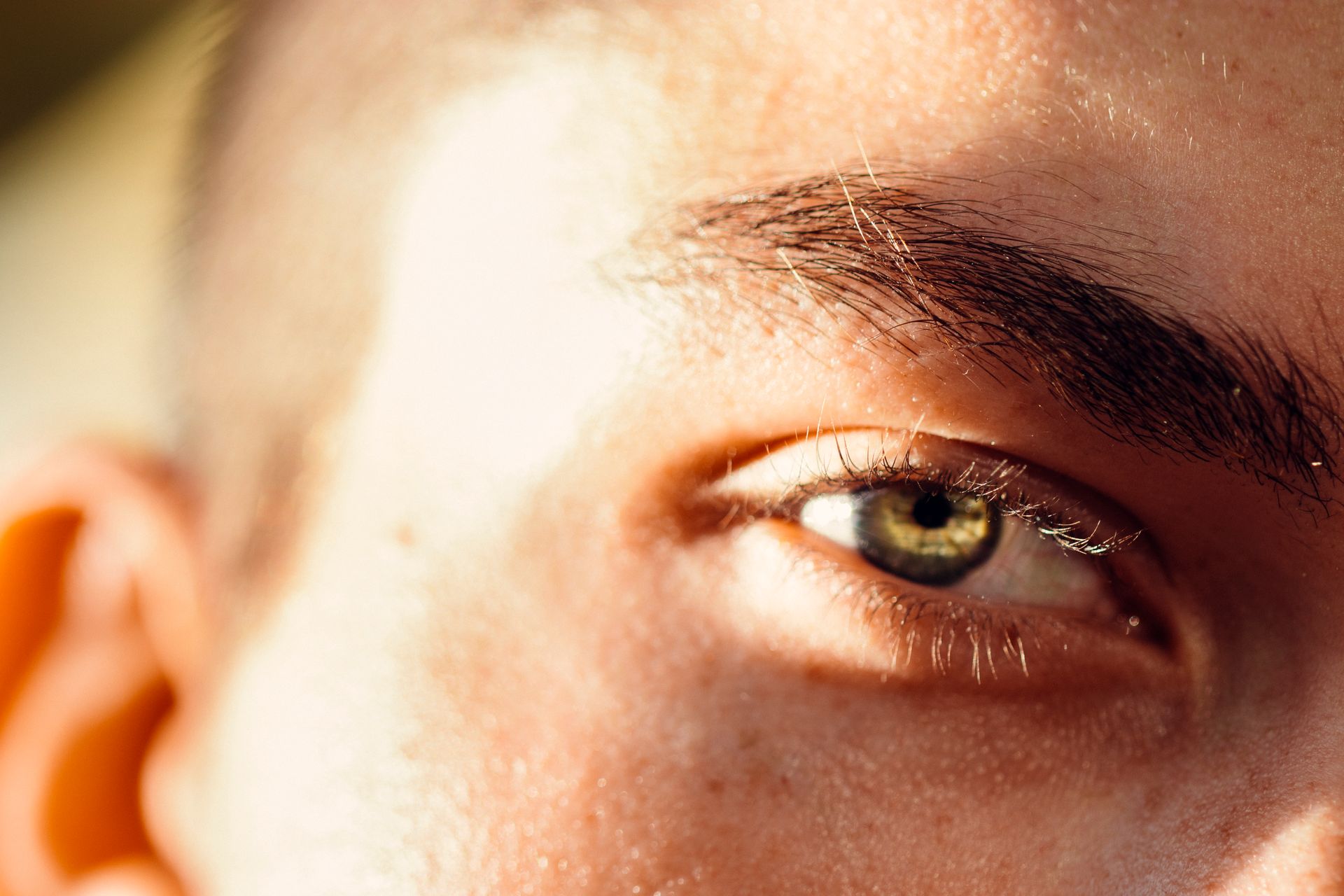
Monocular vision means that you see with one eye only. The other eye is blind, or it sees so little that it does not help. The most important difference from binocular vision is depth perception. When you see with two eyes, your brain compares the two slightly different images and works out how far away things are. When you see with one eye, your brain has to use other clues, such as the size of an object, how fast it grows as you approach it, and the way it moves against the background. This takes time to learn, and that is why the German rules require an adaptation period after you lose an eye. Most people adapt well within a few months, but it is a skill that needs practice, and driving too soon can be dangerous.
Monocular vision also reduces your visual field, which is how much you can see without moving your eyes. With two eyes, your visual field is about 180 degrees wide. With one eye, it is about 150 degrees wide, and the missing part is on the side of the blind eye. That means that a cyclist or a pedestrian can appear from the blind side later than a driver with two eyes would expect. A monocular driver can compensate by turning her head more, by checking mirrors more often, and by taking extra care at junctions. These habits become automatic with practice, and an ophthalmologist will check them by testing your visual field and talking to you about your driving.
It is also worth knowing that monocular vision does not mean that your good eye is weaker. In fact, the good eye often sees just as well as, or better than, the eyes of a person with binocular vision, because the brain gives it more attention. Many monocular drivers have a visual acuity of 1.0 in their good eye, which is excellent, and they see road signs and number plates without any problem. The challenge is not sharpness, but the loss of depth perception and the narrower visual field, and both can be managed with the right habits and the right medical advice.
Driving with One Eye: The Eye Test and Visual Acuity Rules
Driving with one eye starts with a medical assessment, because the standard Sehtest at the optician is not designed for monocular drivers. The standard test requires a visual acuity of at least 0.7 with both eyes together, and a monocular driver cannot meet that test in the way it is written. Instead, the ophthalmologist carries out a full examination, checks the visual acuity of the seeing eye, tests the visual field, and checks the health of the retina, the lens, and the optic nerve. The result is a report, called an augenaerztliches Gutachten, which the driving licence office uses to decide whether to issue a licence and whether any restrictions are needed.
For a car driving licence, class B, and for a motorcycle licence, the seeing eye must usually reach a visual acuity of at least 0.5. That is lower than the 0.7 required for a two-eyed driver, because the rules recognise that a monocular driver cannot be judged in the same way. The visual field of the seeing eye must be normal, which means that the central visual field and the visual field to the side of the seeing eye must be within the normal range. The ophthalmologist will test this with a computerised visual field test, called perimetry, which maps the whole visual field in detail.
The ophthalmologist will also check that you have had enough time to adapt. If you have recently lost an eye, the advice is usually to wait until your vision has stabilised and you have had time to practise seeing with one eye. Many ophthalmologists suggest a period of at least three months, but the exact time depends on the individual case, on how well the seeing eye works, and on whether there is any other health problem. The driving licence office follows the ophthalmologist’s advice, and you will not be given a licence until the ophthalmologist says that you have adapted and that your vision is stable.
Why the Standard Sehtest Is Not Enough
The standard Sehtest at the optician is a screening test for people with two eyes. It checks visual acuity and a simple visual field test, and it produces a certificate that the licence office accepts automatically. For a monocular driver, the same test would give a misleading result, because the certificate form assumes that both eyes contribute. An optician who knows that you see with one eye should not issue the standard certificate, and should refer you to an ophthalmologist instead. That referral is not a refusal. It is the correct first step, and it puts your case into the hands of a doctor who can examine your eyes in detail and write the report that the licence office needs.
In practice, this means that you should book an ophthalmologist first, rather than an optician, when you apply for a licence with one eye. Bring your identity card, your current glasses or contact lens prescription, and any medical reports about the eye that does not see. Tell the ophthalmologist how long you have had monocular vision and whether you have already been driving with it in another country. That information helps the ophthalmologist to write a clear report, and it helps the licence office to make a quick decision. The examination is not covered by the standard eye test fee of a few euros, and it often costs between 50 and 150 euros, but it is the official route to a licence.
The Visual Field Test in Detail
The visual field test at the ophthalmologist is more detailed than the screening test at the optician. You sit in front of a machine, look at a fixed point, and press a button every time you see a small light appear at the edge of your vision. The machine builds a map of your visual field and shows whether there are any blind areas. For a monocular driver, this map is essential, because the licence office needs to know that the seeing eye covers enough of the road. A normal visual field in the seeing eye, plus a visual acuity of at least 0.5, is usually enough for a car licence, although the ophthalmologist can also recommend restrictions, such as a limit to daytime driving, if there is a reason to do so.
The Legal Rules for Monocular Drivers in Germany
The legal basis for driving with one eye in Germany is the driving licence regulation, the Fahrerlaubnis-Verordnung, and its annex on fitness to drive. The annex sets out the medical rules for each class of licence and each health condition, and it distinguishes between private licences, called Group 1, and professional licences, called Group 2. For Group 1, which includes cars and motorcycles, monocular vision is allowed if the seeing eye meets the visual acuity and visual field limits and the ophthalmologist confirms that the driver has adapted. For Group 2, which includes lorries and buses, the rules are very different, and this is where many expats are surprised.
For a lorry licence, class C, or a bus licence, class D, monocular vision is normally not sufficient, because the European rules for Group 2 require good vision in both eyes. A lorry or bus driver must have a visual acuity of at least 0.8 in the better eye and 0.1 in the worse eye, a normal visual field in both eyes, and no other eye disease that could affect driving. A person who sees with only one eye usually cannot meet those requirements, and the driving licence office will normally refuse a Group 2 licence. There are no exceptions in the standard rules, although the licence office can ask for an expert opinion in individual cases. If you work as a lorry or bus driver and lose sight in one eye, you should talk to your employer and to the licence office at once, because your professional licence is at risk.
For a car licence, the process after the ophthalmological examination is simple. The driving licence office receives the report, checks that the visual acuity and visual field limits are met, and issues the licence, usually without a long delay and usually without a restriction, as long as the ophthalmologist has not recommended one. If the office has any doubts, it can ask for a second opinion from another ophthalmologist, or it can require you to take a driving test or a practical driving assessment. This is rare, and it usually happens only when the visual field is close to the limit or when there is another health problem as well.
The eye test for a driving licence on this site explains the standard test for two-eyed drivers, and the eye test at the ophthalmologist page explains what happens at the next stage, including the report that the licence office uses for monocular drivers.
Adapting to Driving with One Eye

Adapting to driving with one eye is a practical challenge that most drivers overcome with time and practice. The first thing to learn is how to judge distance. Without binocular depth perception, you will need to rely on the apparent size of a car, the way it moves across your visual field, and the time it takes to reach you. When you are overtaking, leave more space than you used to, and when you are parking, use your mirrors and your reversing camera, if you have one. After a few months, these checks become automatic, and many monocular drivers say that they drive better than they did before because they are more careful.
The second thing to learn is how to compensate for the narrower visual field. Turn your head more often to check the blind side, and check your mirrors before you change lanes, before you turn, and before you pull out of a parking space. When you are at a junction, lean forward and look to the left and to the right, and take an extra second before you pull out. This is good advice for every driver, but it is essential for a monocular driver, because a car on the blind side can be closer than it looks. Consider fitting a blind-spot mirror or a blind-spot warning system in your car, if it does not have one already. These systems are cheap, easy to fit, and very useful.
The third thing to check is your glasses. Many monocular drivers wear glasses for their good eye, and the prescription must be correct and current. The other lens should be clear glass if you wear glasses, so that the blind eye is still protected and the glasses feel balanced. Wear sunglasses that fit well and do not reduce your vision, and keep your windscreen and your glasses clean, because a dirty windscreen makes it harder to judge distance at night. If your good eye is long-sighted or short-sighted, an incorrect prescription can make the adaptation much harder than it needs to be.
Exchanging a Foreign Licence with One Eye
If you arrive in Germany with a driving licence from another country and you have monocular vision, the rules for exchanging it, called Umschreibung, are the same as the rules for a new application. You will need a medical report from an ophthalmologist in Germany, and the licence office will check it against the German Annex 6 rules. A foreign licence that was issued without a monocular assessment will not be accepted automatically. If your foreign licence was issued after a similar assessment in your home country, bring that report with you and have it translated into German by a sworn translator, because it can save time.
You should also tell your car insurance that you have monocular vision and that you hold a licence with that condition on it. Not telling your insurer can be a problem if you have an accident, because the insurer can say that you did not tell them everything that was relevant. In most cases, a monocular driver pays the same premium as any other driver, because the risk is not greater once the driver has adapted. If your insurer asks for a copy of your medical report, provide it. It shows that you have followed the rules and that your licence was issued on a proper medical basis.
For the official legal text behind the rules in this article, see the German driving licence regulation (Fahrerlaubnis-Verordnung).
Driving with one eye takes practice, but it is possible in Germany. Driving with one eye needs a good seeing eye and a normal visual field. Driving with one eye is safest after you have adapted and your ophthalmologist has confirmed it.
Frequently Asked Questions
Can I drive in Germany with only one eye?
Yes. For a car or motorcycle licence, you can drive with one eye if your seeing eye has a visual acuity of at least 0.5, your visual field is normal, and an ophthalmologist confirms that you have adapted. The licence office decides on the basis of that report.
Do I need a special eye test for monocular vision?
Yes. The standard Sehtest at the optician is not designed for monocular drivers. You need a full ophthalmological examination and a report for the driving licence office, including a visual acuity test, a visual field test, and a check of the health of your seeing eye.
Can I get a lorry or bus licence with one eye?
Normally no. Group 2 licences for lorries and buses require good vision in both eyes, a visual acuity of at least 0.8 in the better eye and 0.1 in the worse eye, and a normal visual field in both eyes. A monocular driver usually cannot meet those requirements.
How long do I have to wait after losing an eye before I can drive?
It depends on your case, but a period of at least three months is common, and you must wait until your vision is stable and your ophthalmologist says that you have adapted. Do not drive before your doctor clears you, even for a short journey, because your depth perception will still be changing.
Do I have to tell the driving licence office that I have one eye?
Yes. You must be honest on your licence application, and you must provide the ophthalmological report. Hiding a medical condition can lead to a revoked licence and problems with your insurance if you have an accident.
Conclusion
Driving with one eye is possible in Germany, and it is common. The rules are clear: for a car licence, your seeing eye needs a visual acuity of at least 0.5, a normal visual field, and an ophthalmologist who confirms that you have adapted to monocular vision. For a lorry or bus licence, the rules are stricter, and monocular vision is usually not sufficient. The standard Sehtest at the optician is not the right test for you, so book an ophthalmologist first, bring your medical reports, and allow time for the licence office to decide. Once you hold your licence, adapt your driving habits, check your mirrors more often, and keep your glasses prescription current. Many monocular drivers drive for decades without any problems, and with the right preparation, you can too. Talk to your ophthalmologist, follow the rules, and drive safely in Germany.