Ishihara Plates: The Colour Vision Test Explained

If you have ever been shown a circle full of coloured dots and asked what number you can see inside it, you have met an Ishihara plate. These dotted circles are the standard way to screen colour vision in the driving licence eye test in Germany, and they have been used for more than a hundred years. The Ishihara plates colour vision test is a short, painless check, but its design is cleverer than it looks: the number is there, but only for people whose colour vision works in the usual way.
This guide explains the Ishihara plates method itself: who invented the plates, how they are made, what the different types of plate show, how the test is run at the optician, and what your answers mean. It focuses on the method, not on the general colour test, and it explains what happens when the plates reveal a colour vision weakness, including what that means for your driving licence.
Ishihara Plates Colour Vision Test: How It Works
An Ishihara plate is a circle filled with small dots of different colours and different brightness. Inside the circle, some of the dots form a number, usually a one-digit or two-digit number. The dots that form the number are coloured in a way that makes them stand out to someone with normal colour vision, but blend into the background for someone with a red-green colour vision deficiency. The test works by colour, not by sharpness: the dots are large enough to see clearly, and the only question is whether the number emerges from the pattern.
What makes the method reliable is that the dots are not all the same. They vary in size, in colour and in brightness, so you cannot guess the number from the shading or the shape of the dots. A person who cannot tell red from green will either see no number at all, or will see a different number from the one a person with normal colour vision sees. The tester records which plates you read correctly and which you miss, and the pattern of errors tells them whether your colour vision is normal, weakened or clearly different.
The plates are used as a screening test, not as a final diagnosis. A screening test is designed to catch people who need a closer look, not to label them. If you miss a few plates, the tester will not tell you that you are colour blind. They will note the result, explain what it might mean, and, if necessary, suggest a more detailed test with an eye doctor, who can use other methods to find out exactly how your colour vision differs.
Who Invented the Ishihara Test?
The test was developed by Dr Shinobu Ishihara, a Japanese ophthalmologist who worked at the University of Tokyo. He published the first edition of the plates in 1917, after he was asked to design a simple test for the Japanese army, which needed to know whether soldiers could read coloured signals. The plates were a success because they were cheap to print, easy to use, and needed no electricity or special equipment, just good daylight.
More than a century later, the same plates are still in use around the world, in optician shops, in eye clinics, at the doctor surgery, and in the driving licence eye test. The full edition has thirty-eight plates, and there is also a shorter edition with twenty-four plates, which is the one most often used for screening. The design has barely changed since 1917, because the idea is simple and it works: colour is hidden in plain sight.
Ishihara himself would have been surprised by how long his plates lasted. At the time, colour vision tests used coloured wools and yarns, which were slow and hard to standardise. The plates turned the test into a quick book of images that any trained tester could use. Today, digital versions exist on screens and tablets, but the printed book is still the reference, because the colours on a printed plate are fixed, while a screen can vary with its settings.
What the Plates Look Like
There are several kinds of plate in the book, and each one has a job. The first kind is the demonstration plate, which almost everyone can read. It shows a clear number, such as twelve, in strong colours, and it is used to check that you understand the task and that the light is good enough. If you cannot read the demonstration plate, the tester will check the lighting or your glasses before going on.
The second kind is the transformation plate. In a transformation plate, a person with normal colour vision sees one number, and a person with a red-green deficiency sees a different number. The tester learns something from both answers: the number you see tells them which kind of colour vision you have. The third kind is the vanishing plate, where a person with normal colour vision sees the number clearly, and a person with a deficiency sees nothing at all, just a jumble of dots.
The fourth kind is the hidden digit plate, which is the reverse: only a person with a red-green deficiency can see the number, because it is made from colours that normal vision blends into the background. The last kind is the diagnostic plate, which is used to find out whether the problem is mainly with red or mainly with green. Not every screening uses all the kinds of plate, but together they give a clear picture of how a person’s colour vision works.
How the Test Is Done at the Optician
At the optician, the Ishihara test takes just a few minutes and is done as part of the normal driving licence eye test. The tester shows you the plates one at a time, in a book or on a screen, and asks you to read the number you see. You are not timed, but the plates are usually shown for a few seconds each, because a long look can let you work out the number from the shapes of the dots instead of their colours, which defeats the purpose of the test.
Lighting matters more for the plates than for the letter chart. The colours on a printed plate are made to be seen in daylight, or in a room lit by a daylight lamp. Under a yellow tungsten lamp, the colours shift and the numbers can become harder to see, even for people with normal colour vision. A good optician checks the light before starting the test, and will use a daylight lamp if the room light is not good enough.
You will usually be shown about six plates for the driving licence screening, not the full book of thirty-eight. That is enough to separate normal colour vision from a clear deficiency. The tester holds the plates at about seventy-five centimetres from your eyes, at the height of your eyes, and you look at them with both eyes open. If you wear glasses, keep them on, and if you are tired or the room is dim, say so before the test starts.
What Your Answers Mean: The Number of Errors
The tester counts how many plates you read correctly and how many you missed. The result is not given as a percentage, but as a number of errors, and the pattern matters as much as the count. A person with normal colour vision reads almost all the plates correctly, and the odd mistake is usually a number they misread because they were nervous. A person with a colour vision deficiency misses several plates in a row, and the missed plates are often the ones that depend on red and green.
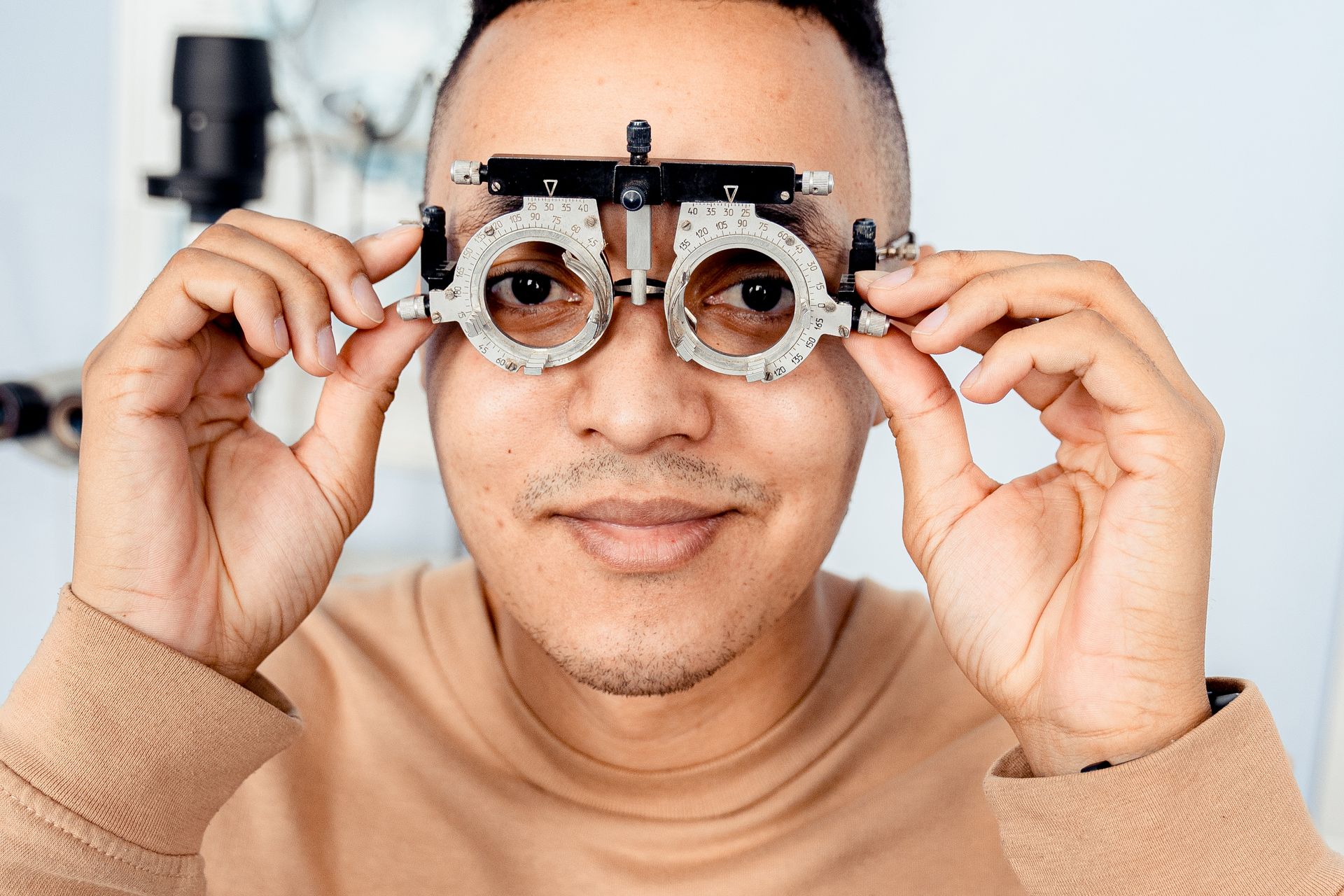
Three or more errors in the screening plates is often used as the line where the tester will note a colour vision weakness and suggest a further test. That is not a diagnosis, and it does not mean you cannot drive. It means the screening has done its job and a closer look is worth doing. The fuller test, done by an ophthalmologist, uses more plates, a lantern test or an anomaloscope, which is a machine that asks you to match a yellow light by mixing red and green lights until they look the same.
The answers also tell the tester which colours you confuse. If you consistently mistake red for green, that is the most common pattern, and it is the one that matters most for traffic lights. If your errors are mostly on plates that use other colour pairs, the tester will note that too. The exact pattern helps the eye doctor decide whether your colour vision is mild, moderate or strong in its difference, and whether any restriction is needed for the licence.
What Happens If You Cannot Read the Plates
If you cannot read some of the plates, the tester will explain the result calmly, and will not make you feel as if you have failed the eye test. Colour vision is only one part of the driving licence eye test, and the main part, visual acuity, is measured separately. Many people with a colour vision weakness pass the acuity part easily, get their certificate, and drive without any restriction. The plates do not measure your ability to drive; they measure one part of your colour vision.
What happens next depends on the size of the problem and on the licence you want. For a standard car licence, a red-green colour vision weakness does not usually block the licence, because the road system is designed so that traffic lights are read by position as well as by colour, and road signs use shapes and words as well as colours. The tester will note the result, and the licensing authority will accept the certificate with the note attached.
If the weakness is strong, or if you are applying for a lorry or bus licence, the steps are different. The professional examination is stricter about colour vision, and the eye doctor may carry out the full test to see whether you can safely read coloured signals. In rare cases a very strong deficiency can limit a professional licence, but that decision is made by the authority on the basis of the doctor report, not by the optician. For most people, the Ishihara result is information, not a barrier.
Ishihara Plates and the Driving Licence
In Germany, Ishihara plates are the usual screening tool in the driving licence eye test, but they are not the only tool. The licence rules ask the tester to check colour vision, and the plates are the simplest way to do that in an optician shop. The certificate records the result of the whole test, including the colour screening, and the authority does not ask for the plate-by-plate answers. If your acuity and visual field are fine, the certificate is issued even when the colour screening shows a weakness.
It is worth knowing the plates before you take the test, but not worth trying to learn them. Studying pictures of Ishihara plates online can help you understand the method, but the test uses plates you have not seen, and memorising one set of numbers does not make the tester read a different answer. If you think you may have a colour vision weakness, the best preparation is to tell the tester and to accept the result, so that the record is honest.
For a fuller picture of the whole colour test, and how the plates fit alongside other checks, see our general guide to the colour vision test for the driving licence. If you already know that you have a red-green deficiency, our article on red-green colour blindness and the driving licence explains the rules for car and professional licences, and when the Ishihara result matters most.
Conclusion
Ishihara plates are a simple, elegant test that has been in use since 1917. A circle of coloured dots hides a number that only normal colour vision can read, and the pattern of right and wrong answers shows how a person’s colour vision works. In the driving licence eye test, the plates are a quick screening, and a weakness they reveal is usually not a barrier to a car licence. What matters is that the tester has checked it, that you know the result, and that the right note is made when the certificate is issued.
Frequently Asked Questions
What are Ishihara plates?
Ishihara plates are circles filled with coloured dots, in which a number is hidden. The dots that form the number stand out for people with normal colour vision, but blend into the background for people with a red-green deficiency. The test was invented by Dr Shinobu Ishihara in 1917.
How many Ishihara plates are used in the eye test?
For the driving licence screening, the optician usually shows about six plates, not the full book of thirty-eight. That is enough to separate normal colour vision from a clear deficiency. The full book is used when a closer diagnosis is needed.
What does it mean if I cannot read an Ishihara plate?
It may mean that your colour vision differs from normal, most often because you confuse red and green. The tester will note the result and may suggest a fuller test with an eye doctor. It does not mean that you have failed the eye test or that you cannot drive.
Can I learn the Ishihara plates before the test?
There is no point. The test uses plates you have not seen, and the colours are what matter, not the numbers. If you have a colour vision weakness, memorising a few numbers will not change the result, and the tester will use other plates.
Do Ishihara plates diagnose colour blindness?
No, they screen for it. If you miss several plates, an ophthalmologist can carry out a more detailed test, such as an anomaloscope, to find out how strong the difference is and which colours you confuse.
Does failing the Ishihara plates stop me getting a licence?
Normally not for a car licence. A red-green weakness does not usually block the licence, because traffic lights are read by position as well as by colour. For lorry and bus licences, the rules are stricter, and the eye doctor decides on the basis of the full examination.