Hard Contact Lenses and the Eye Test: Rules and Tips

Soft contact lenses get most of the attention, but a large number of people wear hard contact lenses, also called rigid gas permeable lenses, or RGP lenses. They are made of a stiff plastic that holds its shape on the eye, they let oxygen through to the cornea, and they give very sharp vision. If you wear them, the hard contact lenses eye test has a few rules that are different from the rules for soft lenses, and it helps to know them before you book.
This guide explains the rules and gives practical tips for the eye test with hard contact lenses: what rigid lenses are, how they differ from soft lenses, whether to wear them to the test, how long they should be out before a test, and what to do if they irritate your eyes on the day.
Hard Contact Lenses Eye Test: What Rigid Lenses Are
Hard contact lenses, or rigid gas permeable lenses, are small, stiff discs that sit on the cornea and keep their own shape, unlike soft lenses, which drape over the eye. They are usually smaller than a soft lens, about nine to ten millimetres across, and they move a little with every blink, which helps tears to flow under the lens and keeps the eye healthy. Because the lens is rigid, it can correct astigmatism very well, which is one reason opticians still prescribe them for people whose cornea is not round.
Rigid lenses are made from a material that lets oxygen pass through, which is why they are called gas permeable. The eye needs oxygen, and a lens that blocks it can cause the cornea to swell. Modern rigid lenses let enough oxygen through that they can be worn all day, but they are rarely worn overnight, because the eye still needs to breathe while you sleep. If you wear hard lenses, your optician has measured your cornea with a topographer, a machine that maps the shape of the eye, to fit the lens to your cornea.
Hard lenses are often prescribed for people with a stronger prescription, for keratoconus, a condition where the cornea bulges into a cone shape, or for people whose eyes cannot tolerate soft lenses. They need a short period of getting used to at first, because the eyelid can feel the edge of the lens, but most wearers become comfortable with them within a week or two.
How Hard Lenses Differ from Soft Lenses
The main difference for the eye test is that a rigid lens can change the shape of the cornea slightly while it is being worn. Because the lens is stiff, it presses gently on the cornea, and over time the cornea can take the shape of the lens. When you take the lens out, the cornea needs time to return to its natural shape, and your vision during that time can be a little different from your vision with the lens in. Soft lenses do not do this, because they are too flexible to press the cornea into a new shape.
That is the reason the timing of the test matters. If the tester wants to measure your eyes without lenses, to check what your uncorrected vision is, they may ask you to leave the hard lenses out for some hours before the test, or even for a full day, depending on how long you have worn them. For soft lenses, the same check can be done after a much shorter break. Always ask the optician what they want before the test, rather than guessing.
Hard lenses also feel different in the eye. A little dust or a draught can make a hard lens uncomfortable more quickly than it makes a soft lens uncomfortable, because the edge of the lens is felt by the eyelid. In a test room, the air is often dry, and the bright light can make your eyes water. If a lens becomes painful, you can ask the tester for a short break, and you can take the lens out and put it back in after the test. Do not force yourself to keep a painful lens in.
Taking the Test with Hard Lenses: The Rules
The rule for the driving licence eye test is the same for hard lenses as it is for any other correction: the test is taken with the correction you will use when you drive. If you drive with hard lenses, take the test with the hard lenses in. If you drive with glasses, take the test with glasses. The licence code 01.02 is noted when you pass with contact lenses, and it means you must wear lenses whenever you drive.
One detail to watch is the licence code itself. The code for contact lenses does not say which kind of lens, so hard and soft lenses are treated the same way. If you pass with hard lenses and later switch to soft lenses, the code still applies, because it only says that you must wear lenses. The same applies if you switch from lenses to glasses: tell the licensing authority, and the code will be changed to 01.01.
For a fuller picture of the rules for all lenses, see our guide to contact lenses in the eye test, and for a comparison of lenses and glasses, see our article on contact lenses versus glasses in the eye test. The rules for hard lenses are the same as the general rules, with the extra timing detail explained in the next section.
Removal Times: When to Take Them Out
When do you take hard lenses out before a test? The answer depends on what the tester wants to measure. If the tester only wants to see how well you can read the chart with your lenses in, you do not take them out at all. You wear them to the test, you do the test with them in, and the result is recorded with the code 01.02. That is the normal case for the driving licence eye test.
If the tester also wants to know your uncorrected vision, or to fit a new pair of lenses, they may ask you to leave the hard lenses out beforehand. The right amount of time depends on how long you have worn them and how much the lenses have pressed the cornea. Ask your optician. Some people need only a few hours without the lenses, while others need a full day. Never guess. The optician who fitted your lenses knows how your cornea reacts, and they can tell you how long to leave them out.
Orthokeratology lenses, which are worn overnight to reshape the cornea so that you can see clearly during the day without lenses, are a special case. If you wear them, your vision without lenses during the day may be good enough to pass the test, but it changes during the day as the cornea returns to its natural shape. Tell the tester that you wear overnight lenses, and bring the lenses and the case with you. The tester may want to test you at a set time of day, or with the lenses in, so that the result is stable.
Lens Care and the Test Day
On the day of the test, put in a clean pair of lenses. If you wear daily rigid lenses, use a fresh pair. If you wear a pair for a month or a year, clean them the night before, and check that they are not scratched or cloudy. A lens with a deposit on it makes the chart look hazy, and a scratch can throw a line of light across your vision. Both will cost you rows on the chart.
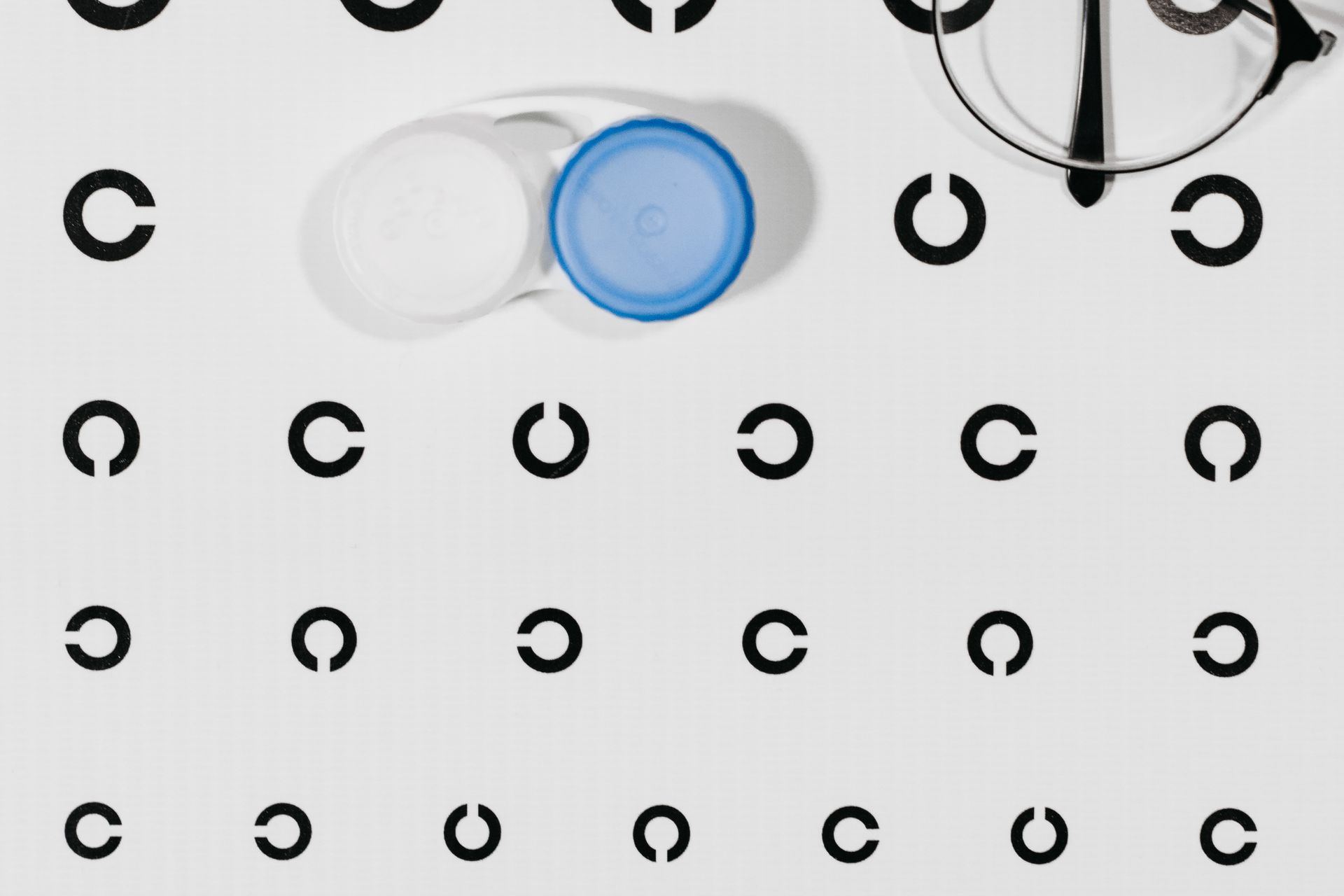
Bring the lens case, the cleaning solution, a small mirror, and your glasses. If a lens falls out in the shop, you need to be able to find it, clean it and put it back in. A hard lens is small and easy to lose on a carpet, and the shop floor is not the place to find out that you left the case at home. Your glasses are the fallback if a lens is lost or your eye is too irritated to wear one.
Do not put a lens in a dry eye. If your eyes are dry or irritated on the morning of the test, use the wetting drops your optician recommended, and wait until the lens feels comfortable before you leave home. If the eye is red or painful, leave the lens out, take the test with your glasses, and ask the optician to check the eye later. A red eye is a sign that something is wrong, and it is better to wear glasses for one day than to damage your cornea.
What If Your Vision Is Worse After Removing Them?
Some hard lens wearers find that their vision is noticeably worse for a few hours after they take the lenses out. That is the cornea returning to its natural shape, and it settles by itself. If the optician asks you to leave the lenses out before a check, they know about this effect, and they will measure your eyes at the right time. It is not a sign that your eyes have got worse. It is a sign that the lens had been doing its job.
If you arrive at the test after taking the lenses out, tell the tester when you took them out. That detail helps the tester to read the result. A tester who knows you removed the lenses an hour ago will be more careful about a weak result than one who thinks you have been without lenses all day. Honesty about timing makes the test fairer.
If the difference is large and it does not settle after a day, ask your optician to check the cornea. A rigid lens that presses the cornea too hard can cause a temporary change that lasts longer than expected, and the fit may need to be adjusted. The optician can measure the cornea with the topographer and change the lens if the fit is wrong.
Switching to Glasses for the Test
There is nothing wrong with taking the driving licence eye test with glasses instead of hard lenses. Some people choose glasses for the test because it is simpler: no lenses to lose, no timing to worry about, no dry eye in the test room. The rules are the same as with lenses. The test is taken with the correction you will use to drive, and the code 01.01 is noted when you pass with glasses.
If you usually drive with hard lenses but you took the test with glasses, the licence will say glasses, and you must wear glasses when you drive. If you want to drive with the lenses instead, you can take the test again with the lenses in, or you can ask the licensing authority to change the code after a new test. The safest choice is to take the test with the correction you actually use.
For many hard lens wearers, the simplest routine is this: wear the lenses to the test, bring glasses as a backup, and tell the tester everything, including when you last removed the lenses. That combination covers every situation, and the tester can give you the fairest result.
Conclusion
Hard contact lenses are fully accepted for the driving licence eye test, and they give very sharp vision. The key points are simple: take the test with the lenses in if you drive with them, ask your optician how long to leave them out if the tester wants a check without lenses, bring the case, the solution and your glasses, and tell the tester about any irritation or soreness. A rigid lens is a precise tool, and it needs a little more planning than a soft lens, but with that planning it is no obstacle to passing the test.
Frequently Asked Questions
Can I take the eye test with hard contact lenses?
Yes. Hard lenses, or rigid gas permeable lenses, are allowed for the driving licence eye test. Take the test with the lenses in if you drive with them, and the code 01.02 will be noted on your licence.
Do I need to take hard lenses out before the eye test?
Not for the normal driving licence test, which is done with the lenses in. If the tester wants to measure your eyes without lenses, your optician can tell you how long to leave them out, because a rigid lens can press the cornea into a new shape that takes time to settle.
What should I bring to the eye test with hard lenses?
Bring the lens case, cleaning solution, a small mirror, wetting drops if you use them, and your glasses as a backup. If a lens falls out or your eye is irritated, you need to be able to clean it and put it back in, or to fall back on glasses.
Are hard lenses better than soft lenses for driving?
Hard lenses often give sharper vision and correct astigmatism very well, which helps when driving. They need more care and a short period to get used to, and they can feel less comfortable in dust or wind. The choice depends on your eyes and your prescription.
What if a hard lens hurts during the eye test?
Ask the tester for a short break, take the lens out and check it. A speck of dust or a dry eye is often the cause. Do not keep a painful lens in. Wear glasses for the rest of the test if you need to.
Do overnight lenses change the eye test?
Orthokeratology lenses worn overnight reshape the cornea so that you see clearly during the day without lenses. Tell the tester that you wear them, because the result can change during the day. Bring the lenses and the case with you.