German Eye Test vs Austria and Switzerland: The Differences

Introduction
German eye test rules are familiar to anyone who has applied for a driving licence in Germany, but they are not the same as the rules in the neighbouring countries, Austria and Switzerland. If you move from Germany to Austria or Switzerland, or if you hold a licence from one of those countries and want to exchange it in Germany, the differences can be confusing. Is the eye test the same? Is the certificate valid in the other country? How much does it cost, and how long is it valid? This guide compares the German eye test with the Austrian and Swiss eye tests, so that you know what to expect in each country and what to do when you cross a border with your licence.
German eye test is called the Sehtest, and it is required for every first driving licence application in Germany. It is a simple test of visual acuity and visual field, done at an optician or an authorised doctor, and the result is written on the Sehtest-Bescheinigung, which is valid for two years. Austria and Switzerland also require an eye test for a driving licence, but the name of the test, the place where it is done, the visual acuity limit, and the validity of the certificate are all slightly different. The differences are small, but they matter, especially when you need to exchange a licence or when your certificate is about to expire.
In this article, you will learn how the German eye test works, how the Austrian eye test works, how the Swiss eye test works, and how the three compare on cost, on validity, on the visual acuity limit, and on what happens if you fail. You will also learn whether a German certificate is accepted in Austria or Switzerland, and vice versa, and what to do if you move between the three countries. By the end, you will understand the German eye test in its European context, and you will know how to handle a licence exchange without a delay.
The German Eye Test in Brief
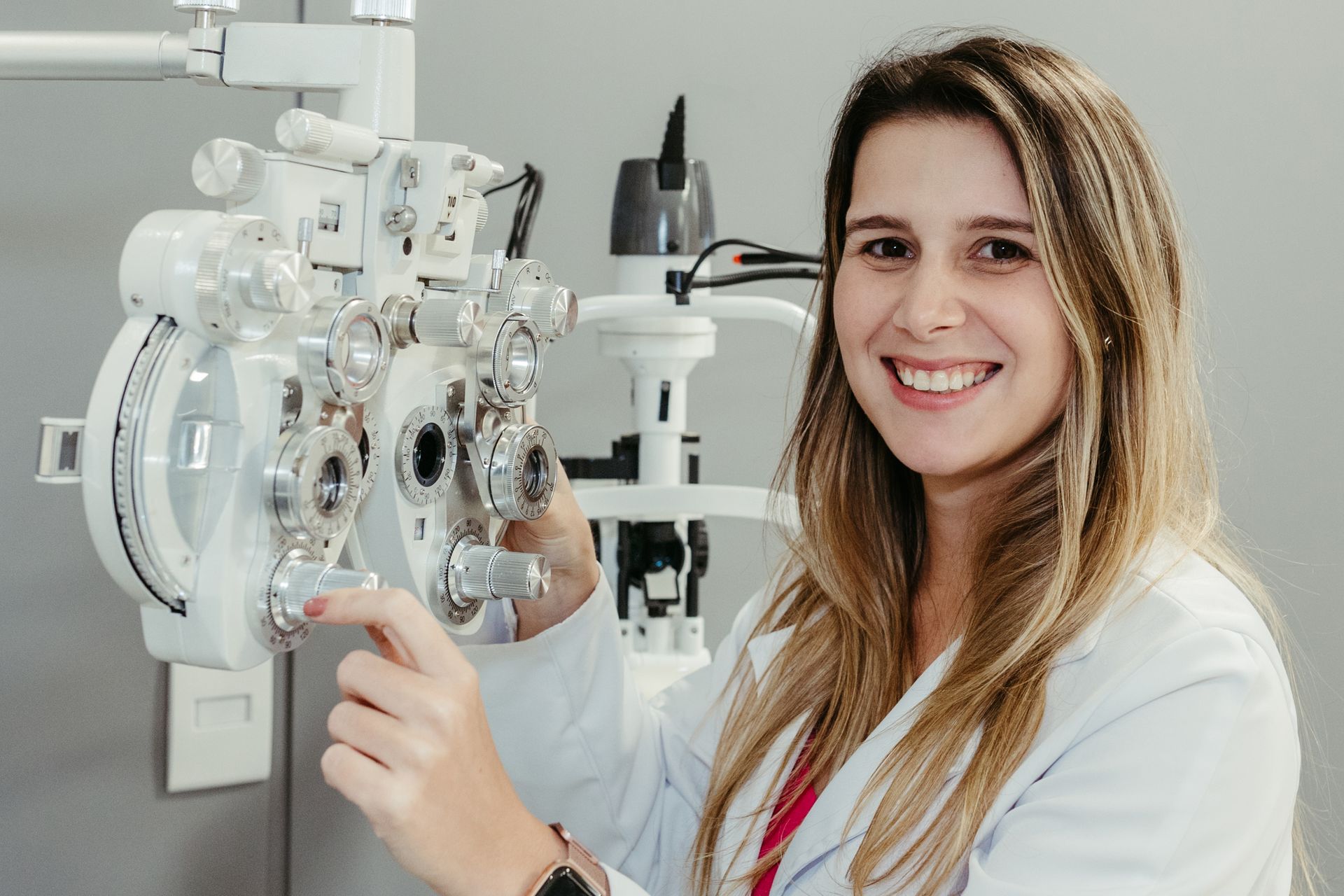
German eye test is the Sehtest, and it is the standard test for a first driving licence. You go to an optician, an ophthalmologist, or a doctor at a technical inspection centre, bring your identity card or passport, and read letters or numbers from an eye chart, first with one eye covered, then with the other, and then with both eyes together. The test also includes a simple visual field check. You need a visual acuity of at least 0.7 with both eyes together, with or without glasses or contact lenses, and if you wear glasses, the certificate will say so, and your licence will carry a glasses condition.
German eye test costs between 6.43 and 15 euros at an optician, and it is often free at large optician chains. The certificate is valid for two years, and it is accepted by the driving licence office in every German state. There is no routine re-test for car drivers in Germany, so once you hold a licence, you keep it, unless you are convicted of an offence or a doctor reports a problem. For lorry and bus drivers, the rules are stricter, with a medical check every five years after the age of 50, and the eye test is part of it.
German eye test is not a medical examination. It does not check your retina, your blood pressure, or your general health. It checks only whether you can see well enough to drive at that moment. If the optician finds a problem, you will be sent to an ophthalmologist, who will do a full examination and write a report. That report can lead to a restricted licence, for example a licence that requires you to wear glasses, or a licence that is limited to daylight driving. The system is simple, cheap, and quick, and it works well for most drivers.
The Austrian Eye Test: How It Differs
The Austrian eye test is called the augenaerztliche Untersuchung, and it is part of a medical examination for a first driving licence in Austria. Like the German eye test, it checks visual acuity and the visual field, and it is done by an ophthalmologist or by a doctor who is authorised to carry out the test. The visual acuity limit for a car licence in Austria is also 0.7 with both eyes together, which is the same as in Germany, so a driver who passes in Germany would usually pass in Austria, and vice versa. The test includes a colour vision check and a check for eye diseases, which is more detailed than the German screening test.
The main differences are in the validity and the paperwork. In Austria, the medical report for a first driving licence is valid for 18 months, which is shorter than the two years in Germany, so you have less time to complete your driving course and your driving test. The cost is higher too: an eye examination by an ophthalmologist in Austria usually costs between 50 and 100 euros, because it is a medical examination, not a simple optician test. In Germany, a test at an optician is cheaper, but if you need an ophthalmologist, the cost is similar.
Austrian driving licences are also different in another way: since 2013, the Austrian car licence has been valid for 15 years from the date of issue, and it must be renewed with a photograph, although no new eye test is needed for a renewal. The German eye test and the Austrian eye test both follow the same European minimum standards, because Austria and Germany are both members of the European Union and must meet the EU driving licence directive. But the national rules on validity, cost, and the place of the test are set by each country, and that is where the differences appear.
The Swiss Eye Test: How It Differs
The Swiss eye test is called the Sehtest, just as in Germany, and it is required for a first driving licence in Switzerland. It is done by an optician or by an ophthalmologist who is authorised by the cantonal road traffic office, the Strassenverkehrsamt. The visual acuity limit for a car licence in Switzerland is 0.7 with both eyes together, the same as in Germany and Austria, and the test includes a visual field check. The certificate is valid for two years, which is the same as in Germany, so a driver who passes in Switzerland has the same amount of time to complete the course as a driver in Germany.
The differences are in the cost, in the language, and in the licence itself. A Swiss eye test at an optician usually costs between 10 and 20 Swiss francs, which is similar to the German price, but the Swiss licence itself is more expensive to obtain, because the whole driving course, including the theory test, the first aid course, and the practical test, can cost several thousand francs. The Swiss application forms are in German, French, or Italian, depending on the canton, and the eye test certificate is issued in the language of the canton, although the result is the same in every canton.
Switzerland is not a member of the European Union, so its driving licence rules are not set by the EU directive in the same way, but Switzerland has agreements with the EU that make its licences largely compatible. A Swiss licence can be exchanged for a German licence, and a German licence can be exchanged for a Swiss licence, but the eye test is usually part of the exchange, and you may need a new test in the country where you apply. The eye test for a driving licence page on this site explains the German standard test in detail, and the eye test in Berlin page shows the kind of local information that helps in a large German city.
German Eye Test vs Austria and Switzerland: A Comparison
German eye test is the cheapest and the quickest of the three, and it is the simplest, because it is done at an optician and it produces a certificate that is valid for two years. The Austrian eye test is a medical examination, it costs more, and it is valid for 18 months, which gives you less time. The Swiss eye test is similar to the German test in price and in validity, but it is done in a different language in each canton, and the licence itself is more expensive to obtain. All three countries require a visual acuity of 0.7 for a car licence, a normal visual field, and a glasses condition if you need a visual aid, which is why the three systems are so similar in practice.
German eye test is accepted in Austria and Switzerland only in limited cases. If you hold a German licence and you move to Austria, your German licence is recognised, and you do not need a new eye test, because the licence itself is the proof. If you are applying for a first licence in Austria, a German eye test certificate is not accepted, because the Austrian office needs a report from an Austrian doctor. The same is true in reverse: an Austrian medical report is not accepted for a German first licence, and a Swiss eye test certificate is not accepted for a German licence application. When you apply for a licence in a new country, take the eye test in that country.
German eye test is a good example of how the EU harmonises the minimum rules, but leaves the details to each country. The EU says that a car driver must have a visual acuity of at least 0.5 in the better eye and 0.5 in the worse eye in some cases, but Germany sets the limit at 0.7, Austria sets it at 0.7, and Switzerland sets it at 0.7, which is stricter than the EU minimum. The result is that a driver who is fit to drive in one country is usually fit in the others, but the paperwork is different, and the cost and validity are different too. Keep your certificate, check its date, and take a new test in the country where you apply.
Exchanging a Licence Between Germany, Austria and Switzerland
German eye test is part of the exchange process when you move. If you move from Germany to Austria and your German licence is still valid, you can exchange it for an Austrian licence without a new eye test, because the EU rules say that a licence from another EU country must be recognised. Austria will keep your German licence, issue an Austrian one, and the eye test is not repeated, because the German licence was issued after the German eye test. The same applies when you move from Austria to Germany.

When Switzerland is involved, the rules are set by the agreement between Switzerland and the EU, and they are similar, but you should check with the cantonal office before you apply, because the process can take longer and the eye test may be required if your Swiss licence is old or if you have a medical condition. Bring your German or Austrian eye test certificate, your licence, and your identity card, and have the documents translated if they are not in German, French, or Italian. Eye test certificates are in German in all three countries, so the language is not a problem, but the date matters: if the certificate is older than two years, take a new test.
Frequently Asked Questions
Is the German eye test the same as the Austrian eye test?
Not exactly. German eye test is a screening test at an optician, and the certificate is valid for two years. The Austrian eye test is part of a medical examination by an ophthalmologist, and the report is valid for 18 months. Both require a visual acuity of 0.7 for a car licence.
Is the German eye test accepted in Switzerland?
A German driving licence is recognised in Switzerland, so you do not need a new eye test when you move there with a valid licence. For a first licence application in Switzerland, you need a Swiss eye test from an optician or ophthalmologist authorised in your canton.
Which country has the cheapest eye test?
Germany is usually the cheapest, with a standard test at an optician for between 6.43 and 15 euros, and often free at large chains. Austria is more expensive, because the test is a medical examination. Switzerland is similar to Germany in price, at 10 to 20 Swiss francs.
How long is an eye test certificate valid in each country?
In Germany and Switzerland, the certificate is valid for two years. In Austria, the medical report for a first licence is valid for 18 months. Check the date on your certificate, and take a new test if it has expired.
Do I need a new eye test if I exchange my licence?
Usually not, if you move between EU countries with a valid licence. If you move to or from Switzerland, or if your licence is old, the office may ask for a new test. Ask the driving licence office in the country where you apply, and bring all of your documents.
For the official legal text behind the rules in this article, see the German driving licence regulation (Fahrerlaubnis-Verordnung).
German eye test is the cheapest and simplest of the three countries compared here. German eye test is valid for two years, just like the Swiss test. German eye test is a good standard, and it is recognised across Europe.
Conclusion
German eye test is a simple, cheap, and quick test that compares well with the Austrian and Swiss tests. All three countries require a visual acuity of 0.7 for a car licence, a normal visual field, and a glasses condition when you need one, because all three follow the same safety standard. The differences are in the detail: Germany does the test at an optician, for a few euros, and the certificate lasts two years. Austria does the test as a medical examination, it costs more, and the report lasts 18 months. Switzerland does the test at an optician or ophthalmologist, for 10 to 20 francs, and the certificate lasts two years. For a licence exchange between EU countries, you do not usually need a new eye test, but for a first licence in a new country, you do. Check the rules in the country where you apply, take the test there, and you will have no problems.