German Driving Licence Classes Explained in English: A, B, C, D and More

When you apply for a German driving licence, the first question is not how much it costs or how long it takes — it is which class you need. The German driving licence classes explained here are a system of letters and numbers that decides what you are allowed to drive, how old you have to be, what eye test you need and whether you have to take a test. This guide explains the German driving licence classes in English — A, B, C, D and more — so you can see which one is yours and what it takes to get it.
The classes follow the European Union system, so they are similar across Europe, but Germany has its own details: the minimum ages, the special categories for trailers, and the two different eye examinations — the simple eye test for car and motorcycle licences and the full ophthalmological examination for lorries and buses. Whether you are converting a foreign licence or starting from scratch, the class on your licence is the thing that decides everything else.
How the German licence classes are organised
The German classes are divided into two groups for medical purposes. Group 1 covers the car and motorcycle classes — AM, A1, A2, A, B, BE and L and T — and needs only the simple eye test (Sehtest). Group 2 covers the lorry and bus classes — C1, C1E, C, CE, D1, D1E, D and DE — and needs a full ophthalmological examination plus a general medical examination, repeated every five years. That is the first thing to know if you are applying for a lorry or bus licence: the medical requirements are much stricter.
Within those groups, the classes are organised by vehicle type, and higher classes usually include lower ones: a class C licence includes C1, and a class D licence includes D1, for example. The classes are printed on the back of the EU card licence, with a start date and an expiry date for each one. When you convert a foreign licence, the authority maps your licence to the German class that matches it most closely.
Class B: the standard car licence
Class B is the licence most expats need. It allows you to drive cars and small vans with a maximum authorised mass of 3,500 kg and no more than eight passenger seats in addition to the driver’s seat. With class B you can also tow a light trailer of up to 750 kg, and with the extension code 96 or the class BE you can tow heavier combinations: BE allows a trailer of up to 3,500 kg, so that the combination can weigh up to 7,000 kg.
The minimum age for class B is 18, or 17 if you take part in accompanied driving (Begleitetes Fahren ab 17), where a registered adult accompanies you. The theory test has 30 questions and the practical test lasts about 45 minutes. Class B is the class that most foreign car licences convert into, and it is the class that needs only the simple eye test: a visual acuity of 0.7 with your correction if you wear one.
Class A, A1, A2: motorcycles
The motorcycle classes are staged by engine size. Class AM, from the age of 15, covers mopeds and light quadricycles up to 45 km/h. Class A1, from 16, covers motorcycles up to 125 cc and 11 kW. Class A2, from 18, covers motorcycles up to 35 kW. Class A, from 20 (with two years of A2) or 24 (direct), covers all motorcycles without restriction. Each step requires its own theory and practical test, although holding a lower class reduces the scope of the next test.
For expats this matters because a US motorcycle endorsement is not always converted into the equivalent German class automatically: the authority will look at the motorcycle experience you can prove. If you only hold a car licence, you will not get a motorcycle class without a test. And as with class B, the motorcycle classes need only the simple eye test.
Class C, C1: lorries
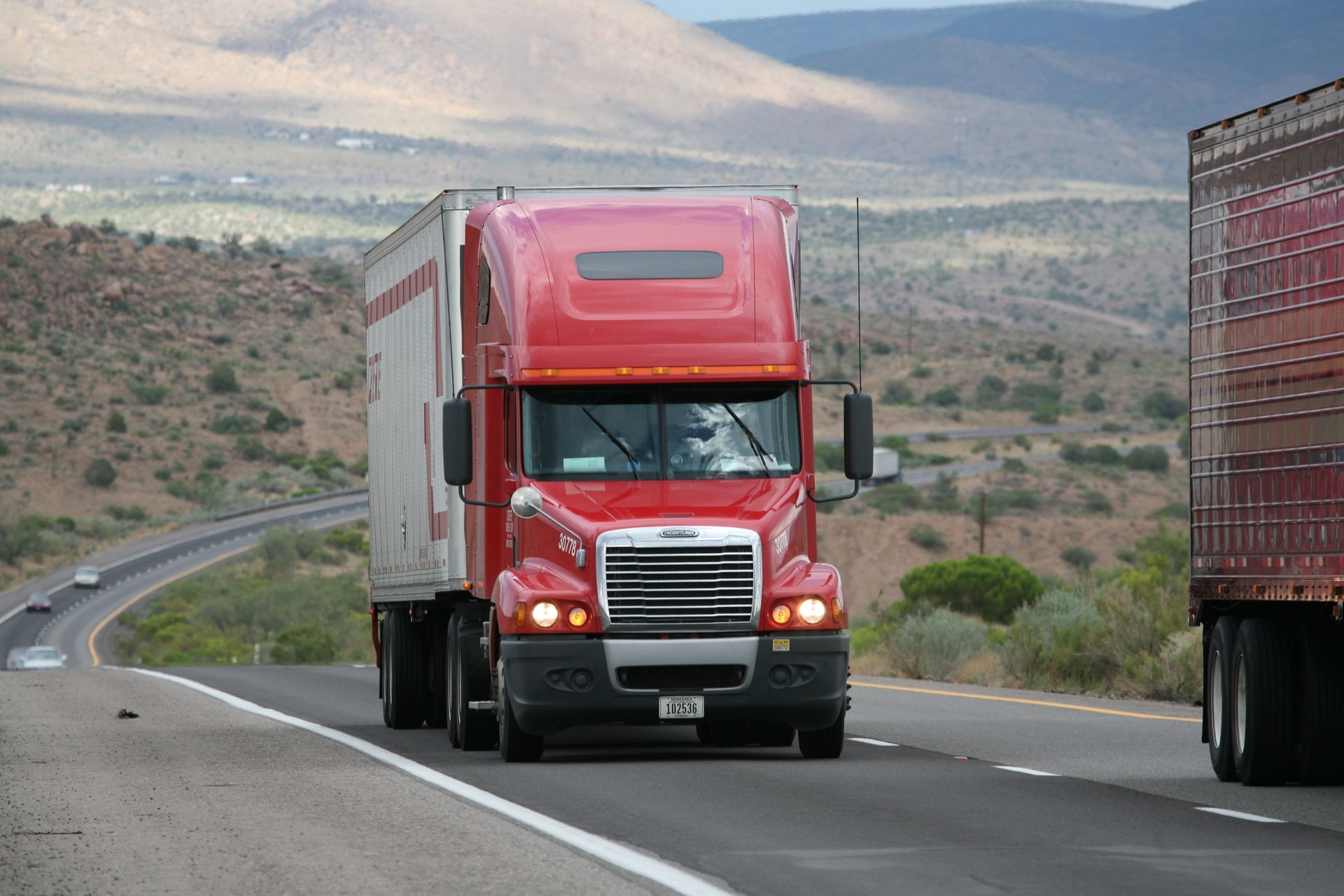
Class C covers lorries over 3,500 kg, including heavy goods vehicles, and class C1 covers medium lorries from 3,500 to 7,500 kg. The minimum age is 18 for C1 and 21 for C (or 18 with a professional qualification in the accelerated basic qualification). To get a class C licence you need the simple eye test plus a full ophthalmological examination and a general medical examination, and the licence is valid for five years, after which it must be renewed with new medical checks.
For expats converting a lorry licence, the process is more demanding than for a car: the medical examinations are more expensive, the driving test is longer, and the authorities check professional qualifications more carefully. Our guide to the lorry eye test explains the ophthalmological examination in detail, and our article on the eye test for a lorry driving licence (class C) covers the requirements and the medical reports.
Class D, D1: buses
Class D covers buses with more than eight passenger seats, and class D1 covers minibuses with up to 16 passenger seats. The minimum age is 21 for D1 and 24 for D (or 21 and 23 with a professional qualification). Like the lorry classes, the bus classes need the full medical examinations, and the licence is valid for five years. Bus drivers also need a psychological assessment in some cases, and they need a certificate of professional competence if they drive commercially.
Bus licences are the hardest to convert, because most countries’ bus licences do not map exactly onto the German classes, and the German authority will check your driving record and your medical fitness in detail. If you plan to drive a bus professionally in Germany, start the process early and expect it to take several months.
Class BE, C1E, CE, DE: trailers
The E classes are extensions for towing. BE extends class B to heavier trailer combinations, up to a combined weight of 7,000 kg. C1E and CE extend the lorry classes, and D1E and DE extend the bus classes. You need the base class first, and for the E classes you need an additional practical test, except for BE, where the rules are easing: in Germany, taking the extension code 96 (a short course, no test) already allows a combination up to 4,250 kg, and BE itself requires a practical test but no theory test.
Class AM, L, T: mopeds and tractors
Class AM covers mopeds up to 45 km/h and light quadricycles, with a minimum age of 15. Class L covers agricultural and forestry tractors up to 40 km/h, with a minimum age of 16, and class T covers faster agricultural tractors up to 60 km/h, from 16 for the smaller class and 18 for the full class. These classes are relevant for a few expats working in agriculture, and they are the only classes where the theory test is relatively short.
Minimum ages for each class
The minimum ages are: AM at 15, A1 and L at 16, B (with accompaniment) and A2 at 17 or 18, A at 20 (after two years of A2) or 24, C1 at 18, C at 21 (or 18 with a professional qualification), D1 at 21 and D at 24 (or 21 and 23 with a professional qualification). The ages for the professional classes are lower if you hold the accelerated basic qualification (beschleunigte Grundqualifikation), which is the professional driver qualification for lorry and bus drivers under EU law.
The eye test for each class
The eye test depends on the group, not on the individual class. Group 1 (car and motorcycle) needs the simple eye test at the optician: a visual acuity of 0.7, costs about 7 euros and takes fifteen minutes. Group 2 (lorry and bus) needs the full ophthalmological examination by an eye doctor, including a visual field test, colour vision and other checks, plus a general medical examination, and both must be repeated every five years when the licence is renewed. This is the biggest practical difference between the classes for expats, and it is one of the main reasons to think carefully before applying for a C or D class if you only need a B.
Which class do you need as an expat?
Most expats need class B and nothing else. If you are converting a foreign car licence, class B is what you will get. If you are converting a motorcycle licence, you will get the equivalent A class. If you drive a lorry or a bus professionally, you need the C or D class, but you should start the medical examinations early, because they take time and cost more. And if you only want to drive a motorhome, check its weight: up to 3,500 kg is class B, and above that it is C1 — a detail that matters for large motorhomes.
Whatever class you need, the process is the same at the start: check the class on your current licence, confirm with your local authority how it will be converted, take the eye test, complete the first aid course, and apply. If you are unsure, your Führerscheinstelle can confirm which German class corresponds to your foreign licence.
Which licence class do you actually need?
The question depends on what you want to drive, not on what licence you already have. Class B is the standard car licence: it covers cars and small vans up to 3.5 tonnes, with a trailer up to 750 kilograms, or a trailer heavier than that as long as the car and trailer together do not weigh more than 3.5 tonnes. For most expats, B is the only class that matters, and it is also the class you get automatically when you convert a foreign car licence.
If you tow a caravan or a horse trailer, B is often not enough. The BE class covers a car with a trailer of up to 3.5 tonnes, and it is the class most caravan owners take. There is also the B96 code, a short training course of seven hours that is entered on your licence and lifts the combined weight limit to 4.25 tonnes — you do not need a test for B96, just the training. If you are not sure which one you need, check the maximum permitted weight of your trailer: it is printed on the trailer’s registration document, and if the number is over 750 kilograms, think about BE or B96 before you tow.
Motorhomes are a special case. A motorhome up to 3.5 tonnes can be driven on a B licence, which covers most rental motorhomes in Germany. A heavier motorhome needs C1, which covers vehicles from 3.5 to 7.5 tonnes, or C for anything heavier. The C1 class also requires a medical examination and an eye test, and it is valid for five years at a time — unlike the B card, which is renewed every 15 years with a new photo and no medical. If you are buying a motorhome, check its weight before you sign: the difference between 3.5 and 7.5 tonnes is the difference between a B licence and a C1 licence.
The motorcycle classes are A1, A2 and A. A1 covers light motorcycles up to 125 cc and is available from age 16. A2 covers motorcycles up to 35 kW and is available from age 18. A covers all motorcycles, and it is available from age 24, or from age 20 if you have held A2 for two years. Each step requires a test, and the training is done on the class of motorcycle you want to ride: for a direct entry, the test covers theory and practice, while an upgrade to the next class needs only a practical test.
Two more classes are worth knowing. Class T is for agricultural tractors, and class L is for small tractors and self-propelled working machines — both are relevant if you live in a rural area or work on a farm. Class AM covers mopeds and light quadricycles, and it is the class most 15- and 16-year-olds start with. The D classes are for buses: D1 for minibuses with up to 16 passengers, and D for full-size buses. For both, you need a medical examination, an eye test and a psychological assessment, and the licence is valid for five years.
One more rule that surprises many expats: the class you hold in your home country decides what you get in Germany when you convert. If your foreign licence only covers automatic cars, your German licence will carry the code 78, which limits you to automatics. And if your licence covers only cars, you will not get a motorcycle class for free — each class has to be earned separately, either in your home country or in Germany.
Frequently asked questions
What is class B in Germany?
Class B is the standard car licence: cars and small vans up to 3,500 kg with up to eight passenger seats. The minimum age is 18, or 17 with accompanied driving. It needs only the simple eye test.
Can I drive a motorhome with a class B licence?
Yes, if the motorhome weighs up to 3,500 kg. Larger motorhomes need class C1.
Do I need a new eye test for a lorry licence?
Yes, and it is a different test: lorry and bus licences (classes C and D) need a full ophthalmological examination by an eye doctor, and a general medical examination, repeated every five years.
What is the minimum age for a German driving licence?
18 for a car (class B), or 17 with accompanied driving; 16 for motorcycles up to 125 cc (A1); 21 for lorries (C) and 24 for buses (D), or younger with a professional qualification.
Which German licence class do I get when I convert a foreign licence?
The authority maps your foreign licence to the closest German class, normally class B for a standard car licence. Motorcycle, lorry and bus licences are converted to the equivalent A, C or D class.
Conclusion: start with class B, add the rest later
The German licence classes look complicated, but for most expats the answer is simple: class B. It covers the car, the small van and the motorhome up to 3,500 kg, and it is the class that every foreign car licence converts into. The motorcycle classes are staged by size and age, and the lorry and bus classes need a full medical examination and are renewed every five years. Find your class, take the eye test that goes with it, and the rest of the process falls into place.