Eye Test for Trailer Licences (Class BE)

You have a caravan, a horsebox or a big trailer, and the car licence is not enough to tow it. The answer is usually class BE, the licence for a car with a heavy trailer, and the first question most applicants ask is whether the eye test is different, stricter or more complicated. The good news is that it is not: the eye test for trailer licences class BE is the same simple test as for an ordinary car licence, with the same standard, the same certificate and the same price. What is different is the weight limit and the practical test, and this guide explains both, so that you can sort out the eye test quickly and spend your time on the part that actually needs practice.
This guide explains the eye test for trailer licences class BE in plain English: what class BE covers, how it differs from the B96 extension and from a lorry licence, what the eye test requires, what towing demands of your eyes that the test does not measure, and what to do if the test is failed. It is written for caravan owners, horse owners and anyone who needs to tow a heavy trailer, and it gives you the facts you need to apply with confidence.
What class BE is
Class BE is the licence for a car or light van, class B, combined with a trailer whose maximum authorised mass is over 750 kilograms, where the combination has a maximum authorised mass of up to 7,000 kilograms. In plain terms, it is the licence you need when the trailer is too heavy for an ordinary car licence. A typical example is a family car towing a large caravan, or a horsebox with two horses, or a car transporter with a vehicle on it. Without BE, a car licence only covers a trailer up to 750 kilograms, or a combination up to 3,500 kilograms where the trailer is not heavier than the towing vehicle.
Class BE requires a practical test, in which you demonstrate that you can drive the combination safely, including reversing with the trailer and uncoupling and coupling it. There is no theory test for BE, which is a welcome difference from a first licence, but the practical test is a real one, and it is worth taking lessons for it, because reversing a trailer is a skill that does not come naturally. The licence is issued without a time limit, like a car licence, and it does not need to be renewed, although the normal rules about medical fitness still apply.
BE, B96 and the lorry licence: the differences
There are three ways to tow legally, and it is worth knowing which one you need. The simplest is B96, which is not a licence class at all but an entry on your car licence, obtained after a short training course of at least seven hours, with no test at all. B96 allows a combination of up to 4,250 kilograms, which is enough for a medium caravan or a small horsebox, and it is the right choice if that is all you need. Class BE goes further, up to 7,000 kilograms, but it needs a practical test, and it is the right choice for a heavy caravan, a large horsebox or a car transporter.
The lorry licence, classes C1 and C, is something else again: it is for trucks, not for cars with trailers, and it requires a medical examination with stricter vision standards, a theory test and a practical test, as well as being limited to five years before renewal. If you are towing a caravan behind your car, you do not need a lorry licence, and the eye test for BE is the simple one, not the medical examination that a lorry driver needs. Our guide to the eye test for a lorry licence explains those stricter rules, and the contrast shows why BE is the simpler path for a private trailer.
The eye test for class BE
The eye test for class BE is the same simple test as for a car licence, known as the Sehtest. It is carried out by an optician or an ophthalmologist, it takes a few minutes, and it measures the visual acuity of each eye separately and of both eyes together, with and without glasses or contact lenses as appropriate. The requirement, as for class B, is a visual acuity of at least 0.7 on the better eye, and the result is recorded on the official certificate. If you reach the standard only with glasses, the licence carries the entry for corrective lenses, and you must wear them when driving, with or without the trailer.
In practice, most applicants for BE already hold a car licence, and that means they already have a certificate, or at least they have already passed the eye test once. The certificate is valid for two years from the date of issue, so if your car licence certificate is still in date, you may be able to use it for BE as well, although the authority may ask for a fresh one if the old one is near its expiry, and it is worth checking before you apply. If you need a new test, it costs the usual few euros at an optician, and it is the same quick procedure you will remember from your car licence. Our guide to the eye test for tractor licences classes L and T covers another licence where the test depends on the class, which is a useful comparison when you are working out which test applies to you.
Towing and vision: what the test does not measure
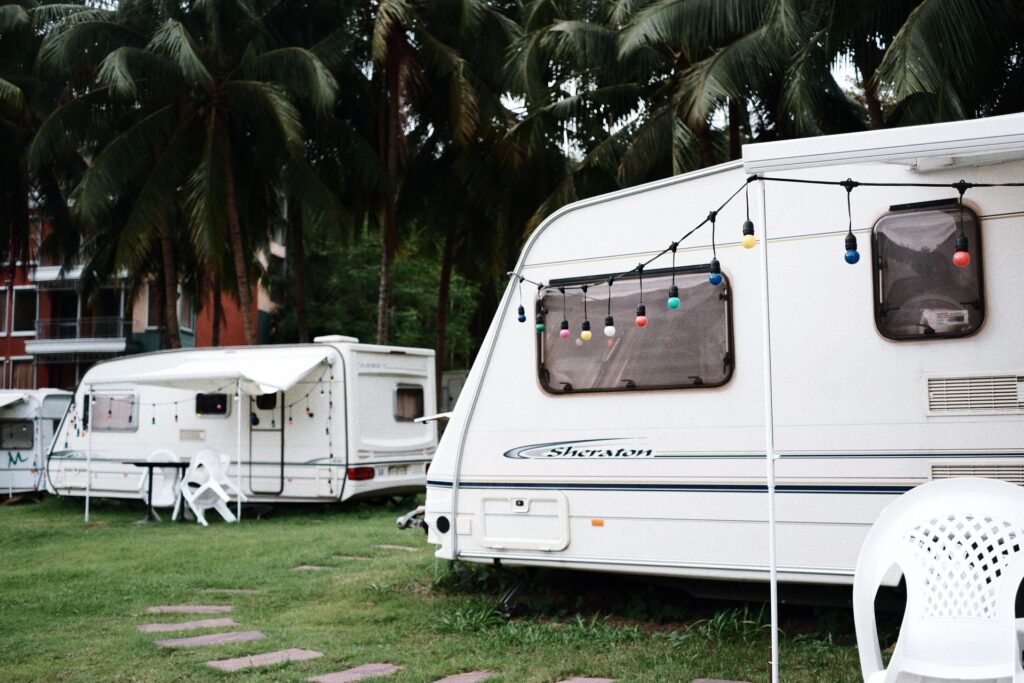
Passing the eye test is only part of being safe with a trailer, because the test measures your visual acuity, not your ability to judge a reversing trailer or to use your mirrors. A trailer changes the vehicle in ways that have nothing to do with how well you can read a chart: the combination is longer, the blind spots are bigger, the braking distance is longer, and reversing requires you to steer in the opposite direction to the way you want the trailer to go. None of that is tested by the eye test, and all of it is tested by the practical test, which is why the practical test exists and why it is worth taking lessons for it.
Good vision does help with towing, though, in a practical sense. Wide-angle mirrors are essential, and they need to be adjusted properly so that you can see the length of the trailer, and your distance vision needs to be good enough to judge the gap when overtaking a lorry or joining a motorway. If you wear glasses, keep them clean and keep a spare pair, because a smear on the lens matters more when you are towing than when you are driving a car alone. And if your eyes tire easily on long journeys, plan regular stops, because towing is more tiring than driving, and tired eyes are a safety risk with a trailer behind you.

Failing the test: what to do
Failing the eye test for class BE is not common, because most applicants already hold a car licence and have already passed the same test, but it can happen if your vision has changed since then, or if your glasses are out of date. The remedy is the same as for any eye test: the optician measures your eyes, orders the right correction, and repeats the test once the glasses or contact lenses are ready. The retest is a new test, and the fee is charged again, so it is worth having the measurement done before you apply, rather than discovering the problem in the middle of the application.
If the failure is due to an eye condition, such as a cataract, the optician will refer you to an ophthalmologist, and the application waits until the condition has been treated and the vision has reached the required level. That is frustrating when the caravan holiday is already booked, but it is much better than driving a heavy combination with poor vision. In the meantime, check whether the B96 extension would cover your trailer, because if the combination is under 4,250 kilograms, B96 may be enough, and it needs no eye test at all beyond the one you already passed for your car licence.
Costs, documents and how to apply
The cost of class BE is modest compared with a first licence. The eye test usually costs between six and fifteen euros at an optician, the driving lessons for the practical test cost a few hundred euros depending on how many you need, and the application fee at the driving licence authority is charged separately. The total is usually between five hundred and eight hundred euros, although it varies by region and by driving school. Keep the receipts for everything, because the eye test certificate is only one of the documents you will need.
To apply, you need your identity document, a recent biometric passport photo, the eye test certificate, and a first aid course certificate if you have not already provided one for your car licence. The application is made at the driving licence authority of your place of residence, and the practical test is usually booked through the driving school, which will also provide a car and trailer for the test. Apply in good time before the holiday season, because driving schools are at their busiest in spring, when everyone wants to be ready for the summer.
Eye test for trailer licences: towing safely after you pass
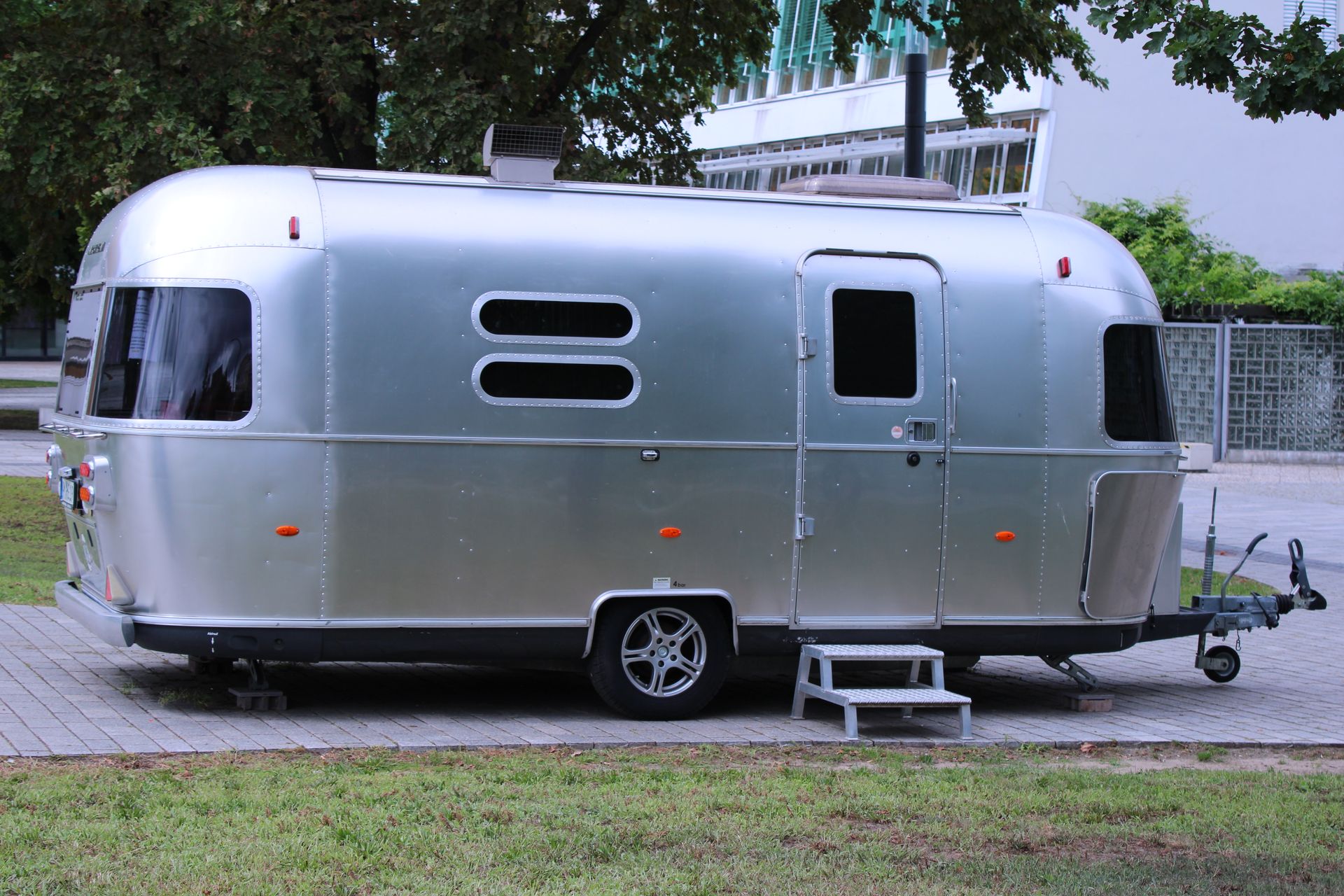
Passing the practical test is only the beginning, because towing a heavy trailer safely is a skill that improves with practice, and the first few journeys are the ones that matter most. Start with a short, easy trip, on a road you know, with no time pressure, and practise the basics: pulling away smoothly, braking earlier than you would without a trailer, and taking corners wider than you think you need to. The trailer follows the car, but it cuts the corner, and the first time you hear the wheels hit a kerb, you will understand why. A few short trips, in daylight and in good weather, will teach you more than a day of reading about it, and the confidence will come quickly.
Reversing is the skill that most people worry about, and it is the skill that needs the most practice. The rule is simple: to make the trailer go left, turn the wheel right, and to make it go right, turn the wheel left, and the reason is that the trailer pivots on the tow ball. Practise in an empty car park, with a friend to watch, and go slowly, because a slow reverse is a controlled reverse, and a fast one is an accident waiting to happen. If the trailer starts to jack-knife, pull forward a little, straighten it, and start again: there is no shame in a second attempt, and there is a lot of damage in a stubborn one. Most drivers can reverse a trailer confidently after a few sessions, and it is worth the effort, because the alternative is to avoid reversing altogether, which is not always possible.
Mirrors are the other half of safe towing, and they are worth setting up properly before every journey. The standard mirrors on a car are not enough for a wide trailer, and towing mirrors, which clip on to the existing mirrors and extend the view, are essential, and in some countries they are a legal requirement. Adjust them so that you can see the full length of the trailer and the road behind it, and check them regularly, because they vibrate and move, and a mirror that has moved is a mirror that lies. If you cannot see the end of the trailer, you cannot overtake safely, and you cannot change lanes safely, and that is a risk that is easy to avoid.
Finally, the load itself matters, and it is the part of towing that has nothing to do with your eyes and everything to do with physics. A trailer that is loaded with too much weight at the back will sway, and a trailer that is overloaded will brake badly, and both are dangerous. The rule for loading is to keep the heaviest items low and over the axle, and to make sure the nose weight, the weight on the tow ball, is within the limits for your car and the trailer, which are stated in the manuals. Check the tyres, the lights and the coupling before every journey, because a trailer that is not properly hitched is a hazard to everyone on the road, and the check takes less than five minutes.
Frequently Asked Questions
Do I need a new eye test for class BE? The test is the same simple test as for a car licence. If your car licence certificate is still valid, within its two years, you may be able to use it, but the authority may ask for a fresh one if it is near expiry.
Is class BE a lorry licence? No. BE is a car licence with a trailer, up to 7,000 kilograms in total. A lorry licence is a separate class with a medical examination and stricter standards.
Can I drive a caravan with an ordinary car licence? Only if the trailer is up to 750 kilograms, or the combination is up to 3,500 kilograms with the trailer not heavier than the car. For a heavier combination, you need B96 or BE.
How long is the eye test certificate valid? Two years from the date of issue, the same as for a car licence, so check the date before you apply.
Do I need towing mirrors for a caravan? Yes, if the caravan is wider than the car, which it usually is. Towing mirrors extend your view so that you can see the full length of the caravan and the road behind it, and they are essential for safe overtaking and lane changes.
How fast can I drive with a trailer in Germany? The limit is usually 80 km/h, although a trailer with a 100 km/h approval can be driven at 100 km/h on motorways if the car and trailer meet the conditions. Check the approval and the road signs, because the limit depends on the combination.
Conclusion
The eye test for trailer licences class BE is the simplest part of the application: the same quick test as for a car, the same standard, and usually the same certificate you already hold. What is new is the weight, the practical test and the skill of reversing a trailer, and those are the parts that deserve your time and your practice.
Check your certificate, book the eye test if it has expired, and spend the rest of your preparation on the driving itself: on mirrors, on reversing, and on getting used to the length and the weight of the combination. The caravan will be ready when you are, and the licence is the last piece of the journey.