Eye Test for Motorcycle Licence Class A2

Introduction
Eye test for motorcycle licence class A2 is the first step for anyone who wants to ride a motorcycle of up to 35 kilowatts in Germany. Class A2 is the middle motorcycle licence: it allows you to ride a motorcycle with a maximum power of 35 kW and a power-to-weight ratio of no more than 0.2 kW per kilogram, and you can get it from the age of 18. For many expats, the A2 licence is the practical choice, because it covers most everyday motorcycles, it is cheaper than the full class A, and it can be upgraded to class A after two years. But before you can start your riding course, you need to pass the eye test for motorcycle licence class A2, and this guide explains exactly how it works.
Eye test for motorcycle licence class A2 is the same test as the standard German driving licence eye test, the Sehtest, and it is done at an optician or an authorised doctor. It checks your visual acuity and your visual field, and the result is written on the official eye test certificate, the Sehtest-Bescheinigung. Riders are sometimes surprised that there is no special motorcycle eye test, but the reason is simple: the legal visual acuity limit is the same for cars and motorcycles, and good eyesight matters even more on a motorcycle, because you have no car body around you and you must spot hazards much earlier.
In this article, you will learn what class A2 allows you to ride, what the eye test for motorcycle licence class A2 involves, what visual acuity you need, what to bring to the test, and how much it costs. You will also learn about the theory and practical riding tests, the difference between A1, A2 and A, how to upgrade from A2 to A, and what happens if you fail the eye test. By the end, you will know how to get your eye test done, how to choose a driving school, and how to start riding in Germany safely.
What Is Motorcycle Licence Class A2?
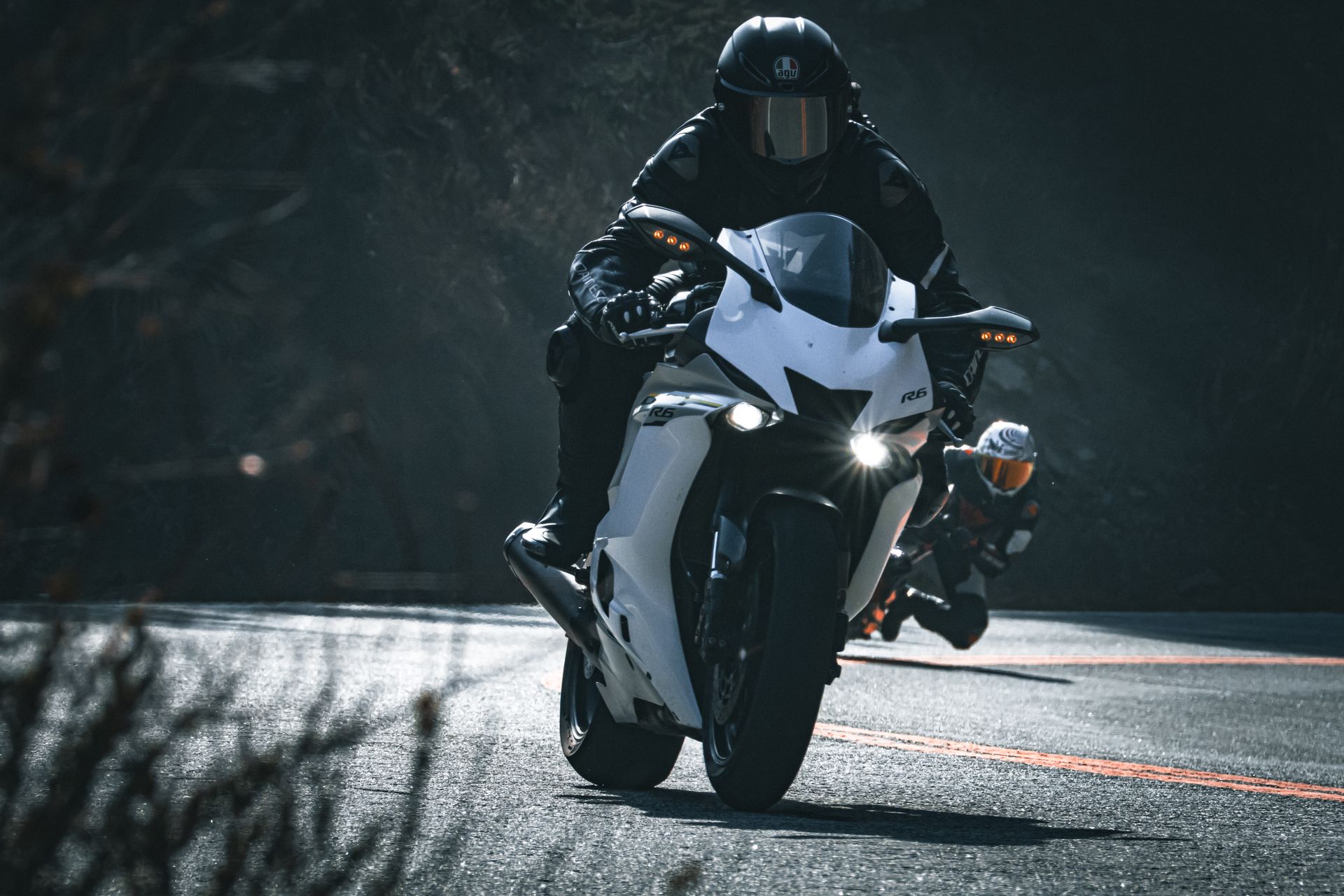
Class A2 is the German motorcycle licence for motorcycles with a maximum power of 35 kW, which is about 48 horsepower. The motorcycle must not be derived from a model with more than twice that power, and the power-to-weight ratio must not be more than 0.2 kW per kilogram. In practice, that covers a wide range of motorcycles, including many popular models that are restricted to 35 kW, such as the Honda CB500, the Yamaha MT-07, and the KTM 390 Duke. You must be at least 18 years old, and you must have lived in Germany for at least six months before you apply, or the application must be made in the town where you are registered.
There are two ways to get an A2 licence. The first is the direct route, where you take the theory and practical tests at the age of 18 without holding another motorcycle licence. The second is the progressive route, where you hold an A1 licence for at least two years and then upgrade to A2 with a shorter test. The A1 licence is for light motorcycles up to 125 cc, and it can be held from the age of 16. Many young riders take the A1 at 16 and the A2 at 18, while adult expats usually take the direct A2 route because it is faster and cheaper than going through A1 first.
Eye test for motorcycle licence class A2 is required for both routes, and the certificate is valid for two years, which gives you enough time to finish your riding course and to take the practical test. If your course takes longer than two years, you will need a new eye test. The certificate costs between 6.43 and 15 euros at an optician, and many large optician chains do the test free of charge. You can take the test at any optician in Germany, and the certificate is accepted by the driving licence office in any town.
Eye Test for Motorcycle Licence Class A2: How It Works
Eye test for motorcycle licence class A2 starts when you walk into an optician, an ophthalmologist, or a doctor at a technical inspection centre, with your identity card or passport in your hand. No appointment is needed at most opticians, and the test takes between ten and twenty minutes. You read letters or numbers from an eye chart, first with one eye covered and then with the other, and then with both eyes together. The chart is placed at a set distance, and the letters get smaller line by line. The optician writes your visual acuity, called Visus, on the certificate, and you need at least 0.7 with both eyes together, with or without glasses or contact lenses.

Eye test for motorcycle licence class A2 also includes a visual field test, which checks how much you can see to the sides without moving your eyes. This matters a lot on a motorcycle, because hazards come from the side more often than in a car, and because you cannot rely on a car mirror in the same way. The visual field test at the optician is a simple screening test, and the result is written as a pass if the field is sufficient. If the screening shows a problem, the optician will refer you to an ophthalmologist for a detailed visual field test.
If you wear glasses or contact lenses, the eye test for motorcycle licence class A2 is done with them on, and your certificate will state that you used a visual aid. The driving licence office will then add a condition to your licence, usually code 01.01 for glasses or 01.02 for contact lenses, which means that you must wear the aid while riding. This is especially important on a motorcycle, because your glasses can be affected by wind, rain, and a helmet visor, and a contact lens that slips can be dangerous. Many riders choose contact lenses for riding, or glasses that fit well under a helmet.
Glasses, Contact Lenses and Helmets
Eye test for motorcycle licence class A2 raises a practical question that car drivers never face: how do glasses work with a helmet? The answer is that you need glasses that fit under your helmet without pressing on your temples or sliding down your nose. A frame that is too wide will hurt after an hour, and a frame that is too narrow will not stay in place. Bring your helmet to the optician when you choose new glasses, and try them on together, so that the optician can adjust the frame for the helmet. Many opticians will do this for free, and it makes a real difference on a long ride.
Contact lenses are a good alternative for riders, because they do not fog up, they do not slide, and they do not need a frame. But they have their own problems. Wind can dry the eyes, especially at speed, and a dry contact lens can slip or fall out. A full-face helmet with a closed visor protects the eyes, and you should always ride with the visor down at speed, not only for the eyes, but also for insects and stones. Artificial tears can help on a long ride, and your optician or ophthalmologist can recommend a lens that stays comfortable on a motorcycle.
The helmet visor itself also affects your vision. A scratched or dirty visor scatters light and reduces contrast, in the same way as a dirty windscreen does in a car. Clean the inside and outside of your visor before every ride, and replace a visor that is scratched. A tinted visor is useful in bright sun, but it is not allowed at night or in a tunnel, and a visor that is too dark can make you miss a hazard. Some riders carry a clear visor for night riding and a tinted visor for the day, and they change it as the light changes.
The Theory and Practical Tests for Class A2
Eye test for motorcycle licence class A2 is only the first document in your application. After the eye test, you need a first aid course, a biometric passport photo, and an application to the driving licence office. Your driving school, the Fahrschule, usually helps you with the paperwork and books your theory test. The theory test has 30 multiple-choice questions, and you must pass it before you can take the practical test. It covers traffic rules, road signs, hazard perception, and questions that are specific to motorcycles, such as how to ride safely in a group and how to handle a motorcycle in the rain.
The practical test for class A2 has two parts. The first part is done on a closed training area, and it tests your slow riding, your braking, your emergency stop, and your ability to ride a slalom through cones. The second part is done on the public road, and it tests your riding in real traffic, your observation, your use of mirrors and indicators, and your ability to ride safely at speed. The whole practical test usually lasts about an hour, and the examiner rides behind you in a car or on a motorcycle. You need a good pair of eyes for both parts, because the examiner will ask you to read a number plate at a distance and to spot hazards early.
The eye test for a driving licence on this site explains the standard Sehtest in more detail, and the eye test for lorry and bus drivers page explains the stricter Group 2 rules that apply when a rider later decides to train as a professional driver. Together, they give you the full picture of the German eye test system.
What Happens If You Fail the Eye Test
Eye test for motorcycle licence class A2 can be failed, and the most common reasons are a wrong glasses prescription, tired eyes, and a dirty lens. If you fail, the optician will tell you your visual acuity and suggest the next step. A new prescription is often enough, and a new pair of glasses can be ready within a few days. You can repeat the test at any optician, and there is no compulsory waiting time. But do not repeat the test until you have fixed the reason for the failure, because the same eyes will give the same result at the next optician.
If a new prescription does not lift your visual acuity above 0.7, the optician will refer you to an ophthalmologist. The ophthalmologist will check for a cataract, a retinal disease, or an astigmatism that needs a special lens. The driving licence office can then decide whether to issue a licence with restrictions, for example a licence that requires you to wear glasses or contact lenses, or a licence that limits you to riding in daylight. A restricted licence is far better than no licence, and many riders in Germany ride every day with a glasses condition on their licence.
Upgrading from A2 to A
Eye test for motorcycle licence class A2 is also the starting point for the upgrade to the full class A licence, which allows you to ride any motorcycle, with no power limit. You can upgrade after holding an A2 licence for at least two years and reaching the age of 20, by taking a practical test, with no theory test needed. Your eye test certificate from the A2 application may still be valid if it is less than two years old, but if it has expired, you will need a new test. Check the date on your old certificate before you apply, and take a new test if it has expired, so that your upgrade is not delayed.
Eye test for motorcycle licence class A2 is a simple test, but it is the foundation of your riding career. Take it seriously, sleep well the night before, bring your correct glasses or contact lenses, and tell the optician if you have diabetes or any other health problem that could affect your eyes. A fair and honest result protects you on your motorcycle, and it protects everyone you share the road with.
Frequently Asked Questions
Do I need an eye test for a motorcycle licence class A2 in Germany?
Yes. Eye test for motorcycle licence class A2 is the standard German driving licence eye test, the Sehtest, and you need the certificate to apply for your A2 licence. It is done at an optician or an authorised doctor.
What visual acuity do I need for class A2?
You need a visual acuity of at least 0.7 with both eyes together, with or without glasses or contact lenses. The test also checks your visual field, which matters a lot on a motorcycle.
How much does the eye test for class A2 cost?
The standard test costs between 6.43 and 15 euros at an optician, and many large optician chains do it free of charge. An ophthalmological examination, if you need one, costs more, usually between 50 and 150 euros.
Can I ride a motorcycle with glasses?
Yes. Many A2 riders wear glasses, but the frame must fit under your helmet. Bring your helmet to the optician when you buy glasses, or use contact lenses, and always ride with your visor down at speed.
Can I upgrade from A2 to A without a new eye test?
Sometimes. If your eye test certificate is less than two years old, you can use it for the upgrade. If it has expired, you will need a new eye test before your upgrade application can be processed.
For the official legal text behind the rules in this article, see the German driving licence regulation (Fahrerlaubnis-Verordnung).
Eye test for motorcycle licence class A2 is the first step towards riding in Germany. Eye test for motorcycle licence class A2 is quick, cheap, and easy to arrange at any optician. Eye test for motorcycle licence class A2 protects you and everyone around you on the road.
Conclusion
Eye test for motorcycle licence class A2 is a simple test with a big importance, because a motorcycle rider has no car body to protect her and must see hazards early. The test is the standard Sehtest, done at an optician, and it needs a visual acuity of 0.7 with both eyes together and a normal visual field. Your certificate is valid for two years, and it costs only a few euros. Bring your identity card, your glasses or contact lenses, and your helmet to the optician if you need new glasses. If you fail, a new prescription is often enough, and you can repeat the test at any time. Once you pass, you can start your theory and practical training, and after two years you can upgrade to the full class A licence. Book your eye test, prepare well, and ride safely in Germany.