Eye Test for Lorry Drivers Who Wear Glasses

Introduction
Eye test for lorry drivers who wear glasses is a topic that worries many professional drivers, because if you wear glasses, you may fear that you will fail the lorry eye test, and that you will lose your C1 or C licence. That is not true. Most lorry drivers wear glasses or contact lenses, and the Group 2 eye test is designed for drivers who need a visual aid. The test is done with your glasses on, and the legal limits are measured with the glasses in place, so a driver with well-chosen glasses can pass the test without problems. Eye test for lorry drivers is a medical examination, not a test of whether you need glasses, and it is done to make sure you see well enough to drive a lorry safely.
Eye test for lorry drivers who wear glasses has rules that are different from the car eye test. The visual acuity must be at least 0.8 in the better eye and 0.1 in the worse eye, a normal visual field is needed, and the doctor will check the health of your eyes. If you wear glasses, the result is measured with them on, and your licence will carry a glasses condition, which says that you must wear glasses, or contact lenses, when you drive. Eye test for lorry drivers is done at the medical examination for a C1 or C licence, and it must be repeated every five years, or more often if your eyesight changes.
In this article, you will learn how the eye test for lorry drivers who wear glasses works in Germany, what visual acuity you need, what happens if your prescription changes, how to prepare for the medical examination, and what to do if you fail. You will also find practical advice on which glasses are suitable for lorry driving, on why contact lenses are sometimes better, and on the special rules for older drivers, for whom the prescription changes more often. By the end, you will know how to keep your lorry licence, even if you wear glasses.

The Group 2 Test for Lorry Drivers
Eye test for lorry drivers is part of a medical examination, which is done by an occupational health doctor or an ophthalmologist, at a technical inspection centre or in a doctor’s practice. The examination includes a visual acuity test, with and without glasses, a visual field test, a colour vision test, and a check of the health of your eyes, including the lens, the retina, and the eye pressure. The doctor will also check your general health, including hearing, blood pressure, and diabetes, because a professional driver needs a general medical examination, not only an eye test. Eye test for lorry drivers usually takes 30 to 60 minutes, and it costs between 100 and 250 euros, depending on the doctor.
Eye test for lorry drivers who wear glasses is done in two ways. The doctor first measures your visual acuity without glasses, to see how much your glasses help, and then measures it with glasses, to check that you reach the legal limit. Eye test for lorry drivers is passed if your visual acuity with glasses is at least 0.8 in the better eye and 0.1 in the worse eye, and if your visual field is normal. The doctor also checks whether you need a special lens, for example a lens that corrects astigmatism, and whether your prescription needs to be updated before the next examination.
What Is the Glasses Condition?
Eye test for lorry drivers who wear glasses results in a glasses condition on the licence. The condition is a code on the licence, usually code 01.01 for glasses, or 01.02 for contact lenses, and it means that you must wear the visual aid when you drive. If you are stopped by the police and you are not wearing your glasses, you will be fined, and your insurance may not cover you in an accident. Eye test for lorry drivers who wear glasses is a legal requirement, and it applies to lorry, bus, and taxi drivers, and it applies to class C1 and C licences.
Eye test for lorry drivers also checks that you have a spare pair of glasses in the vehicle. That is not a legal requirement in Germany, but it is strongly recommended by driving instructors and safety experts, because a pair of glasses can break, and a spare pair means you are not stuck on the road. Eye test for lorry drivers is also a chance to think about your eyesight as it changes with age, because a lorry driver who is over 50 needs a new medical examination every five years, and the prescription often changes at each examination.
Choosing Glasses for Lorry Driving
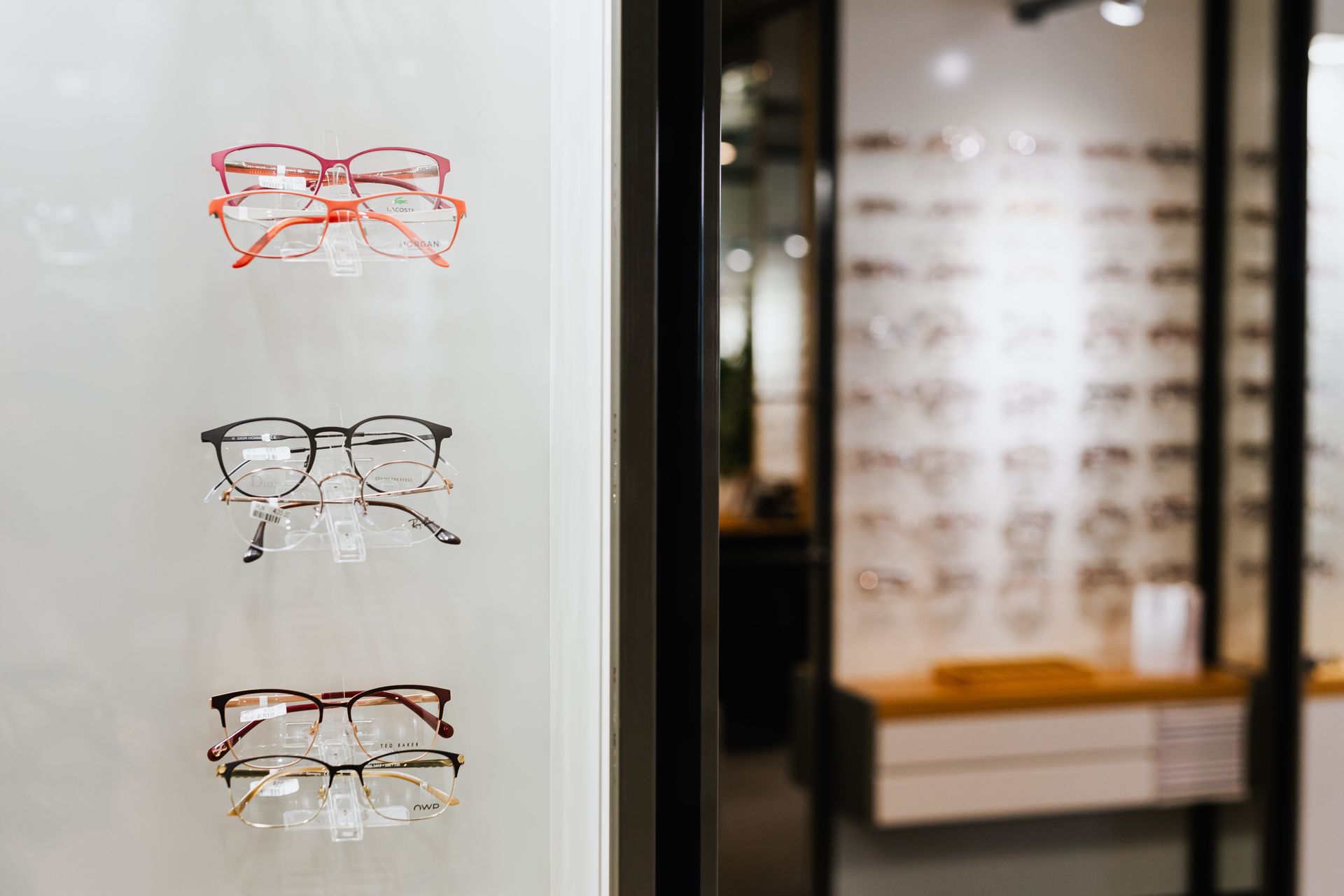
Eye test for lorry drivers who wear glasses is easier if you choose the right glasses. A lorry driver needs a wide field of view, because the mirrors are used often, and a driver who has to turn their head to see the mirrors is slower to react. That means a frame with a narrow lens is a bad choice, and a frame with a wide lens, covering the whole visual field, is better. Eye test for lorry drivers is also easier if the glasses have an anti-glare coating, because a lorry driver often drives at night, and the headlights of oncoming traffic can cause glare that makes it hard to see.
The eye test for lorry and bus drivers page on this site explains the Group 2 rules in detail, and the eye test for a driving licence page on this site explains the standard test for a car licence. If you are a lorry driver, the first page is the one to read, and if you are only applying for a car licence, the second page is more relevant.
Contact Lenses for Lorry Drivers
Eye test for lorry drivers who wear glasses can also be taken with contact lenses, and many lorry drivers prefer lenses because they give a wider field of view and they do not fog up in the rain. Contact lenses are fine for the test, and they are also fine for driving, but they can be a problem if the cab is dusty or if you drive for a long time without blinking enough, and dry eyes are common in a lorry cab. Eye test for lorry drivers with lenses should be taken with the lenses in place, and your licence will carry a contact lens condition, code 01.02, and that means you must wear the lenses, or your glasses, when you drive.
Eye test for lorry drivers is not the only reason to have your eyes checked regularly. If you drive a lorry for 8 hours a day, your eyes get tired, and tired eyes cannot focus well. For that reason, the advice in this article is to take a rest every two hours, to drink plenty of water, and to have your eyes checked every year, even if the medical examination is only due every five years. Eye test for lorry drivers is a legal check, but your eyesight is something you need every day, and it is worth looking after.

What Happens If You Fail
Eye test for lorry drivers can be failed, and the most common reasons are a wrong glasses prescription, tired eyes, and a cataract. If the prescription is wrong, new glasses are often enough, and the test can be repeated after a few days. If a cataract is the cause, an operation can fix it, and the test can be repeated after the eye has healed, usually after a few weeks. If your visual field is too narrow, a specialist can confirm the problem, and the licence office will have to decide whether a licence with restrictions is safe.
If the failure is not caused by a simple problem, the licence office can issue a licence with restrictions, for example a licence that requires you to wear glasses, a licence that does not allow night driving, or a licence that is limited to certain vehicles. Eye test for lorry drivers is a medical decision, and a professional driver who cannot see well enough to drive a lorry safely will lose their licence, but that is rare, because most problems can be fixed.
Keeping Your Lorry Licence Healthy: A Yearly Eye Check
Eye test for lorry drivers who wear glasses is a legal check every five years, but your eyesight changes more often than that, and a yearly eye check is the best way to keep your lorry licence safe. Eye test for lorry drivers should be done every year at an optician, even if the medical examination is only due every five years, because a prescription that is more than two years old can be wrong, and a driver who cannot see clearly is a risk on the road. A yearly check is quick, it takes about 15 minutes, and it is often free at a large optician chain, and it can catch a problem, such as a cataract or a change in your prescription, before it causes a failed medical examination.
Eye test for lorry drivers who wear glasses is also about the conditions in the cab, because a lorry cab is a dry and dusty place, and a driver who wears contact lenses can get dry eyes, and a driver who wears glasses can get a dirty lens, and both make it harder to see. Eye test for lorry drivers should be taken with the glasses you will use for driving, and you should keep a cleaning cloth in the cab, and a spare pair of glasses, so that you are not stuck on the road if your glasses break. Drink plenty of water, take a rest every two hours, and do not drive when your eyes are tired, because tired eyes cannot focus well, and a tired driver is a dangerous driver.
Eye test for lorry drivers should also consider the time of day, because a lorry driver often drives at night, and the headlights of oncoming traffic cause glare, and a driver with a cataract will be dazzled more easily. Eye test for lorry drivers with an anti-glare coating on the lenses can help, because the coating reduces the reflections from headlights, and makes it easier to see at night, and it is worth the extra cost if you drive a lot in the dark. Keep your windscreen clean, inside and out, because a dirty windscreen scatters light and makes the glare worse, and keep your headlights clean, because dirty headlights are dimmer, and less visible to other drivers.
Eye test for lorry drivers who wear glasses should also be planned around the five-year renewal, because the medical examination for a C1 or C licence takes time, and the appointment must be booked in advance, and the report from the doctor must be sent to the licence office before the licence expires. Eye test for lorry drivers is best booked three months before the licence expires, so that there is time for a new prescription, or for treatment, if the examination finds a problem, and so that you do not lose your licence because of a delay. With a yearly eye check, good glasses, and a well-planned renewal, you can keep your lorry licence, safely, for years in Germany.
Frequently Asked Questions
Can a lorry driver wear glasses?
Yes. Eye test for lorry drivers who wear glasses is done with glasses on, and the test is passed if your visual acuity with glasses is at least 0.8 in the better eye and 0.1 in the worse eye. Most lorry drivers wear glasses or contact lenses, and the licence will carry a glasses condition.
Do I need a spare pair of glasses in the lorry?
It is not a legal requirement in Germany, but it is strongly recommended, because if your glasses break, you cannot drive legally without them, and a spare pair means you are not stuck on the road. Keep the spare pair in the cab, not in a case at home.
How often does the eye test have to be repeated?
Eye test for lorry drivers must be repeated every five years for a C1 or C licence, and more often after the age of 50, when the renewal is every five years with a medical check each time.
Are contact lenses allowed for lorry drivers?
Yes, contact lenses are allowed, and the test can be taken with lenses in place. Your licence will carry a contact lens condition, code 01.02, and you must wear the lenses, or your glasses, when you drive.
What happens if my prescription changes?
Eye test for lorry drivers should be taken with your new prescription, and the licence office should be told if your prescription changes, because a licence with a glasses condition must match the correction you need. Have your eyes checked every year, not only every five years.
For the official legal text behind the rules in this article, see the German driving licence regulation (Fahrerlaubnis-Verordnung).
Eye test for lorry drivers who wear glasses is done with the visual aid in place. Eye test for lorry drivers has a limit of 0.8 in the better eye and 0.1 in the worse eye. Eye test for lorry drivers should be repeated every five years.
Conclusion
Eye test for lorry drivers who wear glasses is not a barrier to a professional driving licence. Most lorry drivers wear glasses or contact lenses, and the Group 2 test is done with the visual aid in place, with a limit of 0.8 in the better eye and 0.1 in the worse eye. Choose glasses with a wide field of view and an anti-glare coating, keep a spare pair in your cab, and have your eyes checked every year. If your prescription changes, update your glasses and take the medical examination with the new correction, well before your licence expires. With good glasses and regular checks, you can keep driving your lorry safely, for years, in Germany.