Eye Test for Bus Drivers (Class D): What Else Is Checked?

Driving a bus is one of the jobs with the highest responsibility on the road. A bus driver carries dozens of passengers, drives a large and heavy vehicle through towns and cities, and has to react safely in every situation. That is why the eye test for the bus driving licence Class D is stricter than the test for a car, and it is also stricter in some points than the test for a lorry. This article explains the eye test for bus drivers Class D: what else is checked, what the medical report contains, and what you need to know about costs and renewals.
If you want to become a bus driver, or if you already drive a bus and your licence is due for renewal, this guide will tell you exactly what your eyes have to do. The requirements may sound demanding, but they are there to protect your passengers and everyone else on the road, and most people who take the test with good glasses or contact lenses pass it without problems.
Class D: like Class C, but with passengers
The eye test for the bus licence Class D is similar to the test for the lorry licence Class C, because both are professional driving licences with higher requirements than a car licence. The visual acuity has to reach at least 0.8 on the better eye and 0.5 on the weaker eye, the visual field has to be wide enough, and the contrast vision, the twilight vision and the colour vision are all checked. A medical report is required in both cases, and it has to be issued by a doctor.
The difference between the two classes is the responsibility. A bus driver is responsible for the safety of the passengers, and the passengers are not all able to look after themselves. Children, elderly people and people with disabilities are among the usual passengers, and the driver has to observe them, help them and react to them. That is why the standards for bus drivers are particularly strict, and why the medical checks are repeated regularly.
Visual acuity and visual field for bus drivers
As for Class C, the bus licence requires a visual acuity of at least 0.8 on the better eye and 0.5 on the weaker eye, with or without a visual aid. The test is standardised, and it is carried out with the glasses or contact lenses you normally use for driving. If you need a visual aid to reach these values, the code number 01 is entered in your licence, just as for a car licence.
Your visual field is also tested, and it must cover at least 120 degrees horizontally, with no major gaps near the centre. A bus driver has to see cyclists and pedestrians at the side of the vehicle, especially when turning, and a narrow visual field would make that dangerous. The visual field test is carried out with a special device, and it only takes a few minutes.
Colour vision and twilight vision for bus drivers
Colour vision is tested as part of the medical report, because a bus driver has to recognise traffic lights, brake lights and signals reliably. A red-green colour vision deficiency does not automatically disqualify you, but the doctor will check how strong it is and whether it affects your ability to drive a bus safely. Mild forms are often acceptable, especially if the rest of your vision is good, while a severe deficiency can be a reason to refuse the licence for Class D.
Your twilight vision is also tested, because buses are often driven in the early morning and in the evening, when the light is weak and the contrast is low. The doctor uses a special device to test how well you can see in dim light and how quickly your eyes adjust to changes in brightness. If you have problems seeing at dusk, tell the doctor, because there may be a simple solution, such as a new pair of glasses with a better coating.
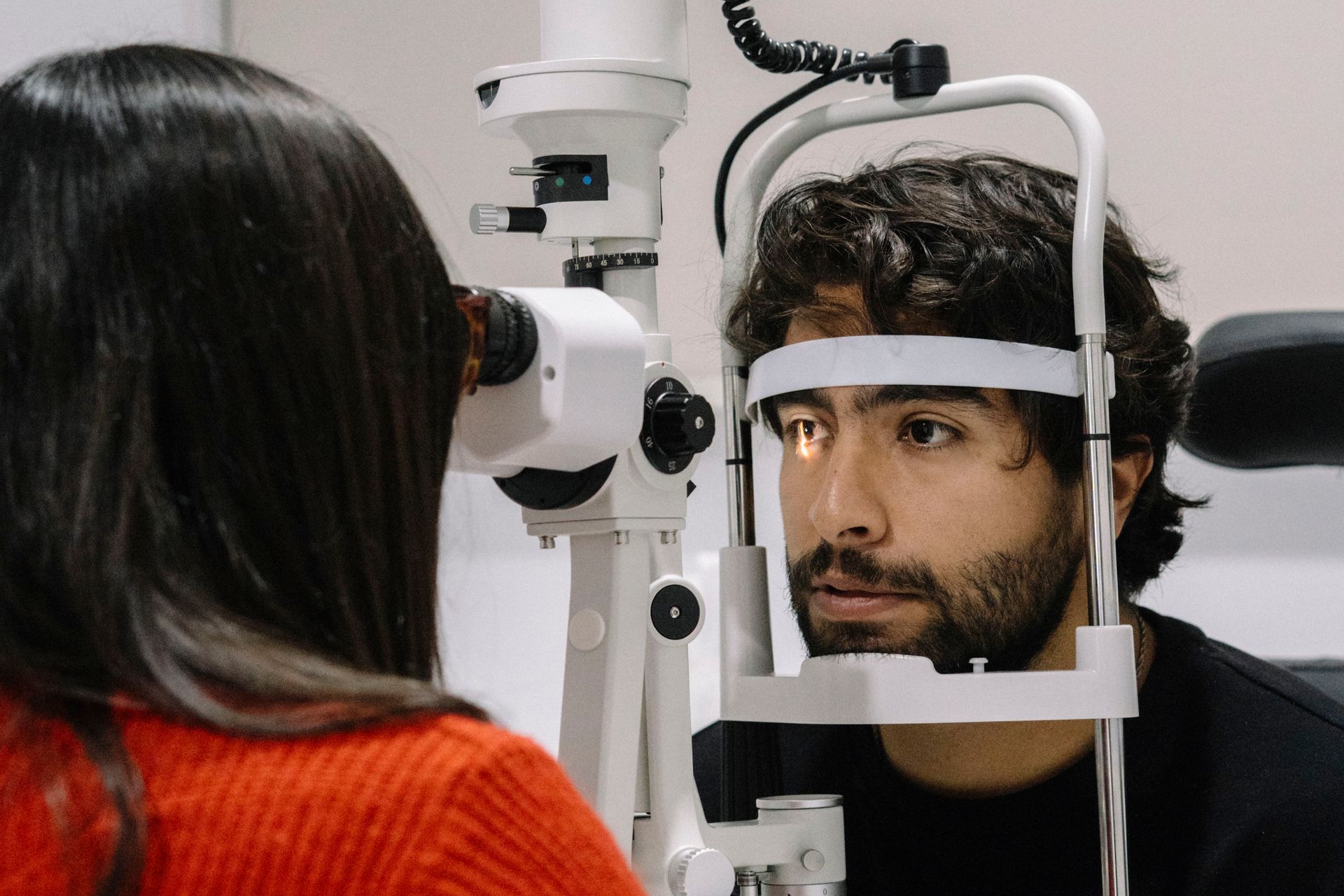
The medical report for Class D
The medical report for the bus licence is a detailed document that is issued by an ophthalmologist or by a doctor with the appropriate qualification. It contains the results of the whole eye examination: your visual acuity for each eye, your visual field, your contrast vision, your twilight vision and your colour vision. The doctor also notes whether you need glasses or contact lenses, and whether any eye disease was found. The report is the basis on which the driving licence authority decides whether you can drive a bus.
The report is not the same as the simple eye test certificate for a car licence, and it cannot be replaced by the ten euro test at the optician. It takes longer to prepare, it costs more, and it is valid for a shorter time. You can find the general rules for lorry and bus drivers in our guide to the eye test for the lorry driving licence, where the differences between the classes are explained.
Costs and validity of the Class D medical report
The medical report for a Class D licence usually costs between 50 and 150 euros, depending on the scope of the examination and the practice. The eye examination is part of that price, and it cannot be booked separately from the rest of the report. Health insurance does not pay for the report, because it is needed for your driving licence, not for a medical treatment. Some employers pay for the report if you are training as a bus driver for their company, so ask your employer or your driving school before you book.
The report is valid for about one year, although you should confirm the exact period with your driving licence authority. That is usually enough time to finish the training and pass the practical test, because a professional driving course is much more intensive than a private car course. Plan your training so that the report is still valid when you take your practical test, or you will have to pay for a new report.
Renewals: every five years for bus drivers
A Class D bus licence is usually valid for five years, and each renewal requires a new medical examination, including a new eye test. That is because vision changes with age, and the law wants to make sure that professional drivers can still meet the higher requirements after many years on the road. The renewal examination is similar to the first one, and the same values apply, so it is not a surprise if you have kept your eyes in good shape.
For answers to other common questions about renewals and the eye test, see our frequently asked questions page. If you notice that your vision is getting worse between renewals, have your eyes checked promptly, and do not wait for the next renewal to find out that your glasses need to be stronger. An early check can prevent a problem that would otherwise cost you time and money.
Health and responsibility as a bus driver
Being a bus driver is more than driving a vehicle from A to B. You are responsible for the safety of dozens of people, and your eyes are one of your most important tools. That responsibility starts with your own health: have your eyes checked regularly, keep your glasses up to date, and see a doctor promptly if you notice problems such as double vision, sudden blurriness or difficulty seeing at night.
It also means being honest about your vision. If your eyesight is getting worse, hiding it will not help you or your passengers. The medical checks are there to protect you, and in most cases a problem can be fixed with a new pair of glasses or contact lenses. A driver who takes their eye health seriously is a safer driver, and a safer driver is a better professional.
Driving a bus with glasses or contact lenses
Many bus drivers wear glasses or contact lenses, and that is no problem for the Class D licence, as long as the correction brings your visual acuity to the required level. The medical report for Class D states the correction you need, and the code number 01 is entered in your driving licence if you may only drive with a visual aid. This means that you must wear your glasses or your contact lenses every time you drive a bus, and you must have a spare pair with you, because a broken frame or a lost lens can stop you from driving. The report also notes the visual acuity of each eye, and both eyes together must reach the required values with the correction.
Contact lenses are popular with bus drivers because they give a wide field of view without a frame, but they need daily care and a clean environment. Glasses are easier to handle and to check, and a spare pair is cheap and easy to carry. Some drivers use glasses for the bus and contact lenses for their free time, and that is fine as long as the correction is the same. If your prescription changes, you need a new medical report, because the code number in the licence must match your current correction. Tell your employer about any change in your vision, because your fitness to drive is checked regularly.
Your checklist for the bus driving licence eye test
The eye test for a bus driving licence is stricter than the test for a car, because you carry passengers and drive a large vehicle. This checklist helps you prepare for the medical report and the eye test, so that you know what will be checked and what documents to bring.
- Book the medical report with a doctor who is allowed to issue it, and ask in advance what the examination includes.
- Bring your identity card, your current driving licence, and a list of any medicines you take.
- Bring your glasses or contact lenses, including a spare pair, because the visual acuity is tested with your correction.
- Expect the eye test to check your visual acuity, your visual field, your colour vision, and your twilight vision.
- Allow at least one hour for the medical report, because it is more than just an eye test.
- Ask the doctor for a written result that you can hand in with your driving licence application.
- Check how often the medical report has to be repeated, because for bus drivers it is usually every five years.
- Plan for a repeat examination before the report expires, so that your licence stays valid without a gap.
- Tell the doctor about any eye condition or operation, because it can affect the result of the examination.
- If your visual acuity is below the required level, ask the doctor what correction or treatment can help.
- Keep the medical report in a safe place, and take a copy for your own records.
- If you carry passengers, your vision is even more important, so do not delay the medical report.
- Ask the doctor whether your colour vision is good enough for a bus licence, because the rules are stricter.
- If you have a health condition, tell the doctor, because it can affect the medical report.
- Plan the medical report early, so that your bus licence does not expire while you wait.
- Keep the contact details of the doctor, so that you can book the next report in time.
Conclusion
The eye test for bus drivers Class D is one of the strictest in German driving licence law, but it is fair and predictable. Your better eye must reach 0.8 and your weaker eye 0.5, your visual field must be wide enough, and your colour vision, twilight vision and contrast vision are all checked in a medical report that costs between 50 and 150 euros and is valid for about one year. The licence is renewed every five years with a new examination. If you have your eyes checked before the training, keep your glasses up to date and take your eye health seriously, the eye test will not stand in the way of your career as a bus driver.
Frequently asked questions
What visual acuity do I need for a Class D bus licence?
Your better eye must reach at least 0.8 and your weaker eye at least 0.5, with glasses or contact lenses if you use them.
How is the eye test for bus drivers different from the test for lorry drivers?
The values are the same, but the responsibility is greater, because a bus driver carries passengers. The medical checks are therefore particularly strict and are repeated every five years.
What else is checked besides visual acuity?
Your visual field, your contrast vision, your twilight vision and your colour vision are all tested as part of the medical report.
How much does the medical report cost?
Usually between 50 and 150 euros, depending on the scope of the examination and the practice.
How long is the medical report valid?
About one year. Confirm the exact period with your driving licence authority and plan your training around it.
How often is the eye test repeated for bus drivers?
A Class D licence is usually valid for five years, and each renewal requires a new medical examination, including a new eye test.
Can I choose the doctor for my Class D medical report?
Yes, you can choose any doctor who is allowed to issue the medical report for a professional driving licence. Most applicants go to their own doctor or to a doctor recommended by their employer, and both are accepted by the driving licence authority. The doctor has to be qualified to carry out the full examination, including the eye test and the general health check. If you are not sure whether a doctor can issue the report, ask the practice before you book. You do not have to use the doctor of the transport company, and the driving licence authority accepts a report from any qualified doctor.
Can I drive a bus if I have colour blindness?
It depends on the degree of the colour blindness. A mild red green deficiency is often not a problem, because the traffic lights are also different in position and brightness, and most bus drivers with a mild deficiency can still recognise them. A severe deficiency can lead to a failed medical report, because the safety of the passengers depends on recognising the signals correctly. The ophthalmologist will test your colour vision and decide whether you are fit to drive a bus.