Eye Test Failed: The First Steps

You took the eye test for your driving licence, and the result was not what you hoped: you did not pass. It can feel like a setback, and it is natural to worry about what it means for your driving licence. The good news is that failing the eye test is not the end of your plans, and it is also very common. Most people who fail do so for a simple reason that can be fixed quickly, and most of them pass on the second attempt. In this article we explain the first steps after a failed eye test.
Here you will find out why people fail, what to do first, how a new pair of glasses or contact lenses usually solves the problem, how to repeat the test, and when a medical assessment is needed. You will also learn how the failed test affects your driving licence application, and how to plan your next steps without losing time or money. By the end of this article, you will know that a failed eye test is a problem with a solution, not a dead end.
First step: stay calm and ask what happened
The first thing to do after a failed eye test is to stay calm. A failed test does not mean that your eyes are bad or that you will never get a driving licence. It means that, on this day and with this correction, your vision did not reach the required value. That is a measurement, not a judgement, and there is a good chance that the reason is simple and easy to fix.
Ask the optician what exactly went wrong. Was your better eye below 0.7, was your weaker eye below 0.1, or was it a problem with your glasses? The answer matters, because it tells you what to do next. If the optician says that your glasses are too weak, the next step is a new prescription. If the test was disturbed because a contact lens slipped or your eyes were dry, the next attempt will probably be fine. A clear answer from the optician is worth more than guessing.
Why people fail the eye test
The most common reason for failing is an outdated prescription. Vision changes slowly over the years, and a pair of glasses that was perfect five years ago may no longer be strong enough to reach 0.7 today. That is why many people fail even though they feel that they can see well. A quick eye check before the test would have shown it, but the official test finds it out first.
Another common reason is forgetting your glasses or contact lenses on the day of the test, or taking the test without them because you thought they were not needed. The test measures your vision with your visual aid, and without it many people cannot reach 0.7. Less common reasons are dry eyes, a slipped contact lens, a scratched lens, or simply nervousness that makes it hard to concentrate on the eye chart. All of these can be fixed, and none of them means that you cannot drive.
Second step: get your eyes checked properly
The next step after a failed test is a proper eye check. The optician will measure your vision carefully, find out your exact prescription, and tell you whether new glasses or contact lenses will bring your vision up to the required value. The eye check is free or very cheap, and it takes only a few minutes. It is important to have this check before you repeat the test, because guessing about your prescription is a waste of time and money.
You can read about how the test works in detail in our guide to the eye test procedure, where the three rounds and the Landolt rings are explained. The eye check will also show whether there is a medical problem that needs further investigation. In most cases there is not, and the answer is simply a stronger lens. If a medical problem is found, for example a cataract or a disease of the retina, the optician will refer you to an ophthalmologist for treatment.
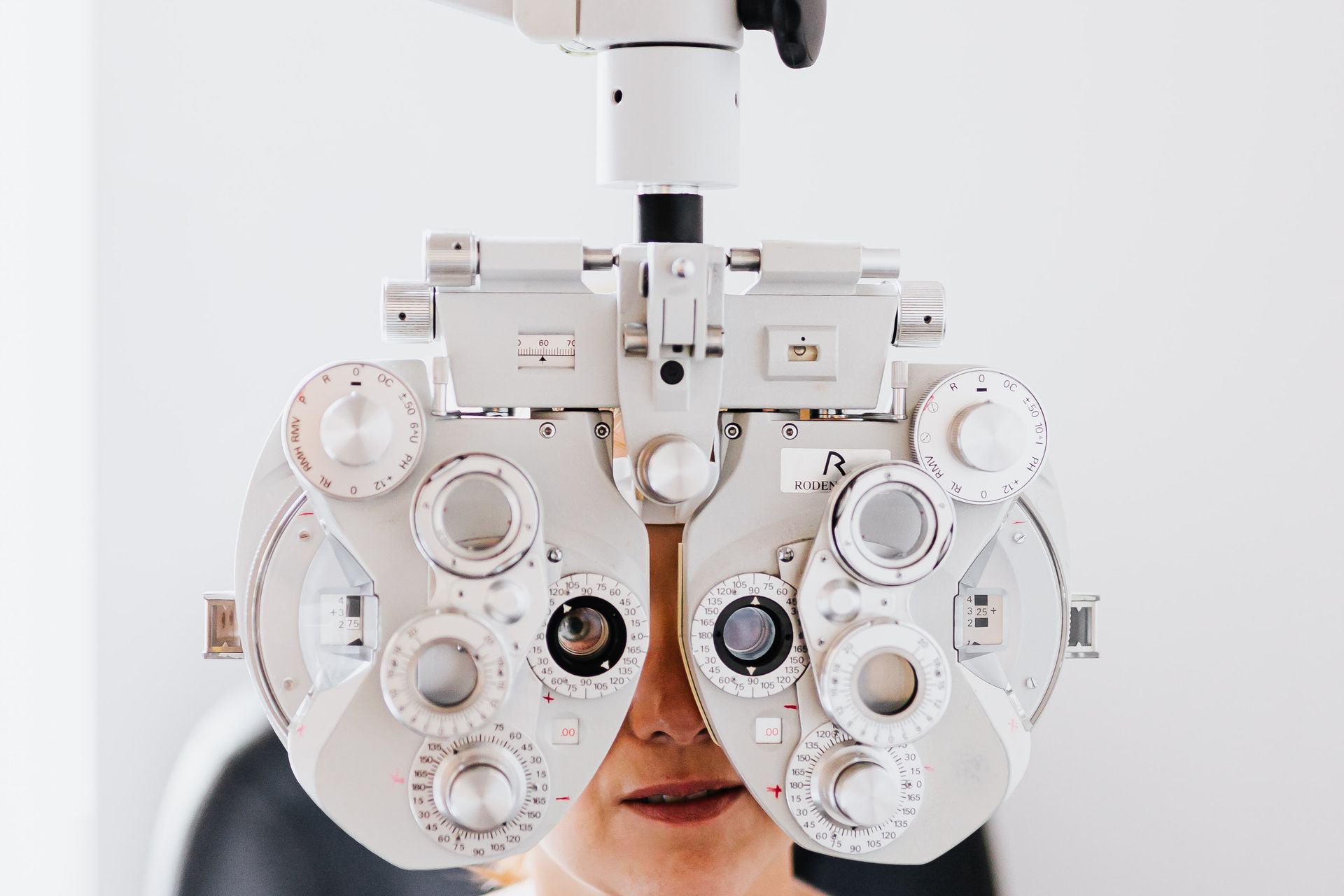
New glasses or contact lenses usually solve it
In most cases, the solution to a failed eye test is a new pair of glasses or contact lenses with the right strength. The optician can order the new lenses for you, and simple glasses are available within a few days, sometimes even on the same day. The cost of simple complete glasses starts at around 50 euros, and the improvement in your vision is often surprising, because you may not have realised how much your eyesight had changed.
If you already wear contact lenses, a new pair with a stronger prescription may be enough. In that case, have the fit of your lenses checked as well, because a lens that does not fit well can make your vision unstable. Try the new glasses or lenses for a few days before you repeat the test, so that you are used to them and your eyes are relaxed. A new visual aid that fits well gives you the best chance of passing the repeat test.
Repeat the test: when and how
Once you have the right glasses or lenses, you can repeat the eye test at any optician. There is no waiting period and no limit on the number of attempts, and the repeat test is carried out in exactly the same way as the first one. The cost is the same as before: a maximum of 6.43 euros plus VAT, about 7.65 euros in total, and often a flat rate of around ten euros. For an overview of all the costs, see our guide to eye test costs.
Book the repeat test when you have had your new glasses for a few days and feel comfortable with them. Bring your identity card and your glasses or contact lenses, and arrive calm and on time. The test itself takes only about ten minutes, and if you pass you receive the certificate on the spot. There is no reason to be nervous about the repeat test, because you already know how it works, and your new glasses give you the best possible chance.
When a medical assessment is needed
If even a perfect correction does not bring your visual acuity up to 0.7, the situation is different. For a Class B licence, the law allows a medical assessment in some cases, and an ophthalmologist will examine your eyes in detail and decide whether you can still drive safely. The assessment looks at your visual acuity, your visual field, your contrast vision and the health of your eyes, and the result is recorded in a formal report.
A medical assessment is needed only in a small number of cases, for example when an eye disease, an injury or a very strong short sightedness prevents you from reaching 0.7 even with correction. In those cases, the driving licence authority will ask for the report before it decides about your application. Discuss the situation openly with your optician and your doctor, and ask the authority what evidence is required. The important thing is not to give up too quickly, because even in difficult cases there may be a solution.
Your driving licence plans after a failed test
A failed eye test does not stop your driving licence plans. You can continue your theory lessons while you sort out your glasses, and you can book your practical test as soon as you have the certificate. The only thing that is delayed is the application to the driving licence authority, because the certificate is one of the documents you need to hand in. Plan for a short delay of a few days, not for weeks or months.
If you want, you can also use the time to practice the Landolt rings at home and to learn more about the test, so that the repeat test feels familiar. The important thing is to keep your plans moving, and not to let a failed test put you off driving altogether. Every year, thousands of people fail the eye test on the first attempt and pass on the second, and there is no reason why you should not be one of them.
How to prepare for the second attempt
Preparing for the second attempt starts with the reason for the failure, so read the result of the first test carefully. If the visual acuity was too low, visit an optician for a new refraction and a new pair of glasses or contact lenses, because a correct prescription usually solves the problem. If the test was failed because of dry eyes or tiredness, take a break before the second attempt, sleep well the night before, and book the test in the morning when your eyes are fresh. Do not rush the second attempt, because a few days of preparation are worth more than a quick repeat with the same problem.
On the day of the second attempt, bring everything you need, including your identity card, your glasses or contact lenses, and the result of the first test, so that the optician can see what has changed. Tell the optician that this is your second attempt, because they will take extra time and check the result carefully. If the optician confirms that your visual acuity is now 0.7 or better, you will receive your certificate and the failed test is forgotten. If the result is still too low, the optician will explain the next step, which is usually a visit to an ophthalmologist for a full examination and a medical report.
Your checklist after a failed eye test
Failing the eye test is disappointing, but it is usually easy to fix, and most people pass on the second attempt. This checklist covers the first steps after a failed test, so that you know exactly what to do and can book a new test with confidence.
- Stay calm, and ask the optician what the result was, so that you know which eye or which value was below the limit.
- Ask the optician what caused the fail, and whether new glasses or contact lenses would solve it.
- Get your eyes checked by an optician or an ophthalmologist, and ask for a new prescription if needed.
- Order new glasses or contact lenses if the prescription has changed, and wear them for a few days before the new test.
- Book a new eye test at the same optician or a different one, and allow enough time for the new glasses to arrive.
- Tell the driving school what happened, so that the school can adjust the plan for your lessons and the theory test.
- Do not book the new test for the next day, because you need time to get the new correction and get used to it.
- Bring the result of the first test to the second test, so that the optician knows what to check.
- Check how much the repeat test costs, and ask whether the optician offers a discount for a second test.
- If a medical assessment is needed, ask the driving licence authority which doctor can issue it.
Conclusion
Failing the driving licence eye test is not the end of your plans. It is a signal that your vision needs a little help, usually in the form of a new pair of glasses or contact lenses. The first steps after a failed test are simple: stay calm, ask the optician what went wrong, get your eyes checked properly, order the right correction, and repeat the test a few days later. The repeat test costs the same small fee and takes only ten minutes, and most people pass it on the second attempt. Only in a small number of cases is a medical assessment needed, and even then there may be a solution. Keep your plans moving, and you will have the certificate in your hand before you know it.
Frequently asked questions
What should I do first if I fail the eye test?
Stay calm and ask the optician what went wrong. Then have your eyes checked properly, so that you know whether you need new glasses or contact lenses.
How much does it cost to repeat the eye test?
The same as the first test: a maximum of 6.43 euros plus VAT, about 7.65 euros in total, and often a flat rate of around ten euros.
Is there a waiting period before I can repeat the test?
No. There is no waiting period and no limit on the number of attempts. You can repeat the test as soon as you have the right glasses or lenses.
Can I continue my driving lessons after a failed eye test?
Yes. You can continue your theory lessons, and you only need the certificate when you hand in your driving licence application and book the practical test.
When is a medical assessment needed?
Only if even a perfect correction does not bring your visual acuity up to 0.7, for example because of an eye disease or an injury. An ophthalmologist will then examine your eyes in detail.
Do most people pass on the second attempt?
Yes. The most common reason for failing is an outdated prescription, and a new pair of glasses is usually enough to pass on the second attempt.
How many times can I repeat the eye test?
There is no legal limit on the number of times you can repeat the eye test. You can repeat it as often as you need, until your visual acuity reaches the required value. Each attempt costs the official fee, so it makes sense to correct your vision before the next attempt instead of repeating the same test. If the optician sends you to an ophthalmologist, follow that advice, because the doctor can find the reason for the low visual acuity.
Should I tell the driving school that I failed the eye test?
Yes, tell your driving school, because they can adjust the plan for your training. There is no shame in failing the eye test, because many learner drivers need a new pair of glasses first. The driving school will wait for your certificate before they book your practical test, and they can also help you to find an optician or an ophthalmologist in your area.